网址:http://m.1010jiajiao.com/timu3_id_2443099[举报]
—May I ________your bike?
—Yes ,but you can’t ______it to others.
A. borrow ,lend B. borrow, borrow C. buy, borrow
查看习题详情和答案>>
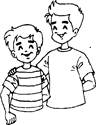 Home Alone
It was Sunday afternoon. My brother and I were alone at home. My parents went for a party and asked me to look after my brother. I was doing my homework while my younger brother was watching TV. Suddenly the doorbell rang. Ding-Dong! My brother thought that it was our parents, so he opened the 1 quickly.
A tall man wearing a black raincoat stood outside. He said that he came to sell books and asked politely 2 our parents were at home.
Without thinking, my brother said, "No." Then the man asked if we would like to 3 some story books. I refused him. When I wanted to close the door, he suddenly pushed the door very 4 and came into our house. He took out a 5 and ordered me to tie up my brother's hands with a rope. I tied up his hands in a special way so my brother could untie
6 easily. The man then tied my hands up and locked 7 of us in the kitchen. Soon, he went upstairs to 8 money. I taught my brother to untie the rope on his 9 .He then untied me. I rushed to the telephone to call the police, 10 the line was dead. The doors were all locked from the outside. It was lucky that the man 11 to lock the kitchen window. We got out of the house through the kitchen window and went to the 12 pay phone to call the police.
Soon 13 came to our house and the man was caught. By that time, my parents had come home. We told them the whole story. My parents were 14 that we were not hurt. They told me that I should stop my brother from 15 the door to strangers. I learnt a lesson on safety.
( ) 1. A. window B. door C. book D. fridge
( ) 2. A. if B. why C. when D. how
( ) 3. A. lend B. borrow C. sell D. buy
( ) 4. A. politely B. slowly C. hard D. quietly
( ) 5. A. book B. knife C. gift D. pen
( ) 6. A. himself B. myself C. herself D. themselves
( ) 7. A. none B. neither C. both D. all
( ) 8. A. look at B. look after C. look like D. look for
( ) 9. A. feet B. hands C. neck D. legs
( ) 10. A. and B. so C. or D. but
( ) 11. A. wanted B. remembered C. forgot D. tried
( ) 12. A. farthest B. nearest C. largest D. smallest
( ) 13. A. my friends B. the police C. the neighbors D. my parents
( ) 14. A. glad B. angry C. sad D. sorry
( ) 15. A. cleaning B. closing C. locking D. opening 查看习题详情和答案>>
Food is very important. Everyone needs to 36 well if he or she wants to have a strong body. Our minds also need a kind of food. This kind of food is 37 . We begin to get knowledge(知识) even when we are very young. Small children are 38 in everything around them. They learn 39 when they are watching and listening. When they are getting older, they begin to 40 story books, science books and anything they like. When they find something new, they love to ask questions and __41 to find out the answers.
What is the best 42 to get knowledge? If we learn by ourselves(自学), we will__43 _the most knowledge. If we are 44 getting answers from others and do not ask why, we will not learn well. When we study in the right way, we will learn __45 and understand better.
|
1. |
|
|
2. |
|
|
3. |
|
|
4. |
|
|
5. |
|
|
6. |
|
|
7. |
|
|
8. |
|
|
9. |
|
|
10. |
|
查看习题详情和答案>>
It was Sunday afternoon. My brother and I were alone at home. My parents went for a party and asked me to look after my brother. I was doing my homework while my younger brother was watching TV. Suddenly the doorbell rang. Ding-Dong! My brother thought that it was our parents, so he opened the ________soon.
A tall man wearing a black raincoat stood outside. He said that he came to sell books and asked politely__________ our parents were at home.
Without thinking, my brother said,“No.” Then the man
asked if we would like to ______some story books. I refused him. When I wanted
to close the door, he suddenly pushed the door very _______and came into our
house. He took out a ________and ordered me to tie up my brother’s hands with a
rope. I tied up his hands in a special way so my brother could untie
______easily. The man then tied my hands up and locked _______of us in the k itchen.
Soon, he went upstairs to _________money. I taught my brother to untie the rope
on his ______. He then untied me. I rushed to the telephone to call the police,
______the line was dead. The doors were all locked from the outside. It was
lucky that the man ______to lock the kitchen window. We got out of the house
through the kitchen window and went to the _______ pay phone to call the police
itchen.
Soon, he went upstairs to _________money. I taught my brother to untie the rope
on his ______. He then untied me. I rushed to the telephone to call the police,
______the line was dead. The doors were all locked from the outside. It was
lucky that the man ______to lock the kitchen window. We got out of the house
through the kitchen window and went to the _______ pay phone to call the police
Soon _______came to our house and the man was caught. By that time, my parents had come home. We told them the whole story. My parents were ______that we were not hurt. They told me that I should stop my brother from _______the door to strangers. I learned a lesson on safety.
1.A. window B. door C. book D. fridge
2.A. if B. why C. when D. how
3.A. lend B. borrow C. sell D. buy
4.A. politely B. slowly C. hard. D. quietly
5.A. book B. knife C. gift D. pen
6.A. himself B. myself C. herself D. themselves
7.A. none B. neither C. both D. all
8.A. look at B.look after C. look like D. look for
9.A. feet B. hands C. neck D. legs
10.A. and B. so C. or D. but
11.A. wanted B. remembered C. forgot D. tried
12.A. farthest B. nearest C. largest D. smallest
13.A. my friends B. the police C. the neighbors D. my parents
14.A. glad B. angry C. sad D. sorry
15.A. cleaning B. closing C. locking D. opening
查看习题详情和答案>>
“Who did this?” asked my teacher. Thirty children tried to think about not only what they had done, but also what our teacher might have found out.
“Who did this?” she asked again. She never became angry, but she was this time. She held up a piece of broken glass and asked, “Who broke this window?”
“Oh, oh,” I thought. I was the one who broke the window. I did not do it on purpose (故意). It was caused by a bad throw of a baseball. Why did it have to be me?
If I admitted (承认) it, I would be in a lot of trouble. How would I be able to pay for a big window like that? “My father is going to get angry at me,” I thought. I didn’t want to raise (举起) my hand, but something much stronger than me pulled it up.
“I did it,” I said. Then I was silent. It was hard enough saying what I had.
My teacher went to one of our bookshelves and took down a book. She then began walking towards my desk. I had never known my teacher to strike (打) a student, but I feared she was going to start with me.
“I know how you like birds,” she said as she stood looking down at my face. “Here is the field guide about birds (鸟类野外指南) that you always check out from our school library. It is yours now. We have got a new one for the school. You will not be punished (惩罚). But remember, it’s only for your honesty.”
I couldn’t believe it! I wasn’t being punished and I was getting my own bird field guide, the one that I had been saving up all my money to buy.
【小题1】How did the writer feel when he saw his teacher walking towards him with a book from bookshelves?
| A.Relaxed. | B.Pleased. | C.Frightened. | D.Guilty. |
| A.lend | B.borrow | C.test | D.buy |
| A.The writer’s teacher often hit her students. |
| B.The writer broke the window when he was catching a bird. |
| C.The writer was seriously punished after he admitted his mistake. |
| D.The writer didn’t want to admit his mistake at the beginning. |
| A.he who is honest is wise | B.better late than never |
| C.practice makes perfect | D.a friend in need is a friend indeed |