网址:http://m.1010jiajiao.com/timu3_id_2425621[举报]
Space travel is nothing new. The first spacecraft with a human was sent up into space in 1961. Since then, people have not only traveled to space, but also many of them have lived there in space stations for some time.
The Soviet Union(前苏联) sent the first space station into space in 1971. This space station was called Salyut 1. Salyut 1 was designed as a place where people could live while they observed space and did experiments. The first group of astronauts lived there for 23 days. The Soviet Union went on to make seven more Salyut space stations. At about the same time, the United States built its own space station, called Skylab.
Astronauts visited and often lived in these space stations for a short time. However, it wasn’t until the late 1980s when The Soviet Union sent the Mir space station that people began to live in space for a longer time. Mir stayed in space from 1989 until 2001, when it was decided that the space station was too old and no longer safe to live in.
Living in space stations seems to be fun, but astronauts face many problems. One of them is food. All the meals on space station are put together on Earth and sent there by space shuttle. Because the food has to last a long time (sometimes up to three months), a lot of it has to be stored in cans. The space station does not have a fridge, but it has a cool room to keep fruit and vegetables fresh. Astronauts also eat many other foods such as dried meat that do not need special care.
Without the help of gravity, sitting down to eat can be tough. Astronauts sometimes have to fix themselves to the wall while eating. They also have to be very careful to that food does not float away.
【小题1】Which of the following has the closest meaning to the underlined word “observed” in Paragraph 2?
| A.Discovered | B.Checked | C.Watched | D.Fixed |
| A.Astronauts can never have a chance to eat fresh food when they live in space station. |
| B.The Soviet Union sent a total of 9 space stations into space in the 1970s and 1980s. |
| C.Astronauts could live in the Mir space station for no more than three weeks. |
| D.Space travel has quite a long history of more than 60 years. |
| A.Exploring Space | B.Space Travel | C.Living in Space | D.Space Stations |
【小题1】My best friend writes a p_________________ to me , it has a beautiful picture .
【小题2】Jim likes to go to the sea and play on the b_________________ .
【小题3】Beijing is the c____________________ of China.
【小题4】Where is your mother? She is w__________________ for a bus .
【小题5】The radio says there will be a s_____________________ wind tomorrow.
【小题6】Chinese people have many ____________________________(传统).
【小题7】Jenny often ______________________(打扫) the floor on Sunday morning.
【小题8】People often go to the _____________________(饭馆)to eat and drink things.
【小题9】Daming is eating lunch and ___________________________(躺)in the sun.
【小题10】_______________________(无论如何),we are going to visit the museum. 查看习题详情和答案>>
—Our school _____ in 1892.
—It has a very long history.
A. built B. is built C. was built D. will build
查看习题详情和答案>>
Entering a university is an important part of a person’s life. Today, many people go to study and train for a future job in subjects like law (法律), medicine or education. But the university is not a modern invention. It has a history that is over a thousand years.
The world’s oldest university, AL-Azhar, is in Cario, Egypt. It was first built as a mosque for religion (宗教寺院) in A.D.972. A few years later, learners and teachers began meeting in the mosque. They read and talked about the subject of law. Around 988, leaders in the city of Cario decided to open up a school for higher learning and the University of AL-Azhar was founded.
At AL-Azhar, there were many university ‘firsts’. Different subjects were set up. The earliest ones taught at AL-Azhar were in law and religion. In a course, students read and studied with the teacher, but there was also free discussion. Often, students and teachers talked about a topic (题目), and there was no ‘right’ answer. Finally, famous teachers from around the world came to AL-Azhar to teach and do deep studies on the subjects they were interested in. At the university, people studied the past, but it was also a place for exchanging new ideas. 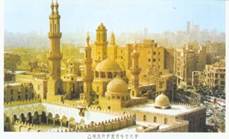
Over a thousand years later, AL-Azhar is still an important university in the world. Its library keeps more than 250,000 of the world’s oldest and most valuable (有价值的) books. Today, many of the world’s most important universities such as Oxford and Harvard still follow the traditions started at AL-Azhar.
【小题1】From the first paragraph(段落) we know that _________.
| A.universities are important to the city life |
| B.the university is a quite new invention |
| C.university education may help a person find law。 |
| D.the university has a history of more than a thousand years |
| A.education | B.religion | C.a meeting | D.law |
| A.Education and medicine. | B.Religion and law. |
| C.Free discussion. | D.History and tradition. |
| A.AL-Azhar was built in the city of Cario in Egypt. |
| B.AL-Azhar didn’t become a university until the years around 988. |
| C.The University of AL-Azhar was a place to read books. |
| D.Now AL-Azhar is still one of the famous universities in the world. |
People enjoy taking trips. But what are the reasons they leave home? One reason is for education. People travel because they want to learn more about other people and other places. They are curious about other cultures. When people are tourists, they get a quick look at different ways of living. Even a short look at another kind of lifestyle is an important lesson. On a trip, a person can learn directly by visiting museums and historic spots. What does a tourist learn who sees the art museums, visits the historical palaces and other scenic spots in Paris and shops along the River Seine? He gets a vivid picture, a real life of one of the French people. He learns about their attitudes(态度), how they feel about business, beauty and history.
What about the tourist who goes to Hong Kong? Does he get the same information that he could get from a book? He might read that Hong Kong is crowded, that there is less than 200 square meters of space for each person. But seeing and feeling the lack of space will impress him much more. He might read that there are nearly 200 vehicles for every kilometer of roadway. But the sight of so many vehicles parked along the roadside would be a much more vivid lesson. The tourist to Hong Kong will never forget the contrasts(对比,对照): the straight vertical lines of tall modern buildings and the moving lines of boats that people live in.
【小题1】Why do people leave home to travel according to the passage?
| A.For education. |
| B.For adventure. |
| C.To enjoy themselves. |
| D.To look for a different lifestyle. |
| A.It has a large population. |
| B.It has many tall buildings. |
| C.There are 200 vehicles for every kilometer of roadway. |
| D.There are many museums and palaces. |
| A.It has many big and beautiful parks. |
| B.It is very crowded. |
| C.It has many historical spots. |
| D.It is an important industrial center. |
| A.It makes our life more interesting. |
| B.It enables us to get first-hand knowledge. |
| C.It helps develop our personalities. |
| D.It brings about changes in our lifestyle. |