题目内容
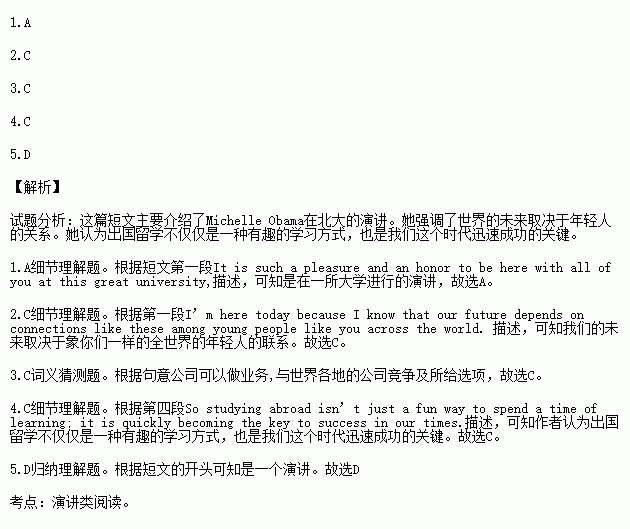
Ladies and Gentlemen, thank you. Well, ni-hao. (Laughter) It is such a pleasure and an honor to be here with all of you at this great university, so thank you so much for having me. I’m here today because I know that our future depends on connections like these among young people like you across the world.
That’s why when my husband and I travel abroad, we don’t just visit palaces and parliaments (国会) and meet with heads of countries. We also come to schools like this one to meet with students like you, because we believe that relationships between countries aren’t just about relationships between governments or leaders — they’re about relationships between people, particularly young people. So we view study abroad programs not just as an educational chance for students, but also as an active part of America’s foreign policy (政策).
Through the wonders of modern technology (科技), our world is more connected than ever before. Ideas can cross different countries with the click of a mouse. Companies can do business and compete with companies across the world. And we can text, email, skype with people in the world.
So studying abroad isn’t just a fun way to spend a time of learning; it is quickly becoming the key to success in our times. Because getting ahead in today’s workplaces isn’t just about getting good grades or test scores in school, which are important. It’s also about having real experience with the world beyond (超出) your borders—experience with languages, cultures and societies very different from your own. Or, as the Chinese saying goes: “It is better to travel ten thousand miles than to read ten thousand books.”
1.Where did the speaker probably give the talk to the audience?
A. In a university. B. In the Parliament Hall.
C. On the Internet. D. In a place of interest.
2.The passage shows that the world’s future depends on _______.
A. getting good grades
B. traveling abroad
C. connections among young people
D. texts and emails
3.What is the meaning of the underlined word “compete” in Paragraph 3?
A. 完成 B. 比较 C. 竞争 D. 抱怨
4.In the speaker’s opinion, what is the key to success in our times?
A. Going to a university.
B. Doing more exercises.
C. Studying abroad.
D. Getting good test scores.
5.Where may the passage come from?
A. A story. B. A news report.
C. A scientific magazine. D. A speech.

 阅读快车系列答案