题目内容
--- is your home from school?
--- It takes 5 minutes to walk there.
A. How far B. How long
C. How much D. How many
A
【解析】
试题分析:句意:--- 你家离学校多远?--- 走到那儿得花5分钟。A. How far多远;B. How long多长时间; C. How much多少钱;D. How many多少个。据It takes 5 minutes to walk there.故选A。
考点:考查疑问词辨析。
考点分析: 考点1:相似、相近词比较 同(近)义词辨析:同义词是指同一语言中意义相近或相同的词。 英语常用同义词辨析 English Synonyms A abandon, desert, forsake, leave, give up 这些动词或词组均含“抛弃、放弃”之意 abandon :强调永远或完全放弃或抛弃人或事物等,这可能是被迫的,也可能是自愿的。 desert :着重指违背法律责任和义务,或自己的信仰与誓言的行为,多含非难的意味。 forsake :侧重断绝感情上的依恋,自愿抛弃所喜欢的人或物。也指抛弃信仰或改掉恶习。 leave :普通用词,指舍弃某事或某一职业,或终止同一某人的关系,但不涉及动机与果。 give up :普通用语,侧重指没有希望或因外界压力而放弃。 ability, capacity, capability, genius, talent, competence, faculty, gift, aptitude 这些名词均可表示人的“能力,才能”之意。 ability :普通用词,指人先天的或学来的各种能力。 capacity :侧重指人的潜在能力,通常不指体力,多指才智,尤指接受与领悟能力。 capability :多用于人,指胜任某项具体工作的能力,也指本身具有、尚未发挥的潜在能力。常与of或for连用。 genius :语气最强,指天赋的高度才能与智力。 talent :着重指人某方面具有可发展和倍养的突出天赋才能,但语意比genius弱。 competence :正式用词,侧重指令人满意的业务能力与水平,达到胜任某项工作等的要求。 faculty :指特殊的才能或智力。 gift :着重个人的天赋的才能或在某方面的显著本领,常暗含不能用一般规律作解释的意味。 aptitude :多指先天或后天习得的运用自如的能力,常暗示接受能力强,能迅速掌握一种学术训练或艺术技巧。 able, capable, competent 这些形容词均含有“有能力的,能干的”之意 able :最常用词,多用于褒义,着重指多方面的,经常性的,或潜在性的能力。有时也指高超、非凡的能力。 capable :语气弱于able,指有能力、有潜力或有条件做某事,常与of连用。 competent :强调具有能胜任某项工作的足够技能或其它所需的条件。 abolish, cancel, repeal 这些动词均含“取消、废除”之意 abolish :正式用词,指彻底废除某种制度、规章或习俗。 cancel :用法广泛,多指取消债务、合同、证书、比赛、旅行、计划或约会等。 repeal书面用词,指撤销立法机关通过的协议、法案或法律等。 about, around, round 这些词均有“在周围、在附近”之意。 about :既可表静态,也可表动态。 around :主要用于美国,静态或动态均可。 round :主要用于英国,多半指动态。 above, on, over 这些前置词均含“在……上”之意。 above :一般指位置高于某物,但不一定在正上方,也不接触另一物,其反义词是below。 on :指与另一物表面相接触。 over :指一物在另一物的垂直上方,多暗示悬空,但也含“覆盖于……之上”之意。其反义词是under。 试题属性- 题型:
- 难度:
- 考核:
- 年级:

take tree island but leave exciting enjoy outside as something |
My favorite TV program is a reality show called Survivor (幸存者). It isn’t on TV at the moment 1. it was on last year.
In the show, two teams of people are taken to a (an) 2. . All of them have to sleep 3. because there aren’t any houses or hotels. They usually choose 4. really useful like a toothbrush since they can only 5. one thing with them. The people also have to find food and they spend a lot of time fishing and collecting fruit from the 6. . Every week one person has to 7. . At the end, there are only two people on the island and one of them is chosen 8. the winner.
I really like Survivor because it’s very 9. and the people have to do things like hunting for food. I really 10. myself when I watch it. I don’t want to be on the show, however, I like living in a house!
“Vocabulary” means the words of a language. To learn vocabulary, you need to check four things.
Spelling To learn a word, you need to how to spell it. You can try the LCWC(look, cover, write, check)method(方法). First, look at the word and read it out loud. Next, cover the word so it can’t be seen. Then, write the word down. Finally, uncover the word and check if you’ve spelt it correctly. |
Pronunciation How do you pronunciation a word? Do you pronounce it the same way as you spell it? If so, you may pronounce it wrong. For example, the pronunciation of “ough” is different in each of these words: “through”, “bough” and “rough”. You also need to know where the stress(the strong sound) is in a word. |
Meaning You need to keep in mind that words often have more than one meaning in English. Take the word “dust” for example. If you dust the bedroom, you are removing the dust. The first “dust” is a verb meaning “to clean”; the second “dust” is a noun meaning “the things being cleaned away”. |
Use How do you use a word? D o you know if it is formal? Do you know what other words it can use with and when? An example is “ yours”. You can use it to show possession(拥有), as in “ This book is yours.” And you can also use it at the end of a less formal letter, e.g. “ Yours, Peter Brown.” At the end of a formal letter you can use it with “Sincerely”, though generally in America the use is “Sincerely yours,” and in the UK, it is “Yours sincerely”. |
根据以上信息,选择最佳答案。
1.Which of the following shows the right order of the LCWC method?
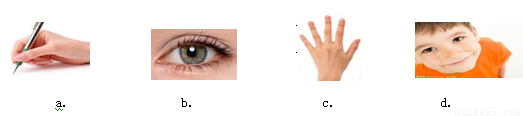
A. c→b→d→a B. d→b→c→a
C. b→c→a→d D.a→b→d→c
2.What can we learn from the part “Pronunciation”?
A. We should pronounce a word the same way as we spell it.
B. We need to know the stress when we pronounce a word.
C. “Ough” has the same pronunciation in “through” and “rough”.
D. We don’t need to know the stress when we pronounce a word .
3.The underlined word “removing” means “__________” in Chinese.
A. 回收 B. 搬家 C. 抛洒 D. 去除
4.Englishmen like to use “___________” at the end of a formal letter.
A. Your B. Yours sincerely
C. Sincerely yours D. Yours
5.From the passage, we know that ____________.
A. how to learn vocabulary
B. the importance of learning vocabulary.
C. why we like English
D. why we learn English