My First Job

I was six when I joined my father and two elder brothers at sunrise in the fields of Eufaula. Okla.  36  the time I was eight I was helping Dad fix up old furniture. He gave me a cent for every nail I  37  out of old boards.

I got my first  38  job, at JM’s Restaurant in town, when I was 12. My main responsibilities (职责) were  39  tables and washing dishes,  40  sometimes I helped cook.

Every day after school I would  41  to JM’s and work until ten. Even on Saturdays I  42  from two until eleven. At that age it was difficult going to work and  43  my friends run off to swim or play. I didn’t necessarily like work, but I loved what working

  44  me to have. Because of my  45  I was always the one buying when my friends and I went to the local Taste Freeze. This made me  46  .

Word that I was trustworthy and hard-working  47  around town. A local clothing store offered me credit (赊帐)  48  I was only in seventh grade. I immediately  49  a $68 sports coat and a $22 pair of shoes. I was  50  only 65 cents an hour, and I already owed(欠) the storekeeper $90! So I learned  51  the danger of easy credit. I paid it  52  as soon as I could.

My first job taught me self-control, responsibility and brought me a  53  of personal satisfaction few of my friends had experienced. As my father,  54  worked three jobs, once told me, “If you  55  sacrifice (奉献) and responsibility, there are not many things in life you can’t have.”How right he was.

1.                A.Before         B.Within          C.From D.By


2.                A.pulled          B.put            C.picked   D.pressed


3.                A.usual          B.real            C.main D.particular


4.                A.sweeping       B.packing         C.clearing  D.emptying


5.                A.or             B.so             C.but  D.even


6.                A.head           B.turn           C.change   D.move


7.                A.studied         B.worked         C.played   D.slept


8.                A.helping         B.having          C.watching  D.letting


9.                A.asked          B.told            C.promised D.allowed


10.               A.study          B.power         C.age   D.job


11.               A.proud          B.friendly        C.lucky D.hopeful


12.               A.ran            B.got            C.flew  D.carried


13.               A.although        B.while          C.if D.since


14.               A.sold           B.borrowed       C.charged   D.wore


15.               A.keeping        B.making         C.paying D.taking


16.               A.gradually       B.greatly         C.hardly D.early


17.               A.out            B.over           C.away D.off


18.               A.point          B.level           C.part  D.sign


19.               A.he            B.that           C.who  D.whoever


20.               A.understand     B.demand        C.offer D.fear


I have been consistently opposed to feeding a baby regularly. As a doctor, mother and scientist in child development I believe there is nothing to recommend it, from the baby's point of view.

Mothers, doctors and nurse alike have no idea of where a baby's blood sugar level lies. All we know is that a low level is harmful to brain development and makes a baby easily annoyed. In this state, the baby is difficult to calm down and sleep is impossible. The baby asks for attention by crying and searching for food with its mouth.

It is not just unkind but also dangerous to say a four-hourly feeding schedule will make a baby satisfied. The first of the experts to advocate a strict clock-watching schedule was Dr Frederic Truby King who was against feeding in the night. I've never heard anything so ridiculous. Baby feeding shouldn't follow a timetable set by the mum. What is important is feeding a baby in the best way, though it may cause some inconvenience in the first few weeks.

Well, at last we have copper-bottomed research that supports demand feeding and points out the weaknesses of strictly timed feeding . The research finds out that babies who are fed on demand do better at school at age 5, 7 , 11 and 14, than babies fed according to the clock. By the age of 8, their IQ(智商)scores are four to five percent higher than babies fed by a rigid timetable. This research comes from Oxford and Essex University using a sample(样本)of 10,419 children born in the early 1990s,taking account of parental education, family income, a child's sex and age, the mother's health and feeling style. These results don't surprise me. Feeling according to schedule runs the risk of harming the rapidly growing brain by taking no account of sinking blood sugar levels.

I hope this research will put an end to advocating strictly timed baby feeling practices.

1.What does the author think about Dr King?

A.He is strict

B.He is unkind

C.He has the wrong idea.

D.He sets a timetable for mothers

2.The word copper-bottomed in Paragraph 4 is closest in meaning to _________

A.basic             B.reliable           C.surprising         D.interesting

3.What does the research tell us about feeling a baby on demand?

A.The baby will sleep well.

B.The baby will have its brain harmed.

C.The baby will have a low blood sugar level.

D.The baby will grow to be wiser by the age of 8.

4.The author supports feeling the baby_______.

A.in the night

B.every four hours

C.whenever it wants food

D.according to its blood sugar level


The Republic of Vanuatu is an island nation located in the South Pacific Ocean. It was one of the poorest nations in the region. Within the last five years, however, it has become a hot spot for adventure travelers. In 2006 it was voted the happiest place on Earth. The reason is not that Vanuatu are the richest but that Vanuatu has white-sand islands, clear waters, the world’s most accessible live volcano, great diving and food that grows faster than it can be picked.

With a population of about 221,000, Vanuatu has 113 languages, which is a result of 3,000 years of immigration from many Pacific countries. There are three official languages: English, French, and Bislama. Bislama developed from South Pacific English, a simplified language that traders and other foreigners used it to communicate with speakers of the many local languages.

Most of the islands are mountainous and of volcanic origin. There are several active volcanoes in Vanuatu, including Yasur on the island of Tanna, one of the world’s most accessible volcanoes. If you’ve ever fancied getting close to a volcano, here’s your chance.

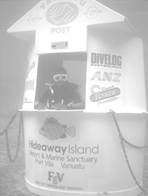
Vanuatu Post’s Underwater Post Office has quickly become one of the busiest post offices for postcards in the world! Visitors from around the world want to experience the world’s first underwater post office. The Post Office is only 50 meters offshore and at just three meters below the surface, very appealing to the young and young at heart. Since opening in 2003, the underwater post office has received about 100,000 visitors. They have posted one of the waterproof(防水的)postcards available in Vanuatu; these cards are collected regularly by one of Vanuatu Post’s four trained divers. The underwater branch is manned daily for usually about an hour, longer with demand.

1.Vanuatu was voted the happiest place on Earth because _______.

A.it’s the poorest nation in the region

B.it’s Vanuatu that are the richest

C.it’s a favorite place for adventurers

D.it’s blessed with abundant nature

2. From the text, _______ led to over one hundred languages spoken in Vanuatu.

A.immigration        B.location           C.dialects           D.foreigners

3.Which of the following is true about Vanuatu? 

A.Bislama developed from local Pacific French.

B.Yasur is one of the live volcanoes in Vanuatu.

C.Vanuatu has more than 113 official languages.

D.Underwater Post Office has opened for 5 years.

4.Which of the following would be the most proper title for the text?      

A.Working at the underwater branch          B.Great diving in amazing Vanuatu

C.A hot spot for adventure travelers          D.The busiest post office on Earth

5.What is most likely to be discussed in the paragraph that follows?

A.Various languages.                       B.Underwater diving.

C.Food in Vanuatu.                        D.History of Vanuatu.


For the people living in the Nile Basin,the river is their life. This 6,825 km waterway,whose watershed (流域) covers three million square kilometers,flows through mountains,woodlands,lakes and deserts. Its potential for fishing,tourism and shipping is great-but so are its challenges.

Water shortage,already serious in Egypt and Sudan,will soon influence several other countries in the watershed as well. Today,about 160 million people depend on the Nile River for their living. Within the next 25 years,the district’s population is expected to double,adding to the demand brought about by growth in industry and agriculture. The frequent drought adds to the urgency.

Water quality is also a problem. Precious soil is washed out to sea. Wastes from industry and agriculture create pollution. Higher concentrations of salt influence irrigated soils. Water-borne diseases remain unchecked. In areas where it’s hot and damp,hyacinths grow so fast that they choke off lakes,dams and other sections of the river,making it difficult for fishing and other businesses to move forward.

Native people along the narrow area of farmland have watched the sand move closer day by day. They’ve seen the river change course,and their only source of water thickened with mud. They’re very poor and have few choices.

But a new program,the Nile Basin Initiative(NBI),is offering very practical assistance. The program is more than just a water-management project. It’s a plan for the social and economic development of a vast district: it concentrates on the needs of the poorest of the poor and the environment that supports them.

These are whole ecosystem problems,calling for united solutions (解决办法).Half the Nile Basin’s countries are among the world’s poorest nations; yet,somehow,they must find the resources,skills and political will to overcome these challenges.

1.What are the great challenges the Nile Basin faces?

A.The development of shipping industry and over-fishing of native people.

B.Overfishing of native people and increasing population.

C.Water shortage and water quality.

D.Increasing population and tourism.

2.The underlined word “hyacinths” in Paragraph 3 most probably refers to ________.

A.plants

B.fish

C.rocks

D.salts

3.The program NBI is mainly aimed at ________.

A.preventing water pollution

B.changing the river course

C.improving living conditions of the poor

D.preventing land from becoming desert

4.What would be the best title of this passage?

A.People’s life in Egypt and Sudan

B.Frequent drought in Egypt and Sudan

C.The poorest countries in the Nile Basin

D.The ecosystem problems in the Nile Basin


违法和不良信息举报电话:027-86699610 举报邮箱:58377363@163.com

精英家教网