题目内容

Under proper conditions,sound waves are reflected from a hillside or other such obstruction(障碍物).Sound travels at a speed of about one-fifth of a mile per second.If the hill is eleven hundred feet away,it takes two seconds for the sound to travel to the hill and back.Thus by measuring the time between a sound and its reflection the echo(回声),you can calculate(计算) the distance to an obstruction.?

During World WarⅡ the British made a practical use of this rule to discover German planes on their way to bomb(轰炸) London long before the enemy was near the object.They used radio waves instead of sound waves,since radio waves can pass through fog and clouds.The outnumbered Royal Air Force(RAF)(皇家空军) always seemed to be lying in wait at the right time and the puzzled Germans never to be surprised.It was radio echoes more than anything else that won the Battle of Britain.?

  Since the radio waves were used to tell the direction in which to send the RAF planes and the distance to send them[their range(距离范围) of flight,in other words],the device(装置) was called radio directing and ranging,and from the first letters the word radar(雷达) was formed.?

1.Sound waves reflected from a hill can be used to calculate the __________.?

A.speed of sound

B.time between a sound and its echo?

C.height of the hill

D.distance to the hill?

2.The British used radio waves because they__________ .?

A.were more exact than sound waves?

B.could not be discovered?

C.could pass through fog and clouds?

D.were easier to use than sound waves?

3.Practical use of radio waves brought about __________.?

A.new machines for planes?

B.a radio directing and ranging device?

C.new radio sets for RAF bombers?

D.a discovering device?

4.Radar allowed British to be able to__________ .?

A.discover German planes on their way to London?

B.direct the outnumbered RAF planes effectively?

C.kill German bomber pilots?

D.both A and B

5.The author of this passage mainly wanted to explain __________.

A.exactly how radar worked?

B.why the British used radio waves in their device?

C.how radar(word and device) came into being?

D.how radar helped the British win the battle??

答案:D;C;B;D;C
练习册系列答案
相关题目

阅读下列短文,从每题所给的四个选项A、B、C、D中,选出最佳选项。

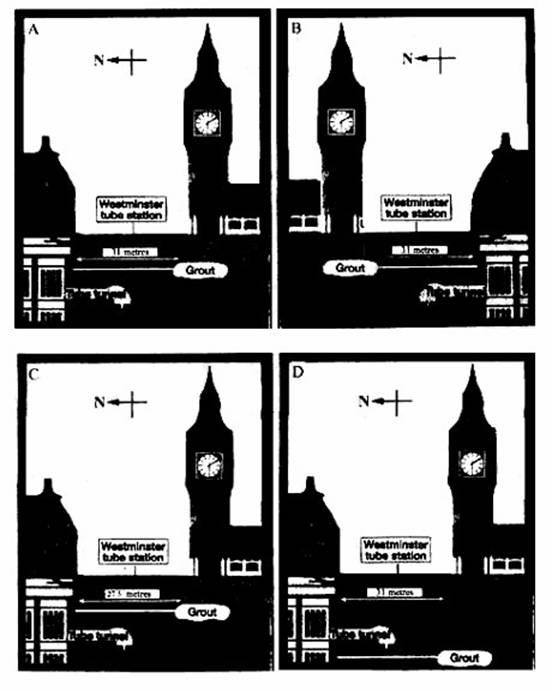
  The tower of Big Ben,London's most famous building,has always leaned(倾斜)slightly,but construction work on a new line for the London Underground seemed likely to give the tower a real lean.Engineers have had to prop up(支撑)its base to prevent it from damaging the rest of the Houses of Parliament.

  To control the tower's movement,engineers pumped grout(水泥浆)into tile soil under the tower.The tower now leans an extra few centimetres,but the lean can only be seen by the most sharp— eyed observer.

  Between 1995 and 1997,to lengthen the Jubilee line of the Underground,builders dug a 40.— metre— deep hole just 31 metres north of the clock tower.And the new tube(underground)tunnels' were even nearer to the tower.John Burland,who recently helped stop the increasing lean in the Leaning Tower of Pisa and was an adviser to the Jubilee line project,believed the work would affect the tower.In his opinion,no further lean should go beyond a safety limit of 27.5 millimetres over existing lean of 220.millimetres.

  To keep the lean within this limit,Burland told the British Association about the new method of pumping grout immediately under the base of the tower.More than 300 tons of grout were pumped in during construction.The tower's additional lean went between 10.and 25 millimetres,but never passed 27.5 millime_Ires.

  After the construction work was completed in late 1997,a review of movements in nearby walls showed that the building was in better shape than had been thought before and the safety limit was raised to 35 millimetres before any action needs to be taken.

  Since 1997,the tower has continued to lean,Burland told Modern Construction.The latest measurements,taken this year,suggest that the tower's lean had just reached 35 milllmetres.But following regular re— examinations of the tower,experts are sure that the tower has stabilised(稳定).A spokesman for London Underg-round says:“We understand the tower has stabilised and returned to its normal movement cycle.”

  From Modern Construction,16 September,2000.

(1)

Which of the following drawings correctly shows how the propping up construction was carried out?

[  ]

A.

B.

C.

D.

(2)

What does the word“review”(in Paragraph5)mean?

[  ]

A.

Observation.

B.

Description.

C.

Discussion.

D.

Reexamination.

(3)

Why was the propping up construction necessary?

[  ]

A.

To stop the tower of Big Ben from leaning.

B.

To stop sharp ________ eyed people from seeing the lean.

C.

To stop the Tower of Pisa from leaning too much.

D.

To stop the clock tower from leaning beyond its safety limit.

(4)

What was the existing lean of the tower at the time when the article was written?

[  ]

A.

220.milllmetres.

B.

255 millimetres.

C.

35 millimetres.

D.

27.5 millimetres.

(5)

We can infer from the article that ________

[  ]

A.

the tower of Big Ben will damage the Houses of Parlia ________ ment

B.

the Jubilee line should be stopped in Burland's opinion

C.

the writer is blaming Burland for making a mistake

D.

the propping up work has proved to be successful

阅读理解

  The tower of Big Ben, London's most famous building, has always leaned (倾斜) slightly, but construction (建设) work on a new line for the London Underground seemed likely to give the tower a real lean. Engineers have had to prop up (支撑) its base to prevent it from damaging the rest of the Houses of Parliament.

  To control the tower's movement, engineers pumped grout (水泥浆) into the soil under the tower. The tower now leans an extra few centimeters, but the lean can only be seen by the most sharp-eyed observer.

  Between 1995 and 1997, to lengthen the Jubilee Line of the Underground, builders dug a 40-metre-deep hole just 31 metres north of the clock tower. And the new tube (underground) tunnels were even nearer to the tower. John Burland, who recently helped stop the increasing lean in the Leaning Tower of Pisa and was an adviser to the Jubilee Line project, believed the work would affect (影响) the tower. In his opinion, no further lean should go beyond a safety limit of 27.5 millimetres (毫米) over the existing lean of 220 millimetres.

  To keep the lean within this limit, Burland told the British Association about the new method of pumping grout immediately under the base of the tower. More than 300 tons of grout were pumped in during construction. The tower's additional lean went between 10 and 25 millimetres, but never passed 27.5 millimetres.

  After the construction work was completed in late 1997, a review of movements in nearby walls showed that the building was in better shape than it had been thought before and the safety limit was raised to 35 millimetres before any action needs to be taken.

  Since 1997, the tower has continued to lean, Burland told Modern Construction. The latest measurements, taken this year, suggest that the tower's lean had just reached 35 millimetres. But following regular re-examinations of the tower, experts are sure that the tower has stabilized (稳定). A spokesman for London Underground says: “We understand the tower has stabilized and returned to its normal movement cycle.”

  From Modern Construction, 16 September, 2004

1.What does the world “review” (in Paragraph 5) mean?

[  ]

A.Observation.
B.Description.
C.Discussion.
D.Re-examination.

2.Why was the propping up construction necessary?

[  ]

A.To stop the tower of Big Ben from necessary.

B.To stop sharp-eyed people from seeing the lean.

C.To stop the Tower of Pisa from leaning too much.

D.To stop the clock tower from leaning beyond its safety limit.

3.What was the existing lean of the tower at the time when the article was written?

[  ]

A.220 millimetres.
B.255 millimetres.
C.35 millimetres.
D.27.5 millimetres.

4.We can infer from the article that ________.

[  ]

A.the tower of Big Ben will damage the Houses of Parliament (国会)

B.the Jubilee line should be stopped in Burland's opinion

C.the writer is blaming (责备) Burland for making a mistake

D.the propping up work has proved to be successful

阅读理解。
     The tower of Big Ben, London's most famous building, has always leaned (倾斜) slightly, but
construction work on a new line for the London Underground seemed likely to give the tower a
real lean. Engineers have had to prop up (支撑) its base to prevent it from damaging the rest of the
Houses of Parliament.
     To control the tower's movement,engineers pumped grout (水泥浆) into the soil under the tower.
The tower not leans an extra few centimeters, but the lean can only be seen by the most sharp-eyed
observer.
     Between 1995 and 1997, to lengthen the Jubilee line of the Underground, builders dug a
40-metre-deep hole just 31 metres north of the clock tower. And the new tube (underground ) tunnels
were even nearer to the tower. John Burland, who recently helped stop the increasing lean in the
Leaning Tower of Pisa and was an adviser to the Jubilee line project, believed the work would affect
the tower. In his opinion,no further lean should go beyond a safety limit of 27.5 millimetres over the
existing lean of 220 millimetres.
     To keep the lean within this limit,Burland told the British Association about the new method of
pumping grout immediately unde the base of the tower.More than 300 tons of grout were pumped
in during construction.The tower's additional lean went between 10 and 25 millimetres,but never
passed 27.5 millimetres.
      After the construction work was completed in last 1997, a review of movements in nearby walls
showed that the building was in better shape than had been thought before and the safety limit was
raised to 35 millimetres before any action needs to be taken.
     Since 1997,the tower had continued to lean, Burland told Modern Constuction.The latest
measurements,taken this year,suggest that the tower's lean had just reached 35 millimetres.But
following regular re-examinations of the tower,experts are sure that the tower has stabilised(稳定).
A spokesman for London Underground says: "We understand the tower has stabilised and retuned to
its normal movement cycle."
                                                                                   From Modern Construction, 16 September 2000
1. Which of the following drawings correctly shows how the propping up construction was carried out?
2. What does the word " review"(in Paragraph 5) mean?
A. Observation
B. Description
C. Discussion
D. Re-examination
3. Why was the propping up construction necessary?
A. To stop the tower of Big Ben from leaning
B. To stop sharp-eyed people from seeing the lean
C. To stop the Tower Pisa from leaning too much
D. To stop the clock tower from leaning beyond its safety limit
4. What was the existing lean of the tower at the time when the article was written?
A. 220 millimetres
B. 255 millimetres
C. 35 millimetres
D. 27.5 millimetres
5. We can infer from the article that _____.
A. the tower of Big Ben will damage the Houses of Parliament
B. the Jubilee line should be stopped in Burland's opinion
C. the writer is blaming Burland for making a mistake
D. the propping up work has proved to be successful

The tower of Big Ben, London’s most famous building, has always leaned (倾斜)slightly, but construction work on a new line for the London Underground seemed likely to give the tower a real lean. Engineers have had to prop up (支撑)its base to prevent it from damaging the rest of the Houses of Parliament.

To control the tower’s movement, engineers pumped grout(水泥浆)into the soil under the tower. The tower now leans an extra few centimeters, but the lean can only be seen by the most sharp-eyed observer.

Between 1995 and 1997, to lengthen the Jubilee line of the Underground, builders dug a 40-metre-deep hole just 31 metres north of the clock tower. And the new tube (underground )tunnels were even nearer to the tower. John Burland, who recently helped stop the increasing lean in the Leaning Tower of Pisa and was an adviser to the Jubilee line project, believed the work would affect the tower. In his opinion, no further lean should go beyond a safety limit of 27. 5 millimetres over the existing lean of 220 millimetres.

To keep the lean within this limit, Burland told the British Association about the new method of pumping grout immediately under the base of the tower. More than 300 tons of grout were pumped in during construction. The tower’s additional lean went between 10 and 25 millimetres, but never passed 27. 5 millimetres.

After the construction work was completed in late 1997, a review of mouvements in nearby walls showed that the building was in better shape than had been thought before and the safety limit was raised to 35 millimetres before any action needs to be taken.

Since 1997, the tower has continued to lean, Burland told Modern Construction. The latest measurements, taken this year, suggest that the tower’s lean had just reached 35 millimetres. But following regular re-examinations of the tower, experts are sure that the tower has stabilized (稳定). A spokesman for London Underground says: “We understand the tower has stabilized and returned to its normal movement cycle.”

From Modern Construction, 16 September 2000

    Which of the following drawings correctly shows how the propping up construction was carried

out?

1. What does the world “review” (in Paragraph 5) mean?

A. Observation.

B. Description.

C. Discussion.

D.Re-examination.

2. Why was the propping up construction necessary?

A. To stop the tower of Big Ben from necessary?

B. To stop sharp-eyed people from. seeing the lean.

C. To stop the Tower of Pisa from leaning to much

D.To stop the clock tower from leaning beyond its safety limit.

3. What was the existing lean of the tower at the time when the article was written?

A. 220 millimetres.

B. 255 millimetres.

C. 35 millimetres.

D. 27. 5 millimetres.

4. We can infer from the article that__________.

A. the tower of Big Ben will damage the Houses of Parliament

B. the Jubilee line should be stopped in Burland’s opinion

C. the writer is blaming Burland for making a mistake

D.the propping up work has proved to be successful

违法和不良信息举报电话:027-86699610 举报邮箱:58377363@163.com

精英家教网