题目内容

  Bananas are one of the world’s most important food crops. They are also one of the most valuable exports. Bananas do not grow from seeds. Instead, they grow from existing plants. Bananas are threatened by disease because all the plants on a farm are copies of each other. They all share the same genetic weaknesses. For example, the Cavendish banana is most popular in North American and European markets. However, some kinds of fungus organisms easily infect the Cavendish. Black Sigatoka disease affects the leaves of Cavendish banana plants. The disease is controlled on large farms by putting chemicals on the plants’ leaves. Farmers put anti-fungal chemicals on their crops up to once a week.
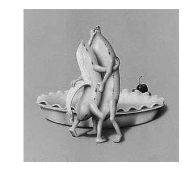
Another fungal disease is more serious. Panama disease attacks the roots of the banana plants. There is no chemical treatment for this disease. Infected plants must be destroyed. Panama disease has affected crops in Southeast Asia, Australia and South Africa. There is concern that it may spread to bananas grown in the Americas. This could threaten an important export product for Central and South America.

The International Network for the Improvement of Banana and Plantain supports research on bananas. The group has headquarters in France and other offices in the major banana-growing areas of the world. The group says that more research must be done to develop improved kinds of bananas. The group says that fungal diseases mainly affect only one kind of banana. In fact, there are five hundred different kinds of bananas. Food and Agriculture Organization of the United Nations has said that the Cavendish banana represents only 10% of world production.

The U. N. agency says farmers should grow different kinds of bananas. This protects against diseases that affect only one kind. Experts warn that disease may cause the Cavendish banana to disappear. This happened earlier to another popular banana because of its genetic weakness against disease.

1.What does this passage mainly tell us?

A. Bananas are the world’s most important food crops.

B. The risk to a popular banana shows need to grow other kinds.

C. There are five hundred different kinds of bananas.

D. How to grow bananas in different countries.

2.Bananas are threatened by disease because   .

A. they grow from seeds

B. they are one of the most valuable exports

C. the only way to prevent it is to put chemicals on their leaves

D. they have genetic weaknesses against disease

3. Panama disease   .

A. doesn’t belong to fungal disease

B. affects the leaves of banana plants

C. destroys bananas more seriously than Black Sigatoka disease

D. has spread to bananas all over the world

4. We can infer from Paragraph 3 that   .

A. the center of the group is in the US

B. the Cavendish banana covers only a small part of the yield of bananas

C. the key to solving the disease is to research all kinds of bananas

D. each fungal disease affects five hundred different kinds of bananas


1.B

2.D

3.C

4.B

【解析】

【文章大意】香蕉由于遗传性的抗病弱点, 在不久的将来有的品种可能会消失。文章列举了两种威胁Cavendish香蕉的真菌病, 国际组织建议农民种植更多种类的香蕉。

1.选B。主旨大意题。根据全文内容和结构判断, 文章主要介绍威胁Cavendish香蕉的真菌类疾病, 进而显示出种植其他种类香蕉的必要性。故答案为B。

2.2】选D。细节理解题。根据第一段内容可知, 香蕉易受病害威胁是因为其遗传上的抗病弱点。后文也有叙述。

3.3】选C。细节理解题。根据第二段前两句可知A项错误; 根据第二段第二句可知这种疾病威胁香蕉作物的根部, B项错误; 根据第二段后三句可知, 这种香蕉疾病已影响到东南亚、澳大利亚和南非, 有可能传播到美洲, D项错误。由文章前两段分别对两种真菌病的描述可知, C项正确。

4.4】选B。推理判断题。根据第三段中“The group has headquarters in France”可知其中心位于法国, A项错误; 根据第三段第三句可知, 应对这种疾病的办法是培育改良品种, 而不是研究所有的品种, C项错误; 根据第三段第四句可知D项错误。由第三段最后一句可判断B项正确。


练习册系列答案
相关题目

I was ten when I first sat with my grandmother behind the cashier(收银台)in her general store.   1. I quickly learned the importance of treating customers politely and saying “thank you”.

At first I was paid in candy.   2. I worked every day after school, and during the summer and on weekends and holidays from 8 a. m. to 7 p. m. . My father helped me set up a bank account.   3. 

By the time I was 12, My grandmother thought I had done such a good job that she promoted me to selling cosmetics(化妆品). I developed the ability to look customers directly in the eye. Even though I was just a kid, women would ask me such things as “What color do you think I should wear? ”I took a real interest in their questions and was able to translate what they wanted into makeup(化妆)ideas. 4. 

The job taught me a valuable lesson: to be a successful salesperson, you didn’t need to be a rocket scientist—you needed to be a great listener.   5. Expect they are no longer women purchasing cosmetics from me; instead, they are kids who tell me which toys they would like to see designed and developed.

A. Later I received 50 cents an hour.

B. Before long, she let me sit there by myself.

C. I ended my selling a record amount of cosmetics.

D. Today I still carry that lesson with me: I listen to customers.

E. My grandma’s trust taught me how to handle responsibility.

F. Soon I found myself looking more beautiful than ever before.

G. Watching my money grow was more rewarding than anything I could have bought.


At the time, I would go out in the evening with my parents. But this time I had borrowed a bicycle from a friend of mine. I didn’t know why, but once I was on my own bicycle, a kind of free feeling flooded through me. The faster I rode, the faster I wanted to go! Far ahead, I rode as if my life depended on it, head down, hands grasping the handbars. I meant to get to Jinghai Bar as fast as I could. . .

Oh! My hands! Don’t come any closer. . . Don’t touch me! That poor doctor just couldn’t get my gloves off. Each time he took a step towards me, I broke into painful shouting. Much later, I discovered that I had crashed(碰撞)heavily with another bicycle, and I hadn’t spoken one word of sense for at least three hours! After some time, my mother arrived at the hospital, her face as white as a sheet, and gave me a hug(拥抱), only then did the doctor begin to stitch(缝合)my head wound, not only did he merrily cut off a long lock of my hair, but used no anaesthetic(麻药)either! Later, I seemed to hear faraway voices saying that my right hand was broken. I almost burst into tears. How would I ever play the piano again?

1. On her way to Jinghai Bar, the writer felt    .

A. nervousB. comfortable

C. light-heartedD. upset

2.Why did the writer ride a bicycle to Jinghai Bar that evening?

A. Because she wanted to attend a party on time.

B. Because she wanted to meet her friend who was waiting for her there.

C. Because she just wanted to join some of her friends and drink some wine.

D. We are not quite sure about what she was really going there for.

3.What did the writer think of the doctor?

A. Friendly. B. Cruel.

C. Hard-working. D. Kind.

4. One thing is sure, that is, before she was wounded she    .

A. often went to Jinghai Bar with her friends

B. liked playing the piano

C. didn’t like any doctors at all

D. would burst into tears when she was in trouble


I still clearly remember that day. I was on the side of the road for almost four hours with my big Jeep. I put signs in the windows that said, “NEED A JACK(千斤顶). ”

Right as I was about to give up, a truck stopped and a man got off. He sized up(对……做出判断)the situation and went back to take a jack. After about two hours, we finished the job with sweats. We were both dirty. His wife produced a large water jug for us to wash our hands in.

I tried to put $20 in the man’s hand, but he wouldn’t take it, so instead I went up and gave it to his wife as quietly as I could. I thanked them up one side and down the other. I asked the little girl, their daughter, where they lived, thinking maybe I’d send them a gift. She said they lived in Mexico. They were in Oregon now so Mommy and Daddy could pick cherries for the next few weeks. After that, they were going to pick peaches, and then go back home.

After I said my goodbyes and started walking back to the Jeep, the girl called out and asked if I’d had lunch. When I told her no, she ran up and handed me a tamale(玉米粽子). I thanked them again and walked back to my car. When I opened the tamale, what did I find inside? My $20 bill! I ran to the truck and the guy rolled down his window. He saw the $20 in my hand, started shaking his head smiling, and with what looked like great concentration said in English: “Today you, tomorrow me. ”Then he rolled up his window and drove away, with his daughter waving to me from the back.

This family, working on a seasonal basis where time is money, took a couple of hours to help a stranger while others passed by quietly.

Since then I’ve helped many people like the Mexican family. I didn’t accept money. But every time I was able to help, I felt as if I was putting something in the bank.

1. From the passage we know that   .

A. the Mexican man couldn’t speak English

B. the author’s car broke down on the road

C. the Mexican family came to Oregon for a visit

D. $20 was a small amount for the Mexican family

2. Why did the author give the money quietly to the man’s wife?

A. Because the man had refused to accept it.

B. Because the man’s wife needn’t wash her hands.

C. Because the author thought the Mexican family was poor.

D. Because the author thought the man’s wife would take it.

3. The Mexican man helped the author because he tended to think that   .

A. it was completely wrong for others to pass by quietly

B. it was quite easy to help the author mend the Jeep

C. it was possible that everyone might get into trouble

D. the author was a polite stranger and needed the help

4. Which of the following is TRUE about the author?

A. He hated those who didn’t offer help.

B. He would send a present to the family soon.

C. He wondered why they didn’t take the money.

D. He considered helping others as saving money in the bank.

5. What can we infer from the passage?

A. The Mexican family lived a richer life than the author.

B. The Mexican family did seasonal work in Oregon each year.

C. The author was inspired to help others by the Mexican family.

D. What made the writer moved was the tamale given by the girl.


At first sight the planet Mars(火星)does not appear very welcoming to any kind of life. It has very little oxygen and water, the temperature at night is below 50 degrees and winds of 100 miles(161 kilometers)per hour cause severe dust storms. However, the surface of the planet seems to show that water flowed across it at some time in the past, and it is believed that there would be enough ice at the poles to cover the planet with water if it melted. Although there is no life on the Mars now, some scientists think there may have been some form of life a long time ago. At that time, the planet had active volcanoes(火山); the atmosphere was thicker and warmer; and there was water. In fact, in some ways the Mars may have been similar to the Earth, where life exists.

Some people believe that the Mars could support life in the future if the right conditions were produced. The first step would be to warm the planet using certain gases which trap the Sun’s heat in the planet’s atmosphere. With warmth, water and carbon dioxide, simple plants could begin to grow. These plants could slowly make the Mars fit to live on. It is judged that the whole process might take between

100, 000 and 200, 000 years. In the meantime, people could begin to live on the planet in a special closed environment. They would provide a lot of useful information about conditions on the Mars and the problems connected with living there.

1. According to the passage, the planet Mars has no   on it.

A. windsB. dust

C. mountainsD. animals

2.It is believed that on the Mars now   .

A. there is a large amount of ice at the poles

B. there is a thicker and warmer atmosphere

C. there are some kinds of simple plants

D. there are many active volcanoes

3. What is the topic of Paragraph 2?

A. Certain gases should be used to warm the Mars.

B. Plants should be grown to make the Mars fit to live on.

C. The Mars could support life on right conditions in the future.

D. People could live on the Mars in a special closed environment.

4. The most suitable title for the passage is   .

A. No Life on the Mars

B. Study of the Mars

C. The Possibility of Life on the Mars

D. Future Conditions on the Mars


The adder is the only poisonous snake native to Britain. Adders have the most highly developed poison injecting mechanism of all snakes, but they are not aggressive animals. Adders will only use their poison as a last means of defence, usually if caught or trodden on. No one has died from adder bites in Britain for over 20 years. By far the most common smake in Britain is the adder. In Scotland, in fact, there are no other snakes at all. The adder is also the only British sanke with a poisonous bite. It can be found almost anywhere, but prefers sunny hillsides and rough open country, including high gournd. In Ireland there are no snakes at all.

Most people regard snake bites as a fatal misfortune, but not all bites are serious, and very few are fatal . Sometimes attempts at emergency treatment turn out to be more dangerous than the bite itself, with amateurs heroically, but mistakenly, trying do-it-yourself surgery and other unnecessary measures.

All snakes have small teeth, so it follows tha tall snakes can bite, but only te bite of the adder presents any danger. British snakes are shy animals and are far more frightened of you than you could possibly be of them. The adder will attack only if it feels threatened, as can happen if you take it by surprise and step on it accidentally, or if you try to catch it or pick it up, which it dislikes intensely. If it hears you coming, it will normally get out of the way as quickly as it can, but adders cannot move very rapidly and may attack before moving if you are very close.

The effect of a bite varies considerably. It depends upon severa things, one of which is the boidy-wight of the person bitten. The bigger the person, the less harmful the bite is likely to be, which is why children suffer far more seriously from snake bites in Britain ,and thought these bites can make some pepe very ill, there are probably just as many cases of bites having little or no effect, as there are of serious illness.

1.What does the underlined phrase “ trodden on” probably mean?

A. Found out B. Heard from C. Stepped on. D. Robbed of.

2.Where are adders to be found?

A. In fertile fields in Scotland.

B. On wild land throughout Britain.

C. In many parts of Britain and Ireland.

D. Everywhere in Britian except Scotland

3.What should you do if you are with someone who is bitten by an adder?

A. Catch the biting adder at onece.

B. Don’t worry about the bitten person.

C. Don’t try to treat the bite by yourself.

D. Operate on the person as soon as possible.

4.What’s the best title of the passage?

A. Poisonous Snakes B. Adders in Britain

C. Take Care oif Sake Bites D. Protec Endangered Adders


违法和不良信息举报电话:027-86699610 举报邮箱:58377363@163.com

精英家教网