题目内容
John did ______ in the exam, I did even ______ .
[ ]
A. bad, worst B. bad, worse
C. badly, worst D. badly, worse

Franz Kafka wrote that “a book must be the ax (斧子) for the frozen sea inside us. ”I once shared this sentence with a class of seventh graders, and it didn’t seem to require any explanation.
We’d just finished John Steinbeck’s novel Of Mice and Men. When we read the end together out loud in class, my toughest boy, a star basketball player, wept a little, and so did I. “Are you crying?” one girl asked, as she got out of her chair to take a closer look. “I am,” I told her, “and the funny thing is I’ve read it many times.”
But they understood. When George shoots Lennie, the tragedy is that we realize it was always going to happen. In my 14 years of teaching in a New York City public middle school, I’ve taught kids with imprisoned parents, abusive parents, irresponsible parents; kids who are parents themselves; kids who are homeless; kids who grew up in violent neighborhoods. They understand, more than I ever will, the novel’s terrible logic—the giving way of dreams to fate (命运).
For the last seven years, I have worked as a reading enrichment teacher, reading classic works of literature with small groups of students from grades six to eight. I originally proposed this idea to my headmaster after learning that a former excellent student of mine had transferred out of a selective high school—one that often attracts the literary-minded children of Manhattan’s upper classes—into a less competitive setting. The daughter of immigrants, with a father in prison, she perhaps felt uncomfortable with her new classmates. I thought additional “cultural capital” could help students like her develop better in high school, where they would unavoidably meet, perhaps for the first time, students who came from homes lined with bookshelves, whose parents had earned Ph. Ds.
Along with Of Mice and Men, my groups read: Sounder, The Red Pony, Lord of the Flies, Romeo and Juliet and Macbeth. The students didn’t always read from the expected point of view. About The Red Pony, one student said, “it’s about being a man, it’s about manliness.”I had never before seen the parallels between Scarface and Macbeth, nor had I heard Lady Macbeth’s soliloquies (独白) read as raps (说唱), but both made sense; The interpretations were playful, but serious. Once introduced to Steinbeck’s writing, one boy went on to read The Grapes of Wrath and told me repeatedly how amazing it was that “all these people hate each other, and they’re all white.” His historical view was broadening, his sense of his own country deepening. Year after year, former students visited and told me how prepared they had felt in their first year in college as a result of the classes.
Year after year, however, we are increasing the number of practice tests. We are trying to teach students to read increasingly complex texts, not for emotional punch (碰撞) but for text complexity. Yet, we cannot enrich (充实) the minds of our students by testing them on texts that ignore their hearts. We are teaching them that words do not amaze but confuse. We may succeed in raising test scores, but we will fail to teach them that reading can be transformative and that it belongs to them.
【小题1】The underlined words in Paragraph 1 probably mean that a book helps to __________.
| A.realize our dreams | B.give support to our life |
| C.smooth away difficulties | D.awake our emotions |
| A.Because they spent much time reading it. |
| B.Because they had read the novel before. |
| C.Because they came from a public school. |
| D.Because they had similar life experiences. |
| A.she was a literary-minded girl | B.her parents were immigrants |
| C.she couldn’t fit in with her class | D.her father was then in prison |
| A.creatively | B.passively | C.repeatedly | D.carelessly |
| A.introduce classic works of literature |
| B.advocate(倡导) teaching literature to touch the heart |
| C.argue for equality among high school students |
| D.defend the current testing system |
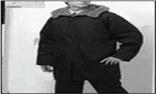
There at a secondhand clothing store in Northampton Mass, my l4-year-old son, John, and I noticed the coat. While the other coats drooped (低垂), this one looked as if it were 41 itself up. The coat was beautifully made, with a Fifth Avenue label and an 42 price of $28, which was popular just then with 43 , but could cost several hundred dollars new. John tried it on and the 44 was perfect.
John 45 the coat to school the next day and came home with a big smile. “Did the kids like your coat?” I asked. “They loved it,” he said, 46 folding it over the back of a chair and smoothing it flat. Over the next few weeks, a 47 came over John. Agreement replaced contrariness (作对) and 48 discussion replaced fierce argument. He became more mannerly and 49 , eager to please. He would generously lend his younger brother his tapes and lecture him 50 his behavior. When I mentioned this 51 to his teacher and wondered what caused the changes, she said laughing. “It 52 be his coat!” Another teacher told him she was giving him a good mark not only because he had earned 53 but because she liked his coat. At the library, we ran 54 a friend. “Could this be John?” he asked surprisingly, 55 John’s new height, appreciating the cut of his coat and holding out his hand, one gentleman to another.
John and I both know we should never 56 a person’s clothes for the real person within them. 57 , there is something to be said for wearing a standard of excellence for the world to see and for 58 what is on the inside with what is on the outside.
For John, it is a time when it is as easy to try on different 59 to life as it is to try on a coat. The whole world, the whole future is stretched out ahead, a vast landscape 60 all the doors are open. And he could picture himself walking through those doors wearing his wonderful, magical coat.
|
1. |
|
|
2. |
|
|
3. |
|
|
4. |
|
|
5. |
|
|
6. |
|
|
7. |
|
|
8. |
|
|
9. |
|
|
10. |
|
|
11. |
|
|
12. |
|
|
13. |
|
|
14. |
|
|
15. |
|
|
16. |
|
|
17. |
|
|
18. |
|
|
19. |
|
|
20. |
|