题目内容

Tour A--Bath & Stonehenge including entrance fees to the ancient Roman bathrooms and Stonehenge--£37until 26 March and £39 thereafter.

Visit the city with over 2,000 years of history and Bath Abbey, the Royal Crescent and the Costume Museum. Stonehenge is one of the world’s most famous prehistoric monuments dating back over 5,000 years.

Tour B--Oxford & Stratford including entrance fees to the University St Mary’s Church Tower and Anne Hathaway's house一£32 until 12 March and £36 thereafter.

Oxford: Includes a guided tour of England’s oldest university city and colleges. Look over the “city of dreaming spires(尖顶)”form St Mary’s Church Tower. Stratford: Includes a guided tour exploring much of the Shakespeare wonder.

Tour C—Windsor Castle & Hampton Court including entrance fees to Hampton Court Palace--£34 until 11 March and £37 thereafter.

Includes a guided tour of Windsor and Hampton Court, HenryⅧ’s favourite palace. Free time to visit Windsor Castle(entrance fees not included). With 500 years of history, Hampton Court was once the home of four Kings and one Queen. Now this former royal palace is open to the public as a major tourist attraction. Visit the palace and its various historic gardens, which include the famous maze(迷宫)where it is easy to get lost!

Tour D--Cambridge including entrance fees to the Tower of Saint Mary the Great--£33 until 18 March and £37 thereafter.

Includes a guided tour of Cambridge, the famous university town, and the gardens of the 18th century.[来

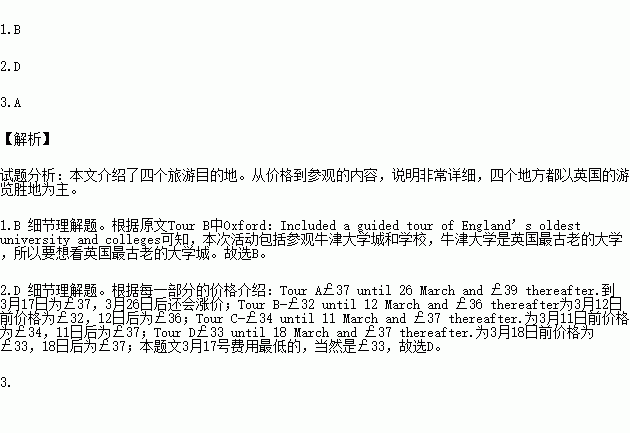
1.Which tour will you choose if you want to see England’s oldest university city?

A. Tour A B. Tour B C. Tour C D. Tour D

2.Which of the following tours charges the lowest fee on 17 March?

A. Windsor Castle & Hampton Court.

B. Oxford & Stratford

C. Bath &Stonehenge.

D. Cambridge.

3.Why is Hampton Court a major tourist attraction?

A. It used to be the home of royal families.

B.It used to be a well-known maze

C.It is the oldest palace in Britain

D. It is a world-famous castle.
练习册系列答案
相关题目

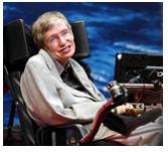
In my first week as a graduate student at Cambridge University in 1964 I met with a fellow student, two years ahead of me in his studies; he was unsteady on his feet and spoke with great difficulty.This was Stephen Hawking.I learned that he had a bad disease and might not live long enough even to finish his PhD degree.

But, amazingly, he has reached the age of 73.Even mere survival would have been a medical miracle, but of course, he didn’t merely survive.He has become arguably the most famous scientist in the world for his brilliant research, for his bestselling books, and, above all, for his astonishing victory over hardship.

Stephen received his “death sentence” in 1964, when I thought it was hard for him to go on with his study.Stephen went from Albans School to Oxford University.He was said to be a “lazy” undergraduate, but his brilliance earned him a first class degree, an “entry ticket” to a research career in Cambridge and a uniquely inspiring achievement.Within a few years of the burst of his disease he was wheelchair bound, and his speech was so unclear that it could only be understood by those who knew him well.But his scientific career went from strength to strength: he quickly came up with a series of insights into the nature of black holes (then a very new idea) and how the universe began.In 1974 he was elected to the Royal Society at the exceptionally early age of 32.

The great advances in science generally involve discovering a link between phenomena that were previously conceptually unconnected — for instance, Isaac Newton realized that the force making an apple fall to earth was the same as the force that holds the moon and planets in their orbits.Stephen’s revolutionary idea about a link between gravity and quantum(量子) theory has still not been tested.However, it has been hugely influential; indeed, one of the main achievements of string theory(弦理论) has been to confirm and build on his idea.He has undoubtedly done more than anyone else since Einstein to improve our knowledge of gravity and he is one of the top ten living theoretical physicists.

1.What impressed the author most about Stephen Hawking?

A.His brilliant research.

B.His bestselling books.

C.His serious disease.

D.His defeating hardship.

2.What made Stephen Hawking start his research career at Cambridge?

A.His death sentence.

B.His “lazy” attitude.

C.His above average talent and ability.

D.His rich experience.

3.It can be inferred that Stephen Hawking was born ________.

A.in the early 1940s

B.in the late 1940s

C.in the early 1930s

D.in the late 1930s

4.What can we learn from the text?

A.Hawking’s theory was proved years ago.

B.Hawking was not as successful as Newton.

C.String theory built on Hawking’s idea.

D.Hawking’s theory has had little influence on others.

5.Which of the following is Not True according the passage?

A.He achieved one success after another in his career despite his disease.

B.He couldn’t walk when the author first met him at Cambridge.

C.He not only survived his disease but contributed greatly to science.

D.He is among the greatest scientists to improve the knowledge of gravity.

Most musicians agree that the best violins were made in Cremona, Italy, about 200 years ago. They even sound better than violins made today. Violin makers and scientists try to make instruments like the old Italian violins. But they aren’t the same. Why are these old Italian violins so special? Many people think they have an answer.

Some people think it is the age of the violins. But there is a problem here. Not all old violins sound wonderful. Only those from Cremona are special. So age cannot be the answer.

Other people think the secret to those violins is the wood. It must be from certain kinds of trees. It must not be too young or too old. Perhaps the violin makers of Cremons knew something special about wood for violins.

But the kind of wood may not be so important. It may be more important to cut the wood in a special way. Wood for a violin must be cut into the right size and shape. The smallest difference will change the sound of the violin. Musicians sometimes think that this is the secret of the Italians.

Size and shape may not be the answer either. Scientists make new violins that are exactly the same size and shape. But the new ones still do not sound as good as the old ones. Some scientists think the secret may be the varnish (清漆), which covers the wood of the violin and makes it look shiny. It also helps the sound of the instrument. Since no one knows what the Italian violin makers used in their varnish, no one can make the same varnish today.

There may never be other violins like the violins of Cremona. And there are not many of the old violins left. So these old violins are becoming more and more precious.

1.What would be the best title for the passage?

A. The Secrets of Cremona Violins

B. The History of Italian Violins

C. Special Musical Instruments

D. How to Make the Best Violins

2.The main purpose of the first paragraph is to _______.

A. list some facts B. raise a question

C. give an opinion D. offer an answer

3.What is still unclear about Cremona violins according to the writer?

A. The shape. B. The size.

C. The wood. D. The varnish.

4.What can we learn from this passage?

A. Modern things are always better than ancient ones.

B. Ancient things are always better than modern ones.

C. Once a cultural relic is lost, it can never be recovered.

D. Varnish for violins will become more and more precious.

违法和不良信息举报电话:027-86699610 举报邮箱:58377363@163.com

精英家教网