题目内容
---Obama won the election. It’s amazing!
---Yes. But the result was within ______ we had expected, ______ brought great joy to many young people and the black.
- A.that; which
- B.that; that
- C.what; what
- D.what; which
第一个空考查的是what引导的名词性从句在句子里做的是within这个介词的宾语,第二个空是由which引导的非限制性定语从句,这里的which指代的是奥巴马当选总统这件事。

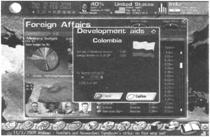 Internal decisions involve managing budgets, security, education, health care and discussion over many proposed laws. You also have to respond to critics. Every decision has a consequence, which changes the political environment. For example, raising taxes will raise criticisms and protests while lowering taxes means you will have less money to play with.
President Obama's plan to improve former president George W. Bush's No Child Left Behind program is an improvement on a good thing. But it doesn't go far enough.
Obama outlined a goal that by 2020, all grade school and high school students are on a path toward college.
However, what we need is a practical plan that not only requires all high school graduates to take at least two years of college but also makes it financially possible for them to do so. We've provided a free public education through the 12th grade. If we're going to keep up—or catch up——with some other countries (like China) in preparing young people for careers, a 12-year education programme no longer is enough.
About 3 million students across the US will graduate from high school this spring. But only 2 million will go on to college, according to a survey by the National Centre for Education Statistics (NCFES). For the more than 1 million who won't go on, money is a main reason. If tuition(学费) were free, about half of them could make up other costs from family or part-time jobs.
Critics (批评家) of free college tuition will say we can't afford it because of the federal deficit (联邦赤字) and other rising costs. Let's see some government spending in detail:
In the last nearly 10 years, the wars in Iraq and Afghanistan have cost us $ 1,000 billion. Federal money which was spent on public primary and secondary education in the last year for which figures are available was $ 47 billion. If we end costly and unnecessary wars and nation-building efforts abroad, the federal government could provide more money on public education, for which state and governments now carry most of the burden.
What's the program No Child Left Behind about this year?
All children being taken good care of by the government.
All grade school and high school students receiving college education.
No child being left alone at home.
All children having good jobs in the future.
The author probably agrees that President Obama's plan ________.
has nothing to do with George W. Bush's program.
will surely succeed in ten years
is about 12-year education for all the children
doesn't contain practical measures(措施) to achieve its goal
If tuition were not paid for, about ________ American students could afford college education.
| A. 3 million | B. 2.5 million | C. 2 million | D. 1 million |
What can we learn from the passage?
The wars in Iraq and Afghanistan were necessary.
The federal government has enough money for the plan.
Critics of free tuition think highly of the plan.
Obama's plan might be difficult to carry out.
After more than a year of bitter political debate, President Obama sat down in the White House East Room on March 23 and signed the 2010 Patient Protection and Affordable Care Act into law with a pen,and then another pen,and another. Obama used 22 pens to sign the  $938 billion health care bill.
The practice of using different pens to sign important legislation(法规)dates at least as far back as Franklin Roosevelt. The reason is fairly simple. The pen used to sign historic legislation itself becomes a historical artifact. The more pens a President uses, the more thank-you gifts he can offer to those who helped create that piece of history. The White House often give pens to supporters of the newly signed legislation. When Lyndon Johnson signed the Civil Rights Act in 1964, he reportedly used more than 75 pens and gave one of the first ones to Martin Luther King Jr. And in 1996, President Clinton gave the four pens he used to sign the Line-Item Veto bill to those most likely to appreciate the bill's consequence.
Once they're given away, some pens end up in museums; others are displayed proudly in recipients'(接受者) offices or homes. But they sometimes appear again, like in the 2008 presidential campaign(竞选活动), when John Macain promised to use the same pen given to him by President Reagan to  cut pork from the federal budget.
Not every President goes for the multipen signature, however. President George W. Bush preferred signing bills with only one pen and then offering several unuse
 d "gift" pens as souvenirs.
【小题1】.We can learn from paragraph 1 that the 2010 Patient Protection and Affordable Care Act .
| A.has been passed easily |
| B.was put forward one year ago |
| C.becomes law in the USA |
| D.is unimportant |
| A.Supporters of the newly signed legislation are likely to get some of them. |
| B.Obama will keep them. |
| C.They will be just set aside |
| D.They will be sold to the public at a high price. |
A. He was ever President in the USA.
B. He took part in the 2008 presidential campaign.
C. He never used the pen given by Reagan.
D. He was only concerned about his own business.
【小题4】What does this passage mainly tell us ?[来源:学。科。网]
A. Obama signed the 2010 Patient Protection and Affordable Care Act.
B. It is a practice to use multiple pens to sign important legislation in the USA.
C. Pens are necessary in the signature.
D. All the presidents like the multipen signature.