题目内容

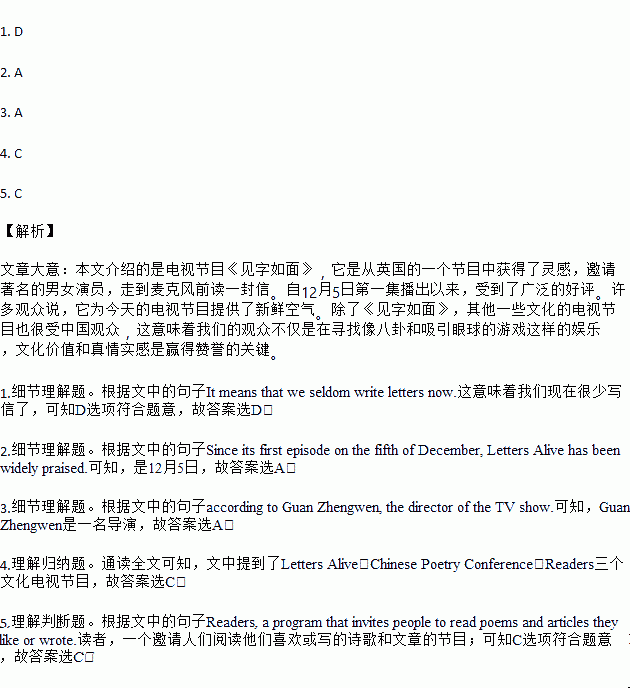
More than 95 percent of people in the world have phones today, according to the United Nations. Phone calls and messages help us easily communicate with others. It means that we seldom write letters now. But a TV show, Letters Alive, is bringing back this old habit.

Letters Alive got its idea from a UK program with a similar name. Both shows invite famous actors and actresses, but there are no funny jokes or different competitions. Instead, it’s just one person walking up to a microphone and reading a letter.

The letters were written by people from different times in history. For example, in one episode (集) they read a letter written by famous writer Xiao Hong to her younger brother in 1941. The letter shows that Xiao Hong missed her brother so much and had great hopes for his future.

“Every letter opens another world for us,” according to Guan Zhengwen, the director of the TV show.” It seems that we can experience the real lives and feelings of the writers.”

Since its first episode on the fifth of December, Letters Alive has been widely praised. Many audience(观众) members said that it has provided a breath of fresh air to today’s TV shows.

Apart from (除了......之外)Letters Alive, some other cultural TV shows have also been well received by Chinese audiences. They include Chinese Poetry Conference (《中国诗词大会》),a classical Chinese poetry competition, and Readers, a program that invites people to read poems and articles they like or wrote.

“This means that our audiences are not only looking for entertainment(娱乐) like gossip (八卦) and eye-catching games,” reported China Youth Daily.“Cultural values and true feelings are the keys to winning praise.”

1.How often do people write letters now?

A. Sometimes. B. Hardly ever. C. Always. D. Seldom.

2.When was the first episode of Letters Alive appeared on TV?

A. On Dec. 5th. B. On Dec. 15th. C. On Sep. 5th. D. On Sep. 15th.

3.What is Guan Zhengwen?

A. A director. B. An actress. C. A host. D. A movie star.

4.How many cultural TV shows are mentioned in the passage?

A. Two. B. Four. C. Three. D. Five.

5.Which is TRUE according to the passage?

A. Phone calls and messages don’t help us easily make contact with others.

B. Letters Alive got its idea from a US program with a similar name.

C. Readers is a program that invites people to read poems and articles they like or wrote.

D. Our audiences are only looking for entertainment like gossip (八卦) and eye-catching game
练习册系列答案
相关题目

Chatting online is now a national pastime in China, especially among the post-90s generation. To some people, however, online chats can seem like a kind of polite conversation. Yet hidden rules and standards do exist, as long as you take the time to look for them.

Get to the Point.

When sending a friend request, include your real name and any other identifying information. Remember, everybody's time is precious. If there's something you want, cut right to the chase. Never send an "are you there?" without any follow-up messages. The quicker that you get to the point, the more likely the other person is to reply.

Send the Right Things.

Please send texts, not voice messages. It might be easier for you to speak than type, but what about the person on the other end? They may be unable to listen to a 59-second message right now. Also, never send personal information by voice message — it is hard to note down. Emojis, GIFs and memes can save the day when you find yourself in an embarrassing conversation, or words fail you.

Try to Understand.

You can always judge a person's mood by their text messages. If the person you're talking to says "good night" or "I'm going to take a shower" that's probably not what they're actually going to do, it is just an excuse to stop talking to you. If someone hesitates for longer than three seconds before saying "yes", they probably really mean "no". If you receive these emojis from friends who are older, read them literally(字面意思) (as a smile, a wave or a laugh).

For the post-90s generation, however, they could be speechlessness.

1.What can you do if there’s something you want when you’re chatting online according to the passage?

A. Send an "are you there?" without any follow-up messages.

B. Send a friend request without any other identifying information.

C. Send it directly without any other useless messages.

D. Send your real name without any follow-up messages.

2.The underlined word "it" in Paragraph 3 refers to"_________".

A. personal information B. voice message

C. Emojis D. GIFs

3.Who will send you a wave to say Goodbye according to the passage?

A. the post-80s generation B. the post-90s generation

C. the post-2000s generation D. the post-2010s generation

4.What is the passage mainly about?

A. How to get to the point when you’re chatting online.

B. Different good ways of sending the right thing.

C. Hidden rules and standards in chatting online.

D. How to understand others through the messages.

5.What is the writer's opinion about chatting online?

A. Your text messages on the phone will show what you're feeling.

B. Using too many emojis while chatting will annoy others.

C. Voice messages make it easier for others to understand you.

违法和不良信息举报电话:027-86699610 举报邮箱:58377363@163.com

精英家教网