题目内容

【题目】(2013黑龙江齐齐哈尔)What does Anna look like

________

AShes kind

BShes tall

CShe likes skating

【答案】B

【解析】What dodoes sblook like?意为某人长得怎么样?look like对外貌的提问,be like强调对性格的提问,所以选B

练习册系列答案
相关题目

【题目】Nowadays, with the development of the Internet, emoji(表情符号)are more and more popular among netizens(网民). Some people even feel difficult to talk online without using emoji. Emoji help netizens to communicate with each other easily and vividly(生动地). Yet, not all emoji are properly used on social media. So we are going to introduce some common but confusing(令人困惑的)emoji to help you have a better understanding of these small signs.

1. A recent survey shows, over 53% people use the emoji when they are chatting online. Some people think it means “I’m shy,” but others only use it when they are surprised or shocked. But what does it really mean? It is still an unsolved question.

2. What do you think of this sign? Believe it or not, 80% of netizens use it under the meaning of “It is not funny at all, but I have to smile.” Is it right? Of course not! It actually means that “I saw what you did(usually bad things) and I want to give you a sinister(奸诈的)smile.”

3. People have very different opinions on this emoji. The Apple company has told that this emoji means “high five(嗨,击掌).” But most people still use the incorrect meaning—“pray”. Some netizens even thought, “If you see this emoji as two people give each other a high five, you must be a bad guy.”

4. According to the official guidelines(官方指南), it is used as “smile through tears(破涕为笑).” However, most young netizens consider this emoji as “Laugh to tears” or simply “LOL”, which means “Laugh out loud”.

You see, emoji are also a kind of language. And different people have different understanding of them.

1After reading the passage, we still can’t understand the emoji ______ well.

A. B. C. D.

2You are playing with your mobile phone while you are doing your homework, your brother sends you this sign , what does he mean?/

A. Send this emoji back to your father

B. Stop doing your homework

C. Put away your mobile phone and do your homework

D. Go on playing with your mobile phone

3When your friend tells you online that he won the first prize in the writing competition, which emoji will you send him?

A. B. C. D.

4The fourth sign means “________”.

A. laugh out loud B. cry out loud C. laugh to tears D. smile through tears

5Why does the writer introduce these four emoji?

A. To help netizens use them properly B. To help netizens use them easily

C. Because they are more important D. Because they are not so common

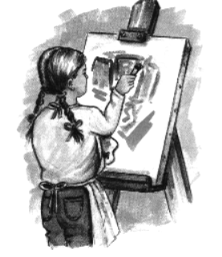
【题目】Do you know what you’d like to be when you grow up? It takes most people many years to find this out. For the young artist Alexandra Nechita, it never really seemed to be a question. From the day she began drawing at the age of two, she was an artist.

Alexandra Nechita was born in Romania in 1985 and moved to California when she was still a baby. As a little child, she loved colouring in her colouring books. Her parents hoped she could spend more time playing with other children, so they took away her colouring books. Alexandra began drawing her own pictures and colouring them in.

By the time Alcxandra was seven ycars old, she had begun painting with oil paints. When

Alexandra took a local art class, her teacher was amazed at the young artist’s unusual style of painting. Alexandra’s work was similar in some ways to the paintings by famous artists like Picasso. These artists did not use a realistic style of painting. They allowed their imaginations to play an

important part in their work. The interesting thing was that little Alexandra had never seen the work of these artists. People called her “Little Picasso”. This was a great honour, but Alexandra’s style of

painting was all her own.

Alexandra’s first public show was held at a Los Angeles public library when she was

only eight years old. People were amazed at how young Alexandra was, but mostly they loved her imaginative artwork. It did not take long for Alexandra and her work to become famous. She appeared on television programs and in newspapers and magazines all over the world. The sale of a single piece can earn the young artist thousands of dollars. But that is not why Alexandra creates artwork. She just cannot imagine doing anything else that would bring her such joy and satisfaction.

Today, Alexandra is a full-time artist. She also works to help support the arts in schools. Alexandra is a strong believer in the power of art as a tool of communication and a bridge to building peace throughout the world.

1When did Alexandra begin drawing pictures?

A. At the age of eight. B. At the age of seven.

C. At the age of two. D. In the year of 1985.

2Alexandra was called “Little Picasso” because .

A. shc learned to paint from Picasso B. her style of painting was like Picasso’s

C. she was one of Picasso’s big fans D. her style of painting was unusual

3What can we learn from the underlined sentence in Paragraph 4?

A. Only painting can make her so happy and satisfied.

B. Only money can make her so happy and satisfied.

C. Anything can make her feel happy and satisfied.

D. Nothing can make her feel happy and satisfied.

4According to the passage, which word can best describe Alexandra?

A. Polite. B. Generous. C. Patient. D. Creative.

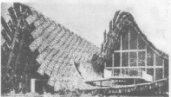
【题目】(题文)All eyes are looking at Milan, Italy this May for the opening of the 2015 World Expo.

Food takes center stage at the six-month event, as this year's theme(主题)is(小题1. Together 148 countries and international organizations are showing new food, energy, science and environmental technology in their pavilions(展馆),(小题2.

China's exhibition area has three themes. "The Gift of Nature" shows crop processes according to the Chinese lunar calendar and the five colors of the soil. "Food for Life" shows the production of foods like tofu, China's famous eight schools of cuisine(菜肴), and its tea culture.(小题3follows the progress of science, including Professor Yuan Longping's hybrid rice.

Designed by Tsinghua University and New York-based Studio Link-Are, the pavilion shows the idea of a "Land of Hope". In fact, the pavilion is based on an important Chinese philosophy -- "Man is part of nature". It shows an attitude of thankfulness, repect and cooperation that characterizes its people. The "land" had fed man from its beginnings and the "hope" suggests a future(小题4. The event's official website Expo 2015 notes,"The underlying theme is balance between mankind and environment, between humanly and nature, Just as farmers look after and protect the earth,(小题5

To see different countries' culture, technology and economy in one place, visit Milan World Expo.

从方框内所给的选项中选出能填入空白外的最佳选项,补全短文。其中有一项为多余选项(10分)

A.so must people care for the planet
B.in which food can offer life to everyone
C."Technology and the Future"
D.which are designed to share their unique food ideas.
E.so we must keep the balance of nature
F."Feeding the Planet, Energy for Life"
A.so must people care for the planet
B.in which food can offer life to everyone
C."Technology and the Future"
D.which are designed to share their unique food ideas.
E.so we must keep the balance of nature
F."Feeding the Planet, Energy for Life"

【题目】阅读下面短文,完成相关任务。

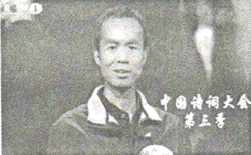
Lei Haiwei, a 37-year-old fast food courier(快递员) from Hunan Province, got first place in a televised Chinese poetry knowledge competition. He beat other competitors, including a master’s degree(硕士学位) graduate from Beijing University, in the third season of the Chinese Poetry Conference on CCTV on April 4, 2018.

“My interest in ancient poems began as early as I was six years old. My father hoped I would grow up to be a man who keeps the mountains, rivers, lakes and seas in mind,” the courier said.

In 2001, the younger Lei found a job in Shanghai and began to read books related to ancient poems at bookstores or libraries in his spare time, since he didn’t make much money. The young man also developed a habit of reciting poems he liked and writing them down after returning home.

Though Lei works as a fast food courier in Hangzhou later, his love for poems never died. Even on his busiest work days, he used any available moment to recite poems. “For

example, I am used to reciting poems when I wait for food at restaurants, and traffic lights

on my way to deliver food. Reciting poems not only enriches my knowledge, but also

makes my job less boring. As for my future plan, I will stick to reading and reciting

poems,” Lei said.

1How old is Lei Haiwei?

____________________________

2What habit did Lei Haiwei develop when he worked in Shanghai?

_____________________________

3What is Lei Haiwei’s future plan?

____________________________

4把短文最后一段中划线句子翻译成汉语。

____________________________

5给短文拟一个恰当的标题。

__________________________

违法和不良信息举报电话:027-86699610 举报邮箱:58377363@163.com

精英家教网