题目内容
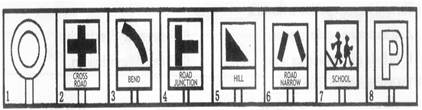
No parking means ______.
[ ]
A. you can't park your car here
B. nobody parks his/her car here
C. there is no parking lot here
D. you needn't park your car here
B. nobody parks his/her car here
C. there is no parking lot here
D. you needn't park your car here
A

练习册系列答案
 教材全解字词句篇系列答案
相关题目
Mr. Brown lived in a house less than two miles from his office, so he was able to drive home every day for lunch. Every time he drove home at noon, he found many cars were parked outside his house and there was no room for his own car. He had to drive somewhere else to park his car. Then he had to walk back home. This made him very angry.
He had put up a board, which said, “ No parking” in the garden facing the road, but nobody noticed it. People seemed to obey(遵守) only a police notice with letters on a blue board:
POLICE NOTICE
NO PARKING
Mrs. Brown suggested that he could steal a police notice. He was afraid to do so. She then suggested that he could make one just like a police notice. He said he was not the police and couldn’t use the word “police”. Several days later, Mr. Brown made a blue board with white letters:
POLITE NOTICE
NO PARKING
“ Oh!” Mrs. Brown said, “You told me you weren’t going to use the word “police”, but why do you use it now?” “Really?” he asked, “Look again.” She started to laugh. “You are really clever.”
【小题1】How many notice boards did Mr. Brown make altogether?
【小题2】Mr. Brown made a notice board which ________________ in the end.
【小题3】We can infer(推断) that ____________ after he put up the blue board.
He had put up a board, which said, “ No parking” in the garden facing the road, but nobody noticed it. People seemed to obey(遵守) only a police notice with letters on a blue board:
POLICE NOTICE
NO PARKING
Mrs. Brown suggested that he could steal a police notice. He was afraid to do so. She then suggested that he could make one just like a police notice. He said he was not the police and couldn’t use the word “police”. Several days later, Mr. Brown made a blue board with white letters:
POLITE NOTICE
NO PARKING
“ Oh!” Mrs. Brown said, “You told me you weren’t going to use the word “police”, but why do you use it now?” “Really?” he asked, “Look again.” She started to laugh. “You are really clever.”
【小题1】How many notice boards did Mr. Brown make altogether?
| A.Only one | B.Two | C.Three | D.None |
| A.was just the same as a police notice |
| B.was different in colour from a police notice |
| C.looked just like a police notice |
| D.said “ POLICE NOTICE, NO PARKING” |
| A.more people will park their cars outside his house |
| B.more policemen will come to park their cars at noon |
| C.fewer people will visit him at noon later on |
| D.fewer people will park their cars outside his house |
 on
the bottle mean?
on
the bottle mean?