题目内容
________ do housework after work.
- A.Both of parents
- B.Both my parents
- C.All of my parents
- D.My both parents
解析:both和形容词性物主代词同时修饰名词时,both要放在形容词性物主代词的前面。

 同步练习河南大学出版社系列答案
 同步练习西南大学出版社系列答案
 补充习题江苏系列答案
 学练快车道口算心算速算天天练系列答案
When you are curious about something and want to know more about it, you can use the way of asking questions. Asking questions is the first step to make discoveries and find interesting answers. The following steps can guide you during the research.
Step 1 Write down the subject that you are interested in on a piece of paper. Just get the main idea down. For example, you might write:
Discover more about robots.
Step 2 Stop and think for a moment about what you have already known about your subject. List what you have already known like the sentences below:
1. The first robot appeared in the USA in 1959.
2. A robot can do housework and act as a teacher.
3. Sometimes a robot catches viruses and causes a lot of problems.
Step 3 What can you do with what you want to learn? By asking questions, start writing down questions about the robots on the paper:
1. What might robots be like in the future?
2. What other things can robots do for people?
3. What kind of power will robots possibly use in five years?
Step 4 Armed with your list of questions, you can now go to the nearest library or computer to begin your research. As you learn more about your subject, you’ll probably discover some new questions.
For example, you might discover that robots can help scientists explore dangerous places, like the sea and outer space. How? What happened? Asking new questions can help you research your subject more widely.
The next time you find something interesting to research, take time to organize your thinking by asking good questions. And remember that learning more always brings more questions.
【小题1】What does the writer advise us to do when we’re curious about something?
| A.To read more books about it. |
| B.To look it up in the dictionary. |
| C.To turn to the teacher for help. |
| D.To raise questions and find the answers. |
| A.Writing down your list of questions. |
| B.Discussing your questions with others. |
| C.Taking your list of questions with you. |
| D.Putting your list of questions under your arm. |
① List what you want to learn. ② Find new problems.
③ List what you’ve already known. ④ Choose a research subject.
| A.④③①② | B.④①③② | C.②③④① | D.③②①④ |
| A.Doing Research onRobots |
| B.Asking Good Questions While Doing Research |
| C.Having Interesting Answers on Robots |
| D.Finding Subjects before Doing Research |
Are the lives of city kids the same as those in villages? In lots of ways, they are very different. But what are the differences?
Hu Peng and his four friends decided to find them out. Earlier this month, they went to live for a week at Huagui Village near Xishui. They went door to door there and asked kids there lots of questions. They wanted to learn more about village kids’ everyday lives, so they asked questions like these: Do your parents teach you how to do housework? How much money do you usually spend on dinner? What would you do if a thief comes into your houses? They also asked 150 city kids the same question.
On April 12, the team gave a report to their class. They told about lots of differences between children’s lives in cities and those in villages. The biggest difference is independence. Hu’s team say that more than 60 percent of city kids can’t do much housework, but more than 80 percent of village kids can care for themselves.
City kids told Hu they cared about school a lot, and they had no time to wash clothes or make their beds. Village kids said they helped their parents with a lot: they cook, clean houses and feed farm animals, Hu’s team also saw that village kids had less pocket money. Many never use computers. They play in rivers or on mountains. Some don’t really like to make new friends.
Hu’s team said their trip gave them more self-confidence(自信心) because they were doing something by them-selves. But it also worried them a bit because they saw they still had a lot to learn. “When we grow up, our parents can’t take care of us,” Hu said. “We have to learn to take care of ourselves. ”
请根据短文内容完成下表信息:
|
Kids in the city |
Kids in the country |
|
Can’t do much housework |
1.____________________ |
|
No time to wash clothes or make bed |
2.____________________ |
|
Have pocket money |
Have less pocket money |
|
Use computers |
3.____________________ |
|
4.____________________ |
Don’t like to make new friends |
假如你叫李明,最近你和你父母就“周末学生该不该与同学外出活动”进行了讨论.
现在请你以Should teenagers go out with their friends on weekends? 为题,参照表内所提供的信息,写一篇英语短文.
|
Your parents’ ideas |
Your ideas |
|
1.go over lessons |
1. ----- |
|
2.have a good sleep |
2. ----- |
|
3.help parents do housework |
3. ----- |
注意: 1.开头部分已写好,你只需接着写.
2.所写内容必须包括表格中他们的想法和你的至少三个想法.
3.词数:70个左右.
Should teenagers go out with their friends on weekends?
Recently I’ve had a discussion with my parents about whether teenagers should go out with their friends on weekends.
 I
love it at night. It’s peaceful. And when it cools
down I sometimes do some ironing. I don’t
really care for it. I work full-time and I am too busy for most housework. I
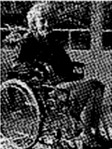
remember the old woman who taught me to iron. I was about 15 and I had to get a
job taking care of a woman to make a living. She had been an able-bodied,
healthy woman until the accident that caused her to be paralyzed.
I
love it at night. It’s peaceful. And when it cools
down I sometimes do some ironing. I don’t
really care for it. I work full-time and I am too busy for most housework. I
remember the old woman who taught me to iron. I was about 15 and I had to get a
job taking care of a woman to make a living. She had been an able-bodied,
healthy woman until the accident that caused her to be paralyzed.