题目内容
【题目】阅读下面的短文,并根据短文后的要求答题。
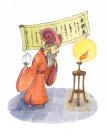
Zhuge Liang lived during the Three Kingdoms period. He was famous for his talent and loyalty (忠诚).
When Zhuge Liang was young, he lived the life of a farmer in Nanyang . Liu Bei visited him three times. Finally, Zhuge Liang promised to do his best to help Liu Bei. A few years later, they built the state of Shu.
After the death of Liu Bei, his son Liu Shan became the emperor of Shu. Zhuge Liang helped him rule the state. He was the prime minister, but he took care of everything, no matter how small it is. (3)Because of his hard work, the state became much stronger than before.
At that time, the state of Wei was an enemy of Shu. Zhuge Liang led the army to fight Wei many times. Before he left,(4) Zhuge Liang wrote a letter to the emperor. At the end of the letter, he said, “I will give myself to the people and the country until the last day of my life.” The war between Shu and Wei lasted for a long time. Finally, Zhuge Liang became sick and died.
It tells us …
(5)Zhuge Liang spent all his time working for his people and country. A great man like him will always be remembered.
【1】Did Zhuge Liang live in the Spring and Autumn period?
_______________________________________________________________________________
【2】How many times did Liu Bei visit Zhuge Liang?
_______________________________________________________________________________
【3】将(3)改为because引导的复合句。
_______________________________________________________________________________
【4】将(4)改为被动语态。_______________________________________________________________________________
【5】将(5)用take改为同义句。
_______________________________________________________________________________
【答案】
【1】No, he didn’t.
【2】Three times.
【3】Because he worked hard, the state became much stronger than before.
【4】A letter was written to the emperor by Zhuge Liang.
【5】It took Zhuge Liang all his time to work for his people and country.
【解析】
诸葛亮是三国时期的一个著名人物,他因他的智慧和忠心而闻名。他辅佐刘备建立了蜀国,他的一生都在为他的国家和人民做贡献,他的名句“鞠躬尽瘁死而后已”至今仍在流传。
【1】根据短文开头第一句话Zhuge Liang lived during the Three Kingdoms period.可知,诸葛亮生活在三国时期,不是春秋时期,故这个问题的答案是否定的。
【2】根据短文第二段中Liu Bei visited him three times.可知,刘备拜访了诸葛亮三次,所以有“三顾茅庐”的故事。由此可知答案为Three times。
【3】原句使用了because of表示原因,后面跟名词短语,because是连词,后面引导从句,因此我们应将这个名词短语改用句子的形式表达,即Because he worked hard, the state became much stronger than before.,主句不用变化。
【4】这个题目要求将这句话变为被动语态,首先我们应把原句的宾语a letter变为主语,再将谓语动词部分变为被动形式,其构成是be+过去分词,注意原句时态不能改变,故应用过去时的被动语态was written;后面的to the emperor照抄;原句的主语前加by,意为“被”。
【5】原句中使用的是spend表示花费的句型,题目要求改为take,它常用于句型It takes sb. +一段时间+to do sth.,注意时态应一致,故应为It took Zhuge Liang all his time to work for his people and country.
这篇短文给我们介绍了三国时期的著名人物诸葛亮的故事。文章是记叙文,介绍的这个人物是学生们非常熟悉的,因此在理解文章内容时会比较容易。题型是任务型阅读,题目设置有回答问题和句型转变。回答问题考查我们对文章细节内容的理解,答案常可以直接在原文找到,注意从题干中寻找关键词,定位原文相关地方即可。例如第1小题,这是一个一般疑问句,问诸葛亮是不是春秋时期的,这在短文的一开头就告诉我们,他是三国时期的,所以这个问题的答案应该是否定的。后面三个题目是句型转换,考查了同义句和被动语态,注意正确使用基本句型和结构。如第4小题,要求改为被动语态,首先我们应把原句的宾语a letter变为主语,再将谓语动词部分变为被动形式,其构成是be+过去分词,注意原句时态不能改变,故应用过去时的被动语态was written;后面的to the emperor照抄;原句的主语前加by,意为“被”。