题目内容

任务型阅读:

We all need a healthy environment, but we produce waste every day and it does harm to our environment. Though we are young, we can still do something to help. In fact, even the simplest everyday activities can make a real difference to the environment. Here are some ideas for you to live a green life.

Remember these three words; reduce(减少), reuse and recycle(循环使用).

Reduce means" use less". Don't waste things. This saves money and reduces pollution and waste going into the environment. Before we buy something new, think if it is really necessary or maybe the old one will be just as good! When we do buy thing, choose local products if possible, and try not to buy too many things from abroad.

Reuse mean" use again". Use things for as long as possible. When we buy things, make sure that they last a long time. We should take care of them so that they will last, and we should repair them if we can instead of throwing them away and buying new ones. Don't use a paper cup or a paper bag. It's better to use a china cup(瓷杯) and a lunch box because you can use them again.

Recycle means" change things into something else". Although it takes energy to change something into something else, it's better than throwing things away or burning them. Find out what can be recycled in your neighbourhood and take part in recycling programmes. We should also buy products made from recycled materials, such as recycled paper, to help save trees.

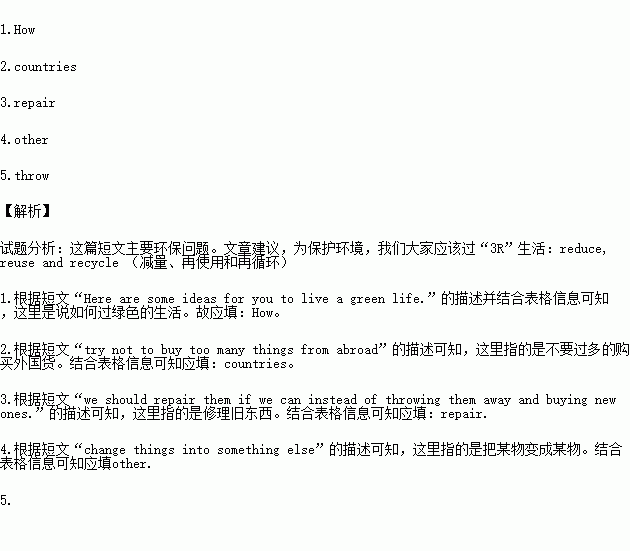
Title: 1. to Live a Green Life

We produce waste every day and it is bad for us. We can do something to help.

Ideas

Do

Don’t

To reduce

Use less

*Try to save something

*Don’t buy too many things from foreign 2.

To reuse

Use again

*Use things for us long as possible.

*Buy things that last long.

*Take care of things or 3. the old things.

Don’t use paper cups or bags.

To recycle

Change things into some 4. things.

*Join in recycling programmes.

*Buy products made from recycled materials.

Don’t 5. things away or burn them.

练习册系列答案
相关题目

Perhaps you’ve seen the English letters “WC” in your city. They show public toilets. But do you know it is far from elegant (优雅的) English? In fact, foreigners from English-speaking countries rarely use the letters.

Workers in our city are changing “WC” signs all over the city. The government is spending much money changing all the bad English on signs and restaurant menus. Many other places in China are following our steps.

“WC, or water closet, is old-fashioned English. It sounds dirty to me,” says Charlie Shifflet, a young man from the US. The old sign will become “Gents/Men” and “Ladies/Women”.

“I see lots of poor English in everyday life, and not only on signs,” he says. “I know what they mean. But they are Chinglish(中式英语), not real English. For example, when someone says to me ‘My hometown is Henan Province’, I know he should say: ‘My hometown is in Henan Province’. ‘Hometown’ is a smaller place in a province.” The common mistakes he picked up include “Not Entry”, which should be “No Entry”, “Direction of Airport” should be changed to “To the Airport”. And it is “room rate”, not “room price”. And remember to “Keep off the grass”, rather than “Care of the green”.

1.What does the writer think of the use of “WC”?

A. He doesn’t think it means water closet.

B. He doesn’t think it old-fashioned English.

C. He doesn’t think it proper(正确的)for a sign.

D. He thinks it elegant English.

2.Charlie Shifflet ____________.

A. is a Chinese living in America

B. thinks Chinese people are sometimes using incorrect English

C. likes to hear or see Chinglish

D. sometimes uses Chinglish

3.The last paragraph is about ____________.

A. why there are so many Chinglish signs

B. examples of Chinglish

C. where Chinglish signs are

D. who uses Chinglish signs

Do you know Xishuangbanna? It’s a very beautiful place. It lies in Yunnan. The Dai people live there. Their homes are wonderful. The houses are very big and have long legs to hold (支撑) them up. Sometimes those legs are over two metres tall.

It can be very hot in Yunnan. But the Dai people do not need air conditioners (空调) to keep cool. Their houses usually have two floors. One half of the second floor is the living room. The living room has a balcony. The other half of the second floor is their bedroom. There is a long corridor (走廊) between the living room and the bedroom.

You must always take off your shoes before you go into a Dai family’s house. They like to keep their houses clean. The bed is made of bamboo. The family’s tables, chairs and cupboards are all made of bamboo too. It often rains in Yunnan. Pigs and chickens live on the first floor, because it is a good place to stay dry.

1.Where do the Dai people live?

A. In big flats. B. In small flats.

C. In big houses. D. In small houses.

2.The writer doesn’t tell us ________.

A. how many floors the Dai people’s house has

B. the things in the Dai people’s house

C. the rooms in the Dai people’s house

D. why it’s cool in the Dai people’s house

3.You may find the things except (除了) ________ in a Dai family’s house.

A. an air conditioner

B. a bamboo bed

C. a bamboo cupboard

D. bamboo chairs and tables

4.The underlined word “dry” in the paragraph may mean ________ in Chinese.

A. 潮湿的 B. 干燥的 C. 醒着的 D. 安全的

5.Which of the following is NOT true?

A. Xishuangbanna is a beautiful place.

B. The Dai family’s houses are usually very clean.

C. It’s easy for the Dai people to get bamboo.

D. The Dai people’s houses are two metres tall.

违法和不良信息举报电话:027-86699610 举报邮箱:58377363@163.com

精英家教网