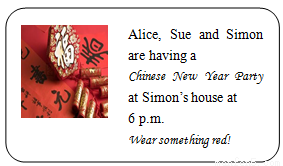
Several days ago,,1 went to my aunt’s home and saw my cousin who is studying English linguistics in a university. He showed me his learning materials.H ere are two pages of t

Now I know at some point in history, the meanings of some common words that we see every day meant something much different. The English language is developing all the time.

Nice

Generally speaking, the word “nice” is quite an expression of praise. However, back in the late 12th century, if someone said you were “nice”, it was far from saying good words about you.

Very long ago, “nice” was used to mean “foolish” and “stupid”. That sounds more like the kind of words that would start a fight, not put a smile on someone’s face. Later on in the 13th century, ‘nice” came to mean “shy and nervous”. During the 14th century, it even meant “being careful”. But finally in the 18th century, it changed to the kinder meaning we know today, and ever since then, people have been using it in a lovable way.

Sad

All of us get sad from time to time. It’s a usual part of life. A loved one passes away. We expect too much progress in an exam. Or the store is out of our favourite drink. These are all things that can make us sad.

However, once upon a time, “sad” had a very different meaning. Back in the 14th century, it was the perfect word if you had eaten too much food at dinner.

Through the years, the meaning of “sad” changed to “heavy” and then “tired”. Interestingly, when “sad” took on its present meaning, it was actually used instead of “unrot”, an old English word that was the opposite of “rot” that meant “cheerful” or “glad”.

1.When did "nice" come to mean "shy and nervous"?

A. In the late 12th century. B. In the 13th century.

C. During the 14th century. D. In the 18th century.

2.The underlined word "these" refers to指代) the following except that________.

A. a loved one passes away

B. we expect too much progress in an exam

C. the store is out of our favourite drink

D. we have eaten too much food at dinner

3. The purpose of the passage is to tell us .

A. the meanings of all words are different at some point in history

B. my cousin learns English well because of his learning materials

C. we should know about all the different meanings of words in history

D. the meanings of some words are changing because language is developing

"Everything happens for the best." my mother said whenever things weren't going my way. "Don't worry. One day your luck will change."

I found mom was right after I finished my college education. I had decided to try for a job in a radio station. I wanted to host a sports program one day. I went to Chicago and knocked at the door of every station. But I got turned down every time.

In one station, a kind lady said my problem was that I hadn't got enough experience." Get some work in a small station and work your way up," she said.

I went back home. I couldn't get a job there, either. I felt really down. "Your luck will change," Mom said to me. I tried another radio station in Iowa. But the owner told me he had already had someone. As I left his office, I asked, "How can someone be a sports announcer (播音员) if he can't get a job in a radio station?"

I was waiting for the lift when I heard the man call. "What did you mean? Do you know anything about football?" He put me in front of a microphone and asked me to try to imagine that I was giving my opinion on a football game, I succeeded.

On my way home, Mom's words came back to me," One day your luck will change, Son. And when it happens, you'll feel doubly good because of all the hard work you've had." At that moment I knew just what she meant.

1.What job was the writer most interested in?

A. A sportsman B. A sports announcer C.A shop assistant

2.The underlined sentence "But I got turned down every time." in Paragraph 2 most probably means "______"

A. But I was successful every time

B. But I was refused every time

C. But I lost my way every time

3.The writer didn't get the job in Chicago, because ______.

A. he was too young

B. he didn't get college education

C. he hadn't enough experience

4.Where did the writer find a job?

A. In Iowa.

B. In his hometown.

C. In Chicago.

5.What's the best title for the passage?

A. I Was Lucky to Find a Job

B. No One Is Always Lucky

C. Everying Happens for the Best

违法和不良信息举报电话:027-86699610 举报邮箱:58377363@163.com

精英家教网