题目内容

阅读下面对话,从方框内7个选项中选择5个恰当的句子完成此对话。

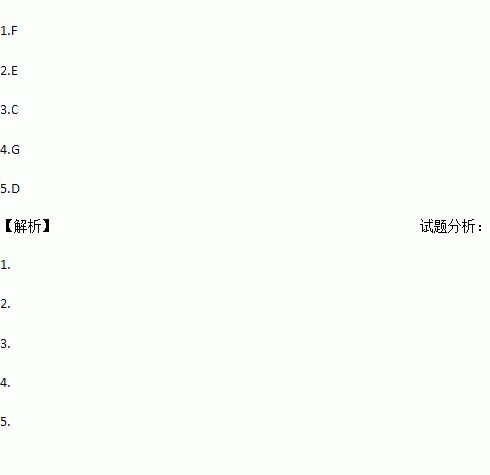
Michael: Hey, John.1.?

John: Well, I live near my school, so I get up at a quarter to seven. I never go to school late.

Michael: Do you have breakfast at home?

John: Yes,2..

Michael: When do you go to school?

John:3., so I go to school at seven forty-five.

Michael:4.?

John: I leave school at five past five and5..

A. When do you play games
B. I have lunch at school
C. Class begins(开始) at eight o’clock
D. I get home at five thirty
E. I usually have some cakes and a glass of milk
F. What time do you usually get up on weekdays
G. When do you get home
 

练习册系列答案
相关题目

A man sat at an underground station in Washington, D.C., and started to play the violin. It was a cold day in January. He played six Bach(巴赫)pieces for about 45 minutes. It was rush hour and thousands of people went through the station, most of them on their way to work.

Three minutes went by and the first person, a middle-aged man, noticed there was a musician playing. He slowed down and stopped for a few seconds and then hurried up to meet his schedule.

After a minute, the violinist received his first dollar tip: a young woman threw the money in the box and continued to walk. Then another few minutes went by and someone stood against the wall to listen to him, but the young man looked at his watch and started to walk again. Clearly he was late for work.

During the musician’s performance, only six people stopped and stayed for a while, twenty gave him money but continued to walk. When he finished playing, no one applauded(鼓掌). No one knew the violinist was Joshua Bell, one of the best musicians in the world.

This is a real story. Joshua Bell playing in the underground station was organized by The Washington Post(《华盛顿邮报》)as part of a social experiment. One of the conclusions from this experiment could be: If we do not have a moment to stop and listen to one of the best musicians in the world playing the best music, how many other things are we missing?

1.The story took place on __________.

A. a cold morning B. a winter evening C. a freezing weekend D. a January afternoon

2.The first dollar tip for the musician was from __________.

A. a middle-aged man B. a young man

C. a young woman D. a small girl

3.The performance in the underground station lasted for about __________.

A. an hour B. 45 minutes C. 20 minutes D. 6 minutes

4.When the musician was playing the violin, 26 people __________.

A. gave him cheers B. introduced themselves to him

C. recognized him D. gave response to his performance

5.The people going past Joshua Bell __________.

A. showed interest in his violin B. seemed in their hurry

C. were on their way home D. acted rudely to him

6.The purpose of this experiment was to __________.

A. observe what people usually did in the underground

B. let us know more about the importance of saving time

C. do a survey on how many people were fond of music

D. make us pay more attention to nice things around

As is well known, saying “no” is not easy at all. But sometimes we have to learn to say “no”. To learn to say “no”, we have to first understand what’s stopping us about it. There are some common reasons why people find it hard to say “no”.

You want to help others. You are a kind soul(灵魂) at heart. You don’t want to turn the person away and you want to help when possible, even if it may take up your time.

Afraid of being rude. I was brought up under the idea that saying “no”, especially to people who are older, is rude. This thinking is common in Asian culture, where face-saving is important. It means not making others look bad or lose faces.

Wanting to be agreeable. At times, you find you are not in agreement. You don’t want to keep yourself away from the group, so you agree to do others’ requests(请求).

Fear of conflict(冲突). The person might be angry if you refuse him. This might lead to an ugly conflict. Even if there isn’t, there might be disagreement which might lead to bad effects(影响) in the future.

Fear of losing opportunities(机会). Sometimes, saying “no” means closing doors or losing opportunities. It may make you feel worried. For example, one of my friends was asked to work in another department(部门) in her company(公司). Since she liked her team, she didn’t want to go. However, she didn’t want to say “ no” as she felt it would affect her promotion(晋升) opportunities in the future.

71题完成句子;72~73题回答问题;74题找出并写下全文的主题句;75题将画线句子译成汉语。

1.In Asian culture, it is ______________________________ to say “no” to people who are older.

2.Why do you agree to do others’ requests?

____________________________________________________________________.

3.What does saying “no” mean sometimes?

___________________________________________________________________.

4._________________________________________________________________.

5._________________________________________________________________.

违法和不良信息举报电话:027-86699610 举报邮箱:58377363@163.com

精英家教网
