题目内容

缺词填空。

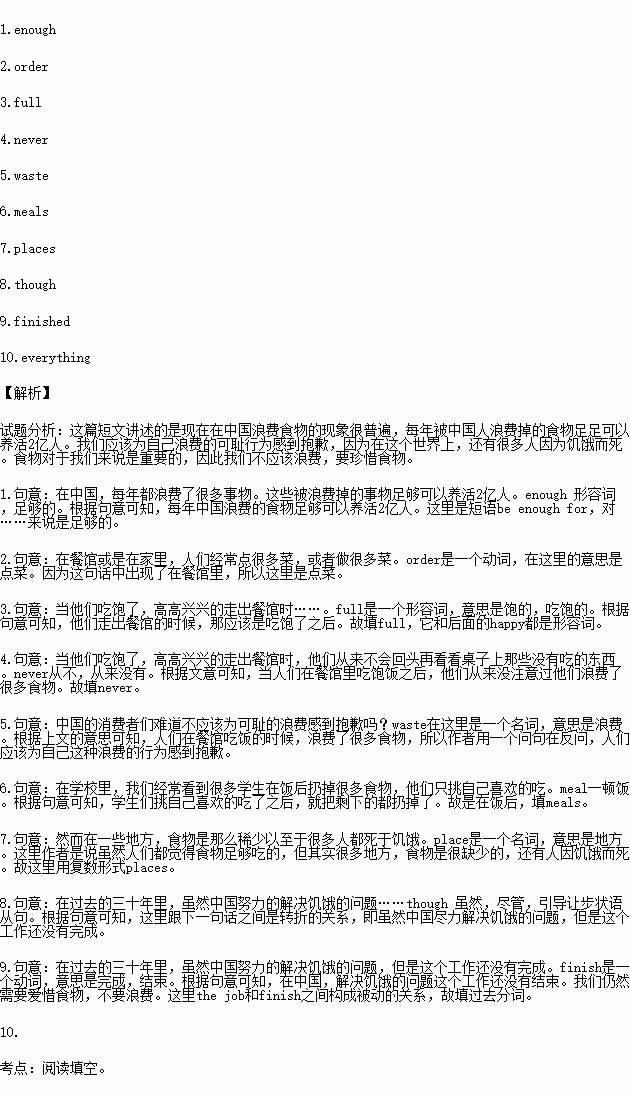
In China, a lot of food is wasted every year and the waste food is e____________for 200,000,000 people. The food is wasted in restaurants, at home and in schools, etc.

In restaurants or at home, people often o __________ or cook too much food. But they can’t eat it up . When they go out of a restaurant, f __________ and happy, they n __________ look back at the uneaten food on the table again. Should Chinese consumers(消费者) feel sorry for the terrible w __________ ?

In schools, we can often see a lot of students throw food away after m __________ and they only eat the food they like.

Everyone is supposed to have enough food to eat. However, in some p__________ , the food is so little that a lot of people died from hunger. T __________ China has tried hard to solve the problem of hunger over the past thirty years, the job is not f __________yet. Food is important to us all. We can’t live without food. So it is necessary for us to love food and try to eat up e __________ on our plates. When we eat in restaurants, we should pack up the leftovers. We also need to tell other people to stop wasting food as soon as possible.
练习册系列答案
相关题目

阅读下列短文,从各题所给的A.B.C.和D项中选出最佳的选择,并在答题卡上将该选项涂黑.

Getting electricity has always been a problem for the 173 people living in Nuevo Saposoa, a small village in Peru, South America. However, things went from bad to worse in March 2015 after heavy rains damaged the only power cables in the area. The villagers were forced to use oil lamps, which are not only expensive but also dangerous because of the harmful gases they produce.

Luckily, researchers at the University of Technology (UT) in Lima, Peru heard about their problem and found a wonderful solution. They made a lamp that can be powered by plants and soil, both of which can be easily found in the Amazonian rainforest where the village lies. The lamp takes energy from a plant growing in a wooden box and uses it to light up an LED light bulb.

While that may sound amazing and even impossible, the science behind the ides is quite simple. As plants create their food (using the sun’s energy, water and chemicals from the soil), they also produce waste which they return to the soil. Tiny animals in the soil eat this waste and they produce electrons – the building blocks of electrical energy. The UT team put special sticks inside the soil to capture the energy and keep it in the lamp’s batteries for later use. The researchers say a single charge can power a 50-watt Led light for two hours - enough time for local villagers to get their evening work done.

The university gave ten Plant Lamps to the villagers of Nuevo Saposoa in October 2015. So far, they have been a huge success! Elmer Ramirez, the UT professor who invented the lamp, believes the Plant Lamp could help improve the lives of many people, especially small rainforest communities, 42% of whom have no electricity.

1.What are the problems of oil lamps according to Paragraph 1?

A. They are difficult to use and create pollution

B. They are expensive to buy and easily damaged

C. They are difficult to repair and produce little light

D. They are expensive to use and can be bad for health

2.The electricity made by the Plant Lamp comes from______.

A. plant food B. plant waste

C. the soil’s heat D. the sun’s energy

3.What is true about the Plant Lamp?

A. It can be made by local people

B. It is much easier to use than oil lamps

C. It can produce all the electricity the village need

D. The things it needs to make electricity are easy to find

4.The Plant Lamp’s inventor believes it could be most helpful for _________.

A. rainforest communities B. cars

C. poor people in cities D. farmers

5. What is the purpose of the passage?

A. To report on a new invention

B. To explain a new scientific theory

C. To describe how electricity is made

D. To discuss the problems of poor villages

阅读理解。

We may know that there are four basic periods(时期) for human beings to pass through when you enter and live in another country. This process helps you deal with culture shock(冲击).

Culture shock begins with the "honeymoon period". This is the time when you first arrive in a place where everything about the new cu1ture is strange and exciting. You see new things, hear new sounds and language, eat new kinds of food. This period can last for quite a long time because you feel very happy.

Unluckily, the second period can be more difficu1t. After you have got used to your new life, you can become very tired and begin to miss your motherland, your family, your friends, your pets and so on. Al1 the little prob1ems in life seem to be much bigger and more worrying when you face them in a foreign country. This period can be very difficult and lead to moving backwards quickly.

The third period is called the "adjustment period". This is when you begin to realize that things are not so bad in the new country. Your sense of humor usually becomes stronger and you realize you are becoming stronger by 1earning to take care of yourself in the new place. Things are still difficult, but you are now a survivor.

The fourth period can be cal1ed "at ease at last". Now you feel quite comfortable in your new place. You can deal with most problems that you have. You may still have prob1ems with language, but you know you are strong enough to deal with them. At this time, you may feel a little uncomfortable if you go back to your motherland.

1.According to the passage, culture shock usually happens when you ______.

A. get married to a foreigner

B. live in a big city

C. go to live in a foreign country

D. meet foreigners in your motherland

2.During the first period of the process, you feel _________.

A. sad and lonely

B. happy and excited

C. angry but strong

D. easy but uncomfortable

3.You will find that you are a survivor in _______.

A. the 1st period B. the 2nd period

C. the 3rd period D. the 4th period

4.The fourth period can be regarded as a period of being _____.

A. relaxing B. worrying

C. tiring D. disturbing

5.From the passage we can conclude that ______.

A. living in another country is fun

B. it’s boring to live in another country

C. knowing about culture shock is hard

D. it’s not easy to deal with culture shock

违法和不良信息举报电话:027-86699610 举报邮箱:58377363@163.com

精英家教网