题目内容
B. how
C. what
D. if

 智慧小复习系列答案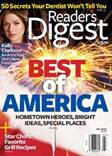
Reader’s Digest is a monthly magazine. Before the 1980s, it belonged to a privately held company, which was started in 1922 by Lila Bell Wallace and Dewitt Wallace. This magazine is small and easy to carry, just half the size of most American magazines, which caused a phrase in 2005, “America in your pocket.” It is the best selling magazine in the USA. At present, its circulation(发行量) in the USA has reached 10 million copies and the number of the readers there is 38 million. Its global circulation outside the USA has reached 40 million people throughout more than 70 countries in 21 languages.
This magazine’s focus(焦点) is not news but more of cultural views because the editors think people now can get timely news from somewhere else. They hope this magazine can give readers something that is about special personal experiences, something the readers can share with their families. In different countries, this magazine provides a window to the world for the local readers. Some parts of the magazine are about the local customs and interests of the local readers. The other parts give the local readers information from all over the world.
This magazine actually used to be a family business until the Wallaces died in the 1980s. Because they had no children, there was no one to take over the company. Sixteen years ago, this company went public and became a public company.
【小题1】How often does Reader’s Digest come out in the USA?
| A.Once a year. | B.Once a month. | C.Once a week. | D.Once a day. |
| A.38 million. | B.40 million. | C.78 million. | D.108 million. |
| A.something about the timely news |
| B.some special personal experiences |
| C.some information from all over the world |
| D.the local customs and interests of the local readers |
You have probably heard it before, most likely from your English teacher. If you want to become a good writer, read good writing. Unluckily, you may not have understood what did good to you and even what you were supposed to get from that experience.
As you start reading a book, poem, or story, do so with no thought at all and the experience will improve your writing. you may not have understood what did good to you and even what you were supposed to get from that experience.
or to learn. As you progress through the work, think about whether it is “easy” reading or not. Do you become so interested in the subject and flow of the writing that you completely forget the person who wrote it, or does the composition sometimes call too much attention to itself through words and phrases that seem out of place or unexpected? The second situation is a chance to learn from the writer’s mistakes. In fact, the reader should not have to worry about how a writer does “his thing” ... he should be able to just enjoy and learn. Every time a word strikes you as poorly chosen, stop to consider why it has this effect. Also, do not spend a lot of time analyzing (分析) the passage but put more efforts in enjoying it from the whole.
Another thing I do, particularly with nonfiction (非小说) books, is to select a part to read as if it is a completely separate work. Once again, read as a common reader rather than a critic (批评家). For learning how words and phrases work together on the most basic level, however, nothing is more suitable than devoting yourself to reading poems. A poet is often trying to put a book’s worth of meaning and feelings into lines, and every side of the work shows a very close attention to craft (工艺).
As you can see, there is no simple way of reading to improve your writing. The key is not to make it boring. Select writers you admire or like most, and enjoy their works as anyone else would. As long as you are reading, you are improving yourself as a writer.
| Improving Your Writing by Reading | |
| Facts | Reading good writing 【小题1】 you become a good writer. You don’t understand the 【小题2】 of reading and what to get from reading. |
| Ways | Read not to learn but for 【小题3】 . 1) Develop a great 【小题4】 in the subject and flow of the writing. 2) Learn from the writer’s 【小题5】 if possible. 3) 【小题6】 shouldn’t be spent in analyzing the passage but in enjoying the passage from the whole. |
| Read as a common consumer rather than a critic. 【小题7】 yourself to reading poems and enjoy the lines. | |
| Conclusions | Don’t make yourself 【小题8】 with reading. Select your 【小题9】 writers and enjoy their works. You are sure to make 【小题10】 during reading. |