题目内容
2.Travelling with your belongs on your back,or backpacking is self-planned budget (预算) touring using low-cost transport,and often going on foot.Backpackers don't carry suitcases or stay in pricey hotels.Instead,they walk around with backpacks filled with everything they need,ready to sleep under the stars if necessary.With their limited budget,they need to choose lodgings (住宿) and transport based on an old saying-the lower the price,the better.The lure (吸引力) of adventure has made backpacking a popular travel style among young people and students who are seldom owners of fat wallets.They prefer exploring a place by themselves,with only a printed map,or a smart phone on hand.
"A package tour may suit a family's needs,but it's not my cup of tea,"says Betty Lam,who went backpacking in New Zealand with three friends last summer."I want to explore a place according to my choice,my timetable and myself."
Were there any particularly memorable events on the trip?
"Once,the train to Auckland was put off and two of our group were hungry,so they left their backpacks with us and went to a nearby shop to buy something to eat.I still remember the scene with Tammy and me running flat out to catch the train,carrying four huge backpacks.The other two were racing behind us as they'd panicked when they saw the train getting ready to pull away from the station.I held the train door open while Tammy was shouting."Quick-jump in!"Susie came in head first with June landing on the top of her like a sack of potatoes!It was so funny!"
So was the trip worth all the effort?
"Definitely.True,we had a few quarrels (争吵); we have different interests,and it wasn't easy to please everybody.But we managed to reach a compromise (妥协) every time.Travelling with friends helps you learn about getting on with people and working together.All of us had gained a lot by the end of the holiday-the four of us had become really good buddies."
What should backpackers always carry with them?
Betty laughs-"not too much!Comfortable walking shoes are important.A raincoat is necessary and bring some practical clothes."
So,is that everything to bear in mind?
"Well,yes and no,because you can't prepare enough.You need much information about where you're going to stay,transport,food,etc.Most importantly,you must have insurance (保险)-just in case your money,passport or backpack get stolen,or you get sick.Take time planning and you'll have fun safely."
53.What do backpackers usually do?D
A.Stay in pricey hotels.
B.Face a lot of dangers.
C.Spend much money.
D.Choose cheap transport.
54.Which of the following statements about Betty is true?B
A.Betty preferred travelling with her family on holidays.
B.The friendship improved as a result of their adventures.
C.Only half of Betty's group caught the train to Auckland.
D.Betty toured New Zealand with backpackers she met there.
55.What's the main purpose of the passage?C
A.To give us some advice on backpacking.
B.To tell us about Betty's travelling story.
C.To introduce a hot travel style,backpacking.
D.To encourage us to travel with less money.
分析 文章大意:
旅行一般是背上背着自己的行李,或者说背包是自我计划预算内的用于旅游的低成本交通工具,背包客不携带手提箱或在昂贵的酒店留宿.他们的背包里充满了他们所需要的一切,如果有必要,会在野外睡觉.他们有限的预算要求他们在选择住宿和交通时是基于一个古老的说法-价格越低越好.
冒险的诱惑力使背包成为年轻人和学生中流行的旅游风格,他们中几乎所有人都没有什么钱.他们喜欢自己探索一个地方,只有一张印刷地图或智能手机.
去年夏天,和三个朋友在新西兰背包旅行的贝蒂•林说:"套餐旅行可能适合家庭的需要,但它不是我的茶."我想根据我的选择探索一个地方,我的时间和我都由我来定."
在旅行中有什么特别难忘的活动吗?
"一次,到奥克兰的火车被推迟了,我们两个人饿了,所以他们丢下了背包和我们去附近的一家商店买东西吃.我还记得当时的场景,我跑了好久去赶上火车,携带四个巨大的背包.其他两个在我们后面,因为他们惊慌失措,当他们看到火车准备离开车站时.我把火车门打开,而Tammy大喊"快跳上来!"Susie首先进来,就像一袋土豆!这真是太好笑了!
那么这次旅行值得所有的努力吗?
"绝对的,真的,我们很少争吵;我们有不同的兴趣,这就决定了不可能让大家都高兴.我们设法达成妥协.与朋友一起去旅行,帮助你了解到与人相处应该共同努力.我们所有人在假期结束时获得了很多-我们四个人已经成为真正好的伙伴.
背包客应该携带什么?
贝蒂笑-"没有太多东西!舒适的步行鞋是重要的.雨衣是必要的,带一些实用的衣服.
所以,一切都要牢记吗?
"嗯,是的,同时也不是,因为你准备的不可能面面俱到.你需要很多的信息,你要留下来,乘坐交通工具,食品等.最重要的是,你必须有保险,应为你可能会遇到以下情况,你的钱,护照或背包被偷,或者你生病了.做时间计划,你会挥获得更多的乐趣.
解答 53.D,推理判断题,文章中提到"Backpackers don't carry suitcases or stay in pricey hotels"和"the lower the price,the better."可知他们不会去住价格昂贵的酒店,因为整个旅途越便宜越好,所以选择D.
54.B,推理判断题,文章中提到"A package tour may suit a family's needs,but it's not my cup of tea"说明他并不会经常和家人一起出去,A错误;由"Susie came in head first with June landing on the top of her like a sack of potatoes!It was so funny"可知,所有人都赶上了火车,所以C错误;文中提到"who went backpacking in New Zealand with three friends last summer"是和自己的朋友去,所以D错误;由"the four of us had become really good buddies"可知,四个人作为朋友,关系越来越好,因此选择B.
55.C,主旨大意题.通过Betty作为背包客旅行的故事,来说明背包客旅游方式和传统旅行的不同之处,并以此向人们展示一种可以获得更大快乐的背包客旅游方式,所以答案应该为C.
点评 本文主要在说背包客的故事.题目涉及到词义猜测、推理判断和主旨大意题,要在抓住关键句子的基础上进行合理地分析才能得出正确答案,切记不能乱猜,一定做到有理有据.

 特高级教师点拨系列答案
 Move as Millions,Survive as OneGreat white sharks in the Pacific Ocean.Wildebeest in Africa.Arctic terns in the Atlantic.At first,these animals seem completely different.One swims,one walks,and the other flies.But they all have one thing in common.They all migrate.
| A. | not popular | B. | not important | C. | active | D. | not friendly |
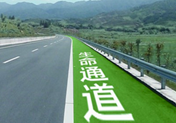 An east China highway pile-up on April 2nd has killed three people and injured 31others.That day was the first day of a three-day national holiday marking the Tomb-Sweeping Day.
in Europe.The spring keeper was (15)B a job many years earlier by a young town
leader.His job was to take away the leaves from the pools in the mountain.He worked hard.
The village soon became an(16)A place for visitors.
Years passed.One evening the town leaders had a meeting.(17)B they reviewed(审核)
the money,one man saw how much they paid the spring keeper.He said:"Who is the old man?(18)C do we keep him year after year?No one ever sees him.For all we know,he is doing
us no good.He isn't(19)D any longer."Then,they fired (解雇) the old man.
For several weeks,(20)A changed.By early autumn,however,the tree leaves began
to fall and fell into the pools,(21)B the rushing flow of water.One afternoon someone(22)A that the spring water had turned yellow.A few days later,swans left,so did the tourists.Diseases reached deep into the village.
Quickly,the leaders held a special meeting.Realizing their(23)D,they asked the
old keeper of the spring to come back.And after a few weeks,the river of life began to clear up.Then,life(24)C to the village in the mountain.
Never look down on the seeming smallness of one's task,job,or life!Even though it is
rather small,it does make a difference.
| 15.A.brought | B.offered | C.found | D.worked |
| 16.A.attractive | B.expensive | C.unwelcome | D.unpopular |
| 17.A.Since | B.As | C.Because | D.If |
| 18.A.How | B.When | C.Why | D.What |
| 19.A.young | B.energetic | C.strong | D.necessary |
| 20.A.nothing | B.something | C.anything | D.everything |
| 21.A.protecting | B.preventing | C.providing | D.producing |
| 22.A.noticed | B.marked | C.signed | D.recorded |
| 23.A.feelings | B.success | C.confidence | D.mistake |
| 24.A.repaired | B.replied | C.returned | D.reached. |