题目内容

阅读下面短文,掌握其大意,然后从所给的词中选出最恰当的10个用其适当形式填空。

Today is 1. . It’s also a 2. day and lots of people go out to enjoy the sunshine. Lisa and her classmates are 3. in the park now. Linda and Jack are _4.___ to the music . Tom and Bob are boating(划船) in the river. They are having a good time. What about Lisa and the 5. ? They are talking about their lives in the future(将来). Jimmy would like to be a teacher 6. he wants to _7.__ more people. Jenny likes writing and 8. with people, so she wants to be a reporter(记者)and works for a magazine(杂志). Lisa wants to be a doctor and works in a 9. . She wants to help sick people(病人) get better. All of the 10. are having fun.

练习册系列答案

相关题目

Are you shy? If you are, you are not alone. In fact, close to 50 percent of people are shy. Almost 80 percent of people feel shy at some point in their lives. These days, shyness is becoming more and more common. Now, scientists are trying to understand shyness. They have some interesting ideas about why people are shy.

Is it possible to be born shy? Many scientists say yes. They say 15 to 20 percent of babies behave shyly. These babies are a little quieter and more watchful than other babies. Interestingly, these shy babies usually have shy parents. As a result, scientists think that some shyness is genetic.

Family size might cause people to be shy as well. Scientists at Harvard University studied shy children. They found that 66 percent of them had older brothers and sisters. As a result, they became shy. At the same time, children with no brothers and sisters may be shy as well. Growing up alone, they often play by themselves. They are not able to learn the same social skills as children from big families.

You may also be shy because of where you were born. When scientists studied shyness in different countries, they found surprising differences. In Japan, most people said they were shy. But in Israel, only one of three people said so. What explains the difference? One scientist says the Japanese and Israelis have different opinions(看法) of failure(失败). In Japan, when people do not succeed, they feel bad about themselves. They blame(责备)themselves for their failure. In Israel, the opposite is true. Israelis often blame failure on outside reasons, such as family, teachers, friends, or bad luck. In Israel, freedom of opinion and risk taking are strongly supported. This may be why Israelis worry less about failure and are less shy.

For shy people, it can be difficult to make friends, speak in class, and even get a good job. But scientists say you can get over your shyness. They suggest trying new things and practicing conversation. And don’t forget---if you are shy, you are not the only one.

1.What does the underlined word “genetic” in paragraph 2 probably mean?

A. Passed down from parents.

B. Learned from friends.

C. Taught by teachers.

D. Made up by brothers.

2.We can learn from the passage that _______ may cause shyness.

A. genetics, grown--ups and birthplace

B. genetics, family size and birthplace

C. family size, grown--ups and failure

D. genetics, family size and freedom

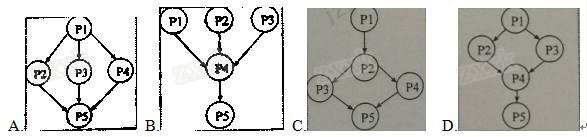
3.Which of the following shows the structure(结构)of the passage? (P=Paragraph)

根据短文内容及首字母提示,填写所缺单词,并将答案填写在答卷纸标号为1—10的相应位置。

In most schools, students in one class have the same schedule. But at Beijing National Day School, each of the 4,174 students can build their o 1. class timetable.

The school has used this special education system s 2. 2011. The school

p 3. the students with many different courses which are based on their interests and abilities. Each of the courses c 4. of different difficulty levels. Students choose their favourite courses of different difficulty levels by themselves. They don’t have fixed classrooms or regular classmates. I 5. , they have more than 400 courses and 272 school clubs to choose f 6. . The school hopes students can become m 7. of their own study and enjoy the courses of studying. The system is highly praised by the Ministry of Education. On February 27th 2014, the ministry held a press conference at the school to announce the system to the whole country.

Students also like the system. Tian Yatong, 14, said she learns to be responsible for herself through the system. She has chosen level 2 (the medium level) for math based on her present abilities, a 8. she has passed the level 3 tests.

“I like the teacher of level 2. I think it works best for me,” said Tian.

The system also “opens a new world” for students, said 13-year-old Li Zixuan.

Li was a 9. to find that she could learn cooking, sewing, making films and many other interesting things at the school. No other schools have these courses for students.

“You’re sure to find one that interests you.” Li said.

Li has chosen a cooking c 10. this term. Now she can make different cakes at home for her parents.

“I may become a pastry(点心) cook one day. Who knows?” Li said.

违法和不良信息举报电话:027-86699610 举报邮箱:58377363@163.com

精英家教网