题目内容

完形填空

I moved to a new neighborhood two months ago. A taxi driver lived in a house with a large garage across the road. He’s single parent with two school-age children. At the end of the day, he would _______ his taxi on the road. “ Why he did not park it in the garage?” I asked myself.

Then, one day I _______that he had another car in his garage. In the afternoon he would come home _______ work, leave his taxi and go out for his _______ car, not in his taxi. I felt it was _______.

I was curious to see his personal car but did not _______ it until I happened to be outside one evening two weeks later, when the garage door was _______ and he drove out in his “own” car: a Rolls-Royce(劳斯莱斯)! It shook me completely_______ I realized what that meant. You see, he was a taxi driver. But deep inside, he saw himself as something else: a Rolls-Royce owner and a(n) ________. He drove others in his taxi but himself and his children in his Rolls-Royce. The world looked at his taxi and called him a taxi driver. But for him, a taxi was _______something he drove for a life.

We go to bed every night and _______ every morning as parents or children, not as bankers, CEOs or professors. We go for a _______ as close friends or go for a vacation as a family. We love life as it is. Yet often, we base our entire happiness and _______ on how high we climb the social ladder(梯子)—how much bigger and better a_______ we have. And we fail to notice Rolls-Royce, by keeping it dusty in our garage. We should pay more attention to _______ we are than what we do!

1.A. park B. drive C. check D. repair

2.A. learnt B. understood C. told D. remember

3.A. for B. at C. without D. from

4.A. another B. other C. third D. first

5.A. useful B. careful C. wasteful D. painful

6.A. get B. make C. buy D. have

7.A. broken B. closed C. painted D. open

8.A. once B. before C. when D. until

9.A. father B. son C. driver D. engineer

10.A. yet B. never C. just D. still

11.A. stay up B. wake up C. take up D. warm up

12.A. Competition B. Performance C. test D. party

13.A. success B. plans C. beauty D. wishes

14.A. garden B. garage C. car D. taxi

15.A. who B. what C. which D. where

练习册系列答案
相关题目

阅读理解。

Are you shy?If you are,you are not alone.In fact,close to 50percent of people are shy.Almost 80percent of people feel shy at some point in their lives.These days,shyness is becoming more and more common.Now,scientists are trying to understand shyness.They have some interesting ideas about why people are shy.

Is it possible to be born shy?Many scientists say yes.They say 15to 20percent of babies behave shyly.These babies are a little quieter and more watchful than other babies.Interestingly,these shy babies usually have shy parents.As a result,scientists think that some shyness is genetic.

Family size might cause people to be shy as well.Scientists at Harvard University studied shy children.They found that 66percent of them had older brothers and sisters.As a result,they became shy.At the same time,children with no brothers and sisters may be shy as well.Growing up alone,they often play by themselves.They are not able to learn the same social skills as children from big families.

You may also be shy because of where you were born.When scientists studied shyness in different countries.They found surprising differences.In Japan,most people said they were shy.But in Israel,only one of three people said so.What explains the difference?One scientist says the Japanese and Israelis have different opinions of failure.In Japan,when people do not succeed,they feel bad about themselves.They blame(责备)themselves for their failure.In Israel,the opposite is true.Israelis often blame failure on outside reasons,such as family,teachers,friends,or bad luck.In Israel,freedom of opinion and risk taking are strongly supported.This may be why Israelis worry less about failure and are less shy.

For shy people,it can be difficult to make friends,speak in class,and even get a good job.But scientists say you can get over your shyness.They suggest trying new things and practicing conversation.And don’t forget﹣﹣﹣if you are shy,you are not the only one.

1.What is the passage mainly about? B

A.Happiness. B.Shyness.

C.Kindness. D.loneliness.

2.What does the underlined word“genetic”in paragraph 2probably mean? A

A.Passed down from parents. B.Learned from friends.

C.Taught by teachers. D.Made up by brothers.

3.What can be learned from the passage? C

A.Most little babies are born shy and quiet.

B.If you are shy now,you will be shy forever.

C.Many shy children have older brothers and sisters.

D.Most Israeli people are shy of expressing opinions.

4.We can learn from the passage that B may cause shyness.

A.genetics,grown﹣﹣ups and birthplace

B.genetics,family size and birthplace

C.family size,grown﹣﹣ups and failure

D.genetics,family size and freedom

5.Scientists suggest that shy people can get over their shyness by B

A.blaming their failure on outside reasons

B.trying new things and practicing conversation

C.getting themselves away from their shy parents

D.trying to understand reasons for their shyness

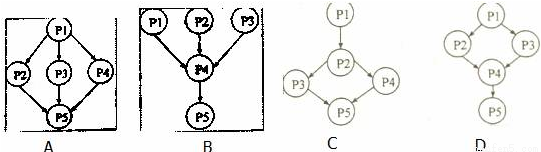
6.Which of the following shows the structure(结构)of the passage?(P=Paragraph) A

Many homes have cameras to protect them from danger. The cameras can tell the owners if someone has entered. But the cameras do not know whether the person is a family member, a friend, a postman or a criminal (罪犯).

But a new camera made by a French company can recognize (辨别出) faces. It can tell parents at work that their children have returned from school, or that the mail has been sent to their home. It can also tell them if a stranger has entered their home. When family members enter a home, the smart camera “recognizes” them and sends information to the owner’s phone. The owner can choose to see the video then or later. But if an unknown person enters a home, the camera will send a warning sound on the owner’s phone.

This is what happened recently to a smart home camera owner named Damien. He lives in Paris.

“On a Friday I was at work, having a big monthly meeting when my phone moved. At first I told myself ‘Oh, it must be a wrong warn,’ but my phone was telling me there was a face that the camera did not recognize. Something was happening in my house!”

“I saw a person I did not know with his shoes on, which is not allowed in my apartment (公寓). I watched it on the video. I felt quite surprised. I hurried back home as fast as possible and called the police on the way. Thanks to the smart camera, the criminal was caught soon,” said Damien.

1.The new smart camera is different from the ones in many homes because it can _________.

A. protect the owner B. help a school child

C. recognize faces D. call the police

2. In Damien’s apartment, people can’t _______.

A. wear shoes B. watch videos

C. have cameras D. send mails

3. If we put the passage into three parts, which of the following is the best?

(1=Para. (自然段)1 2 = Para. 2 3 = Para. 3 4 = Para. 4 5 = Para. 5)

A. ①;②③;④⑤ B. ①;②;③④⑤

C. ①②③;④;⑤ D. ①②;③④;⑤

4. The best title of the passage may be “_______”.

A. Catching Criminals in a Better Way

B. Strange Video Faces

C. Warning Sound on the Phone

D. Smart Home Cameras

违法和不良信息举报电话:027-86699610 举报邮箱:58377363@163.com

精英家教网