There was a famous church(教堂) in London. It was 110 meters high. The center of the church was like a bell. The ceiling of the church was painted by a famous artist. A platform (平台) was built so that the artist could put up a ladder on it and paint the ceiling. The platform was about 70 meters over the ground.

One day the artist was working hard and had nearly finished one popular corner of the ceiling. Also on the platform was his assistant(助手), who was mixing paints. The artist stepped back so that he could see how his work was doing. To have a better look at his painting, he stepped back again. Suddenly, his assistant shouted, picked up a small bowl of paint and started to paint the artist's work on the top. The artist was very angry and rushed forwards to stop him.

“What do you think you are doing?” he shouted angrily. “Are you mad(疯的)?” His assistant replied, “I saw you walking backwards to have a better look at your painting. But you didn't notice that you had reached the very edge(边缘) of the platform. You were in great danger. I wanted to make you move forwards. If I had not made you run forwards, you would have fallen backwards off the edge of the platform.”

1.The story happened in _______.

A. America B. England C. Germany D. France

2.Why did the artist step back again?

A. To have a better look at his painting.

B. To see how his work was doing.

C. To paint a bowl in his painting.

D. To pour some paint on his painting.

3.What did the assistant do to stop the artist falling off the platform?

A. He ran forwards to stop him.

B. He stopped mixing the paints.

C. He painted a famous painting himself.

D. He shouted to the artist and painted his painting.

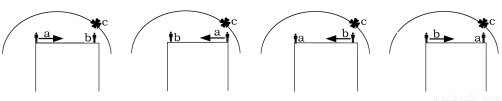
4.Which picture shows the same situation as the underlined sentences in Paragraph 2?

Note: a: artist; b: assistant; c: painting; ←: the direction of the movement

A. B. C. D.

5.After reading the passage, what do you think the artist would probably do?

A. He would be angry with what the assistant had done.

B. He would be thankful to the assistant for having saved his life.

C. He would punish the assistant for having destroyed (毁坏) his painting.

D. He wouldn't allow the assistant to work with him any more.

“The world has never been a better place to live in” says science writer Matt Ridley, “and it will keep on getting better.” Read on to see how Ridley makes his case. Right or wrong? You decide.

Compared with 50 years ago, when I was just four years old, people now make nearly three times as much money, eat one third more food and expect to live one third longer. In fact, it’s hard to find any areas of the world that’s worse off now than it was then, even though the world population has more than doubled over that period.

One reason we are richer, healthier, taller, cleverer, longer-lived and freer than ever before is that the four most basic human needs—food, clothing, fuel and shelter—have grown much cheaper. Take one example: In 1800, a candle providing one hour’s light cost six hours’ work. In the 1880s, the same light from a lamp took 15 minutes’ work to pay for. In 1950, it was eight seconds. Today, it’s half a second. In these terms, we are 43,200 times better off than in1800.

In the United States, rivers, lakes, seas and air are getting cleaner all the time. A car today produces less pollution traveling at full speed than a parked car did from leaks (泄漏) in 1970.

Although the world population is growing, the rate (率) of increase has been falling for 50 years. Across the world, national birth rates are lower now than in 1960, and in the less developed world, the birth rate has almost halved. According to a research report from the United Nations, population will start falling once it reaches 9.2 billion in 2075. After all, there are already seven billion people on earth, and they are eating better and better.

In 1970s, there were 550 billion barrels (桶) of oil reserves (储存) in the world, and in the 20 years that followed the world used up 600 billion. So by 1990, reserves should have been overused by 50 billion barrels. Instead, it is reported there are 900 billion today. They will last for many years and people will find something in place of oil long before they run out.

The more we develop, the more we can develop. The more we invent, the more inventions become possible. For 200 years, pessimists (people who believe that terrible things will happen in future) have had all the headlines—even though optimists have far more often been right. There are some reasons for pessimists. No charity (慈善机构) ever raised money by saying things are getting better. No journalist ever got the front page writing a story about how terrible things won’t happen. Don’t be a pessimist—dare to be an optimist!

1.Today, providing one hour’s light costs ______.

A. 6 hours’ work B. 15 minutes’ work

C. 8 seconds’ work D. 0.5 second’s work

2.Which of the following is true, according to the passage?

A. Things we used to need were much cheaper than they are today.

B. The pollution today is much more serious than it was long ago.

C. Population problem has nearly made the world stop developing.

D. It’s not necessary to be worried about oil reserves in the world.

3.What does the word “optimists” in the last paragraph mean?

A. People who are brave enough to face anything terrible.

B. People who can always tell good things from bad ones.

C. People who have hopeful and happy feelings about life.

D. People who don’t easily believe what they’re told about.

4. Which of the following can be the best title for the passage?

A. Never Give Up B. Cheer Up

C. Don’t Be Sad D. Think Out

违法和不良信息举报电话:027-86699610 举报邮箱:58377363@163.com

精英家教网