题目内容
【题目】
Straight or arched, thick or thin-eyebrows come in many shapes and sizes. But what are eyebrows even for? They don’t keep us warm like our hair, or help us breathe like our nose. So why do we have them at all?
Researchers from the University of York in the UK believe that eyebrows helped us to communicat e better when we were still evolving(进化).
Early humans had large brow ridges (眉骨). This helped them show strength. Later, as the human face evolved to become smaller and flatter, our
eyebrows allowed us to express complex emotions, as well as better understand others’ emotions, the Guardian reported. A quick flash of the eyebrows, for example, is a sign that someone is willing to interact (互动) with others, while pulling our eyebrows up in the middle is an expression of sympathy (同情), Penny Spikins from York University told The Daily Telegraph.
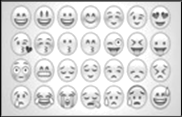
If you still find this hard to understand, just draw a simple face on a piece of paper and draw a line above the eyes. You can draw lines in different shapes and directions . You will find that it is very easy to show anger, fear or surprise in a face.
But this is not the only purpose of our eyebrows. They can also protect our eyes. Their arched shape can help to move rain or sweat around to the sides of our faces, keeping our eyes dry, the BBC reported. Together with our eyelashes, eyebrows can also help to keep dust and other things out of our eyes.
Some researchers believe that if we didn’t have eyebrows, we would have evolved some other facial features to perform the same functions (功能). That could make us look quite different.
【1】According to researchers from the University of York, our eyebrows can .
A.keep us warmB.make us look better
C.help us show strengthD.help us to communicate better
【2】When you pull your eyebrows up in the middle, you might be .
A.showing your sympathyB.eager to talk with others
C.keeping dust out of your eyesD.showing anger in your face
【3】According to the passage, early humans with big brow ridges looked .
A.surpris edB.strongC.angryD.small
【4】The word “that” in the last paragraph refers to .
A.our eyebrowsB.some other facial features
C.some researchersD.the same functions
【5】We can tell from the story that .
A.our eyebrows help us show anger, fear or surprise in our faces
B.it is easy to show your feelings without your eyebrows
C.our eyes may feel dry without our eyebrows ’ protection
D.connecting both eyebrows can help someone look powerful
【答案】
【1】D
【2】A
【3】B
【4】B
【5】A
【解析】
眉毛有很多形状和大小,当我们还在进化中时,眉毛帮助我们更好地交流,眉毛让我们可以表达复杂的情感,也可以让我们更好地理解别人的情绪,同时眉毛还能保护的眼睛免受雨水的浸湿和灰尘的伤害。
【1】细节理解题。根据第二段““Researchers from the University of York in the UK believe that eyebrows helped us to communicat e better”可知眉毛帮助我们更好地交流,故选D。
【2】细节理解题。根据第三段“while pulling our eyebrows up in the middle is an expression of sympathy”可知把眉毛拉到中间是表示同情,故选A。
【3】细节理解题。根据第三段“Early humans had large brow ridges This helped them show strength”可知早期的人类有很大的眉骨有助于使他们看起来很强壮,故选B。
【4】词义猜测题。根据第六段“if we didn’t have eyebrows, we would have evolved some other facial features to perform the same functions”可知如果没有眉毛,我们会进化出一些其他的面部特征来完成同样的功能,根据文句表述的逻辑关系,推断下文指这些其他的面部特征会让我们看起来很不同;故选B。
【5】推理判断题。由文中的陈述可知眉毛帮助我们更好地交流,让我们表达复杂的情感,也可以让我们更好地理解别人的情绪,由此推断眉毛帮助我们在脸上表现出愤怒、恐惧或惊讶,故选A。

 小学学习好帮手系列答案
 小学同步三练核心密卷系列答案