题目内容
“I don’t like my parents. They always __________ me I should do this, and should not do that. It sometimes makes me angry.” said Zhang Hua, a middle school student in Guangzhou. Do you have the __________ problem? Perhaps your parents had the same problem when they were your age long ago. Why does it __________that some parents are not so friendly in their children’s eyes?
One of the biggest things is when someone becomes a parent, he/she likes worrying things. They worry about everything about you, from the time you were born. They worry about your __________ of friends, the food you eat, your work at school, how much sleep you get, etc. All these things are __________ of your life. They want you to grow up __________ and happily.
So how can you __________ things easier on yourself? Just make sure your parents know what you’re doing. Get them to know your friends. Phone if you stay somewhere else. Say sorry to them when you make mistakes. Take responsibility for what you have done. Talk about your __________ with them. They may talk about theirs with you.
Most of all, try to think about why your parents do this or do that. They are still _________ being parents and need help you can give them. Someday, when you become a parent, they may be able to help you how to __________ your children.
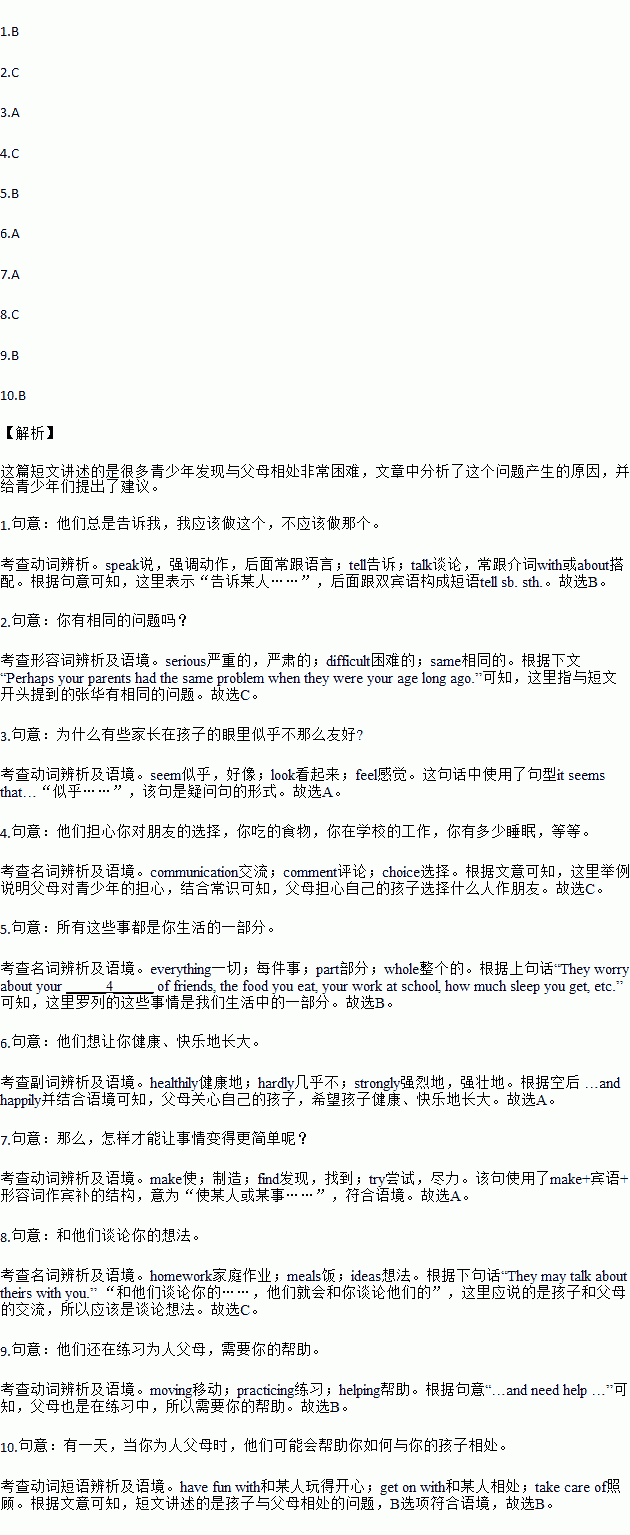
1.A.speak B.tell C.talk
2.A.serious B.difficult C.same
3.A.seem B.look C.feel
4.A.communication B.comment C.choice
5.A.everything B.part C.whole
6.A.healthily B.hardly C.strongly
7.A.make B.find C.try
8.A.homework B.meals C.ideas
9.A.moving B.practicing C.helping
10.A.have fun with B.get on with C.take care of

书面表达
假如你州Paul,是第一中学九年级学生,今年夏天即将毕业。初中三年你变化很大,请根据表格内容,用英语写一篇短文,记录自己的成长过程,并谈谈你的暑假计划。
过去 | 1. 性格内向,不敢在人前讲话。 2. 对学习不感兴趣,成绩不好。 3. 不爱运动,沉迷电脑游戏。 |
现在 | 1. 乐于分享,与同学相处很好。 2. 各科成绩优异,……(举一例) 3. 积极参加各类活动,……(举一例) |
暑假计划 | ……(一至两点) |
要求:1. 词数100左右,文章开头已给出,不计入总词数。
2. 短文需包括表格中所有要点,并适当发挥。
3. 字迹工整,条理清楚,行文连贯。
4. 文中请勿提及你的真实姓名和学校。
I'm Paul, a Grade 9 student in No. 1 Middle School. I'll graduate this summer. I've changed a lot during the last three years.
__________________________________________________________________________________________________________________________________________________________________________________________________________________________________________________________________________________________________________________________________________________________________________________________________________________________________________________________________________________________________________________________________________________________________________________________________________________________________________________________________________________________________________________________________________________________________________________________________