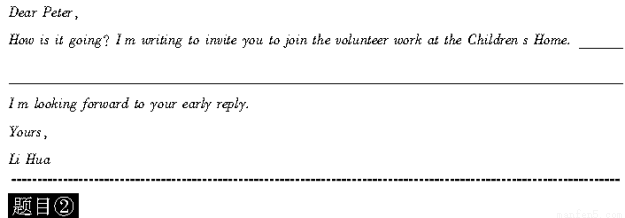
题目内容
Many students in China are learning English. Some of these students are small children. Others are teenagers(十几岁的青少年). Many are adults. Some learn at school, others study by themselves. A few learn English language (语言)over the radio, on television, or in films. One must work hard to learn another language. Why do all these people want to learn English? It is difficult to answer that question. Many boys and girls learn English at school because it is one of their subjects. They study their own language and math and English ... Some people learn English because it is useful for their work. Many people often learn English for their higher studies, because at college or university(大学) some of their books are in English. Other people learn English because they want to read newspaper and magazines in English.
1.Many students in China are learning English, aren't they? ____.
A. No, they aren't B. No, they are
C.Yes, they aren't D.Yes, they are
2.If one wants to learn another language well, he must ____.
A. learn at school B. work hard
C. study by himself D. studies hard
3.The sentence "It is difficult to answer that question" means ____.
A. it is hard to answer that question
B. that question is difficult to answer it
C. it is difficultly to answer that question
D. that question is not difficult to answer
4."Their own language" means ____.
A. English B. Chinese C. French D. Japanese
5.What's the Chinese of "study by themselves"?
A. 和他们一起学习 B. 向他们学习 C. 自学 D. 通过学习

阅读下面短文,从短文后的五个选项中选出能填入空白处的最佳选项。每个选项只能用一次。
A robot teacher
Robots are smart because they have computer brains. They can help people work in dangerous places. 1.________. Brine, the robot mail carrier, brings mail to a large office building in Washington, D.C.. He is one of 250 robot mail carriers in the United States. But have you ever heard about a robot teacher?
Mr. Green is a fourth grade robot teacher. 2.________. One advantage is that he does not forget details. He knows each child’s name, their parents’ names and what each child knows and needs to know. 3.________. Mr. Green does not make mistakes. Each child goes and tells him his name, then dials an ID number. His computer brain puts the child’s voice and number together. He identifies the child with no mistakes. Then he starts the lesson.
4.________. If the children need more time to do their lessons they can move switches and change the timetable. In this way they can repeat Mr. Green’s lesson over and over again. When the children do a good job, he tells them something interesting about their hobbies. At the end of the lesson the children switch Mr. Green off.
The children like Mr. Green very much. 5._______. And when they make a mistake, they don’t feel upset. They have a lot of fun with a robot teacher.
A. They can also do difficult jobs B. He has some advantages as a teacher C. They feel happy and relaxed in his class D. He even knows each child’s pets and hobbies E. Another advantage is that Mr. Green is flexible (灵活的) |
请根据下表中的信息,写一篇介绍白鱀豚的段文(80个词左右).
Nane | baiji (a kind of dolphin) |
Other nanes | Chinese river dolphin,underwater panda |
Living place | Middle part of Yangtze River |
Have babies | Only one every two years |
At birth | 80~90 cm,3~5 kilos |
Adult | 1.4~2.5 meters,135~230 kilos |
Food | Small fish,10 kilos a day |
Life | 25 years |
Activities | In deep water,swim 60 km/h,afraid of people,group life |