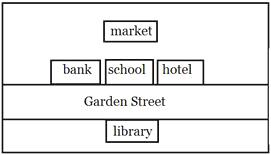
题目内容
【题目】书面表达
假如你校有几位来自美国的交换生,他们打算周末步行去翠湖公园。请根据提示为他们写出前往的路线,并简要介绍公园情况。
要点提示:①路线(见下图);②公园环境优美.凉爽,还可游泳.野餐等;
要求:①词数:80词左右,开头已给出,不计入总词数。②文中不能出现自已的姓名和所在学校的名称。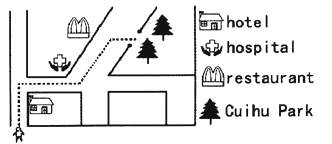
Cuihu Park is not far from here. It's easy to get there. Just go straight
【答案】Cuihu Park is not far from here. It's easy to get there. Just go straight and turn right at the first turning. Walk along the road and turn left when you find a hospital. Cuihu Park is down the street on your right. Across from the park is a restaurant.
The park is really a good place to have fun. It's beautiful and cool with many trees and flowers. You can swim, play games or have a picnic there. It's very relaxing. You may also get a good chance to practice Chinese. I hope you will enjoy yourselves.
【解析】第一,审题。由题目要求:可知本文为说明文,以指路句型为主,同时还要介绍公园情况。作文时态为一般现在时。第二,列举写作要点及重点短语。①指路go straight; turn right; at the first crossing; walk along; turn left ;a hospital; on your right; across from;②介绍公园的情况a good place to have fun; cool; play games ;have a picnic; relaxing。






【题目】

In China, more and more villagers have left home to make a living in big cities. As a result, their children have become leftover children (留守儿童) and they need more care. The survey below is from some villages in China. Three hundred children were chosen to answer the questions.
What they want | Love | Pocket Money | Freedom | Control | Something else |
40% | 18% | 28% | 10% | 4% | |
Who to talk with | Oneself | Family members | No one | ||
27% | 55% | 18% | |||
Communicate with their parents freelyornot | Yes | A little difficult | No | ||
46% | 44% | 10% | |||
The way they like to live | Living with parents | Livingwithoutparents | No idea | ||
58% | 14% | 28% | |||
What they think of their parents’ Working in cities | Bad | Good | No idea | ||
20% | 39% | 41% | |||
Happiest place | School | Home | Friend’s home | ||
48% | 34% | 18% | |||
【1】In the survey, the children were asked about many things EXCEPT ______.
A. places they like B. pocket money
C. their needs D. their parents’ working in cities
【2】Of all the four things, the leftover children need ______ most.
A. love B. money C. control D. freedom
【3】Which of the following is True according to the passage?
A. About 18% of the leftover children often talk with their family members.
B. All the children like to stay at home without their parents.
C. About 1/3 of the children think their parents’ working in cities is bad.
D. More than half of the children think it is good to live with their parents.
【4】How many children think their happiest place is their school?
A. 48. B. 102 C. 144 D. 156
【5】The survey tells us that ______.
A. most leftover children want money from their parents
B. over 40% of the children have difficulty talking to parents freely
C. all the leftover children dream of making money in big cities
D. most villagers like living a life in the countryside