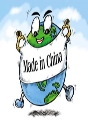
The label(标签), Made in China, is one that is becoming increasing common in shopping centers all over the world.

In the United States, shoppers at Wal-Mart, the nation’s largest retailer(零售商), have a wide selection of products mostly produced in China. The large amount of Chinese imports have created a large selection of goods in other countries as people begin to buy more and more products made in China. These goods are even widely available in other Asian nations, where Chinese-made goods are quite popular. Chinese brand names are also becoming more well-known outside China.

When Chinese Americans visit family and friends in their homeland, gifts from the U.S. are a must. But TVs and fashionable clothes aren't rare any more, and anything 'Made in China' shouldn’t be considered in any case.

"When I decide to visit my family members in China, I will have a big headache. What should I buy for them? They may not all speak English, but everyone in China knows those three words," a Chinese American said. "When they see the label 'Made in China,' they will think, 'Why do you send me this?' "

The development of China has surprised the world with its growth. As a result, the other countries are beginning to try to reduce Chinese goods with the use of taxes(税)and import restrictions. However, the development on the Chinese economy still affects the world in many ways.

1.Around the world, the products made in China are ________ in the shopping malls.

A. unwelcome B. expensive C. popular D. rare

2.What is the Chinese meaning of the underlined word “brand” in the second paragraph?

A. 品牌 B. 明星 C. 生产地 D. 树枝

3.Why do Chinese Americans usually have a headache if they come back to China?

A. Because their Chinese friends can not speak English.

B. Because their friends will be unhappy if the gifts are made in China.

C. Because they should give their friends rare gifts.

D. Because they should give their friends fashionable gifts.

4.How do other countries try to reduce the Chinese goods in their own countries?

A. By developing the qualities of their own products.

B. By telling their shoppers not to buy Chinese goods.

C. By importing more Chinese goods.

D. By using taxes and import restrictions.

5.From the passage, we can know that________.

A. products made in China are more and more popular all over the world

B. TVs and fashionable clothes are ideal gifts for Chinese people

C. everyone in China can speak English

D. the other governments don’t welcome any Chinese goods

根据下面短文内容,选择最佳答案。

Jenny gets up early in the morning. She has her breakfast and goes to school. She walks to the bus stop and takes a bus. She gets to school at about half past seven.

Jenny is never late for school. She likes school and works hard. Classes begin at 8:00. She has six classes every day. Jenny is good at all her lessons, and she likes English best.

Usually Jenny has lunch at school. Sometimes she helps her classmates with their lessons. Jenny goes home at five in the afternoon. Sometimes, she helps her friends with their lessons. After supper she usually watches TV news. Then she does her homework. She goes to bed at about 9:30. Jenny is a good girl.

1.Where does Jenny have her breakfast?

A. At home B. At school

C. On her way to school D. On the bus

2.How does Jenny do at her lessons?

A. She doesn’t like going to school.

B. She can’t do her lessons.

C. She does very well in her lessons.

D. She doesn’t know her lessons at all.

3.How many hours is Jenny at school?

A. Seven hours B. Seven and a half hours

C. Eight hours D. Nine and a half hours

4.What does Jenny sometimes do after school?

A. She has supper with her classmates at school.

B. She helps her friends study their lessons.

C. She does some shopping for her mother.

D. She goes home with her friends.

5.What does Jenny do after supper?

A. She watches TV and then goes to bed.

B. She watches TV and does some housework.

C. She watches TV and does her lessons.

D. She reads her English and does some sports.

违法和不良信息举报电话:027-86699610 举报邮箱:58377363@163.com

精英家教网