题目内容
12.对于"碰到作业困难时是否向老师请教",同学们持有不同的观点,请你根据下表内容的提示,用英语写一篇短文.陈述同学们的观点及理由,并谈谈你的观点及理由,发表在校园网的论坛上.| 观点 | 理由 |
| 向老师请教 | ◆老师讲解得清楚,易于理解 ◆增加与老师交流的机会 |
| 不向老师请教 | ◆性格内向,羞于开口 ◆怕被同学嘲笑 |
| 你的观点及理由:…(理由至少1条,不能重复已给的理由) | |
The students of our class have different ideas about whether we should ask teachers for help with homework problems. .
分析 【高分句型一】
they think it provides chances to communicate with teachers by asking questions.他们认为通过问问题能提供机会和老师交流.
think后是省略了that的宾语从句.
【高分句型二】
They're too shy to ask questions and afraid of being laughed at by other students他们如此的害羞为不敢问问题害怕被其他的同学嘲笑.
too…to do sth太…而不能做某事.
解答 The students of our class have different ideas about whether we should ask teachers for help with homework problems.Some students believe that it's a good way for them to do that because teachers often explain clearly and make it easy for us to understand.Besides,they think it provides chances to communicate with teachers by asking questions.【高分句型一】(赞同)However,some students disagree.They're too shy to ask questions and afraid of being laughed at by other students.【高分句型二】(不赞同)
In my opinion,asking teachers for help with homework problems requires courage which is a good quality we students just need.And it's quite common to have problems.Moreover,our teachers are ready to help us whenever we need.So why not?(我的看法)
点评 做英语书面表达时,只要注意认真审题,分析体裁,确定时态;分析内容要点,列出一些基本词汇及词组;注意表达的条理性,用好连接词;为丰富文章的文采,可以多用一些复合句.最后,注意不要犯语法、句法以及搭配性错误.

Will there be a sports meeting this weekend?
| 1.African lion The animals live in large groups.The groups often have around 15 members.The males(雄性)are different in color,usually from orange-yellow to dark brown.They have long hair on the neck while females(雌性)don't.Young males leave their group when they are around three years old. | 2.Cape buffalo(水牛) The animals are a laige African animal with a pair of big horns(角).When they meet enemies,they will form rings around the young and use their large horns to protect them.Though the animals look like large black cows,they are stronger and get angiy more easily. |
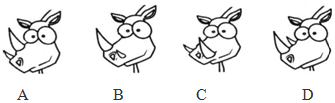
| 3.African Rhinoceros(犀牛) The animals have a large mouth and two horns on its face-a large one in front and a smaller one behind.The lai^er horn can grow to 60-150cm long.The animals enjoy staying in mud pools and spend a lot of time staying in mud pools and spend a lot of time cooling off in water.The animals are becoming fewer and fewer because many of them are killed for their horns. | 4.______ The animals are clever animals.They often communicate with one another and travel a long way to find food or water.They use their long trunks(鼻子)to life things,drinks smell,and to greet each other.The animals always play with each other and help older or sick family members. |
A.African Dog B.African Deer C.African Elephant D.African Horse
52.What can we learn about the African lions?A
A.They like living in large groups.
B.The females have long hair on the neck.
C.They don't have different kinds of colors.
D.Yong males live with their group all their lives.
53.Cape buffaloes use their horns toA.
| A.keep safe from harm | B.make others get angry |
| C.communicate with others | D.find food or water |
55.In which part of a magazine can you find the passage?B
| A.Food Safety | B.Animal World |
| C.Human and Earth | D.Science and Future. |
注意事项:1 短文须包括表格中所有提示内容,要求语句通顺、意思连贯;
2 表格中"感想"一栏须用2-3句话展开合理想象,做适当发挥;
3词数在90个左右,信的开头部分已给出,不计入总词数.
| 简介 | 认识快三年,同龄,性格开朗自信 |
| 以前 | 对学业几乎没兴趣,时常无故旷课 |
| 现在 | 严格要求自己,团结同学,积极参加各类活动 |
| 感想 | … |
| A. | look | B. | look at | C. | look to | D. | see |
| A. | She | B. | They | C. | This | D. | That |