题目内容
阅读理解。
I know my brother better than anyone else in the world. Since the moment of his birth, I’ve been part of his life. I had spent seven happy years in the world with the attention of those around me. But when Rohan was born, life changed. All of a sudden, I had to share my toys and there were no more bedtime stories or my own choice of food.
Finally, I hated this small boy. The poor baby had no idea what had made me so unhappy. Maybe he found me strange, the only person in this house who did not like him. Whatever the reason was, he loved following me around. However, I seldom talked to him and always asked him to leave me alone.
Then all that changed. I hardly remember everything of that day six years ago, but I do remember that I was feeling very angry. Then I found myself in my brother’s room. I couldn’t help reaching my hand through the bars(栏杆)of his bed. At once, he reached his small hand and softly touched mine. And that was all I needed. Through all the unhappiness of the day, that one moment changed everything. How could I hate someone who made me feel so important? For the first time, I saw my brother through the eyes of a sister. Suddenly I realized love from my family was always with me.
To this day, I can’t imagine life without my brother. It is unbelievable(难以置信的)how much I have learned about life from a seven-year-old boy. Above all, Rohan has taught me that one should not care only for himself.
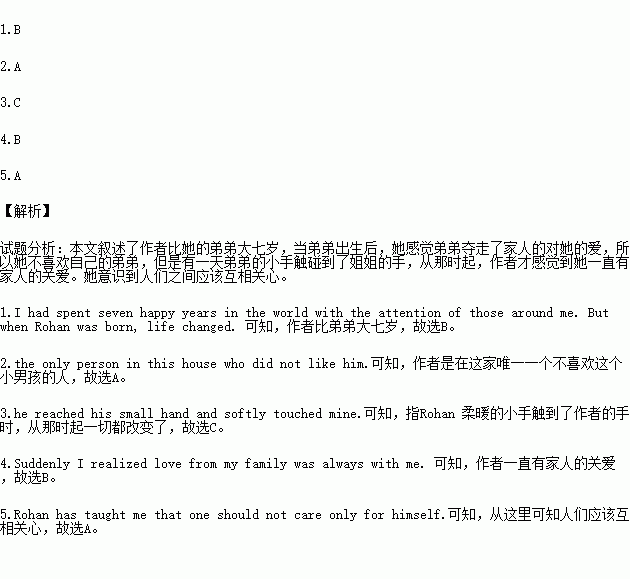
1.The sister was ________ years old when her brother was born.
A.six B. seven C. eight
2.The sister used to be the only person in the house who ________.
A. didn’t like the baby
B. followed the baby around
C. often talked to the baby
3.The underlined phrase “that one moment” refers to the time ________.
A.when there were no more bedtime stories for the sister
B.when the sister found herself in her brother’s room
C.when Rohan softly touched his sister’s hand
4.Which of the following is TRUE?
A.The sister doesn’t know her brother very well.
B.The sister lives with love from her family all the time.
C.The sister remembers everything of that day six years ago.
5.From this story we learn that it’s important to ________.
A. care for others B. share with others C. help others

书面表达.
假设你是李华,你的加拿大笔友Mike最近对中文很感兴趣,写信给你询问如何学好中文。请你根据以下提示内容,给他写一封回信。
提示:
How to learn Chinese well | |
1 | read Chinese newspapers and magazines |
2 | listen to Chinese songs |
3 | speak Chinese as much as possible |
4 | keep a Chinese diary |
注意:1. 内容必须包含表格中所提供的所有信息,可适当发挥。
2. 词数:80-100词。开头和结尾部分已给出,不计入总词数。
3. 文中不能出现学生真实姓名和所在学校名称。
Dear Mike,
I’m very glad to receive your letter.______________________________________________________
_______________________________________________________________________________
_______________________________________________________________________________
___________________________________________________________________________
I hope the advice will help you learn Chinese well. Looking forward to your reply.
Yours,
Li Hua