Every year many young people leave school for a few weeks or months and enjoy an unusual type of educational program. They learn new skills by living in a different country and doing unusual jobs. There are several organizations. They help students to find the experience they are looking for. The table below shows a few possibilities for students.

Country

Job

Time

Description

India

Teaching young children

One month

·Teaching music and dance

·Helping children learn how to communicate

Ghana

Health care work

Two months

·Seeing how doctors work in a less developed country

·Helping care for patients

Thailand

Saving elephants

Three weeks

·Cleaning elephants

·Helping train elephants

New Zealand

Teaching Chinese

Six weeks

·Helping adults learn Chinese

·Spreading Chinese culture

One interesting possibility is helping elephants in Thailand. Most people think of elephants as animals in zoos. In fact, many elephants in Thailand are no longer kept in cages. Now, hundreds of them are homeless. They don’t have owners to care for them. Although they may look well, they are often in poor health and don’t have enough to eat.

One center in Thailand cares for these elephants. It gives them a safe and natural living space. When they are at the center, they stay in a building but are free to walk around. Students come from all over the world to help here. The student helpers work with the elephant keepers. These keepers train the students in caring for the elephants. In the morning, they go to the forest together and lead the elephants to the center. They clean them and give them food. In the afternoon. They take the animals back into the forest for the night. Helping at the center is interesting and the young people learn a lot.

1.Which country can you choose if you want to prepare yourself for a medical career?

A. India. B. Ghana. C. Thailand.

2.Which job might be suitable for the students who love children and arts?

A. Teaching young children B. Health care work C. Saving elephants

3.What does the underlined word “they” in the last paragraph probably refer to?

A. The keepers. B. The doctors . C. The elephants.

4.What does the writer think of the unusual educational program?

A. It is amazing. B. It is boring. C. It is helpful.
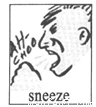
When you cough or sneeze, you’d better turn your head away from others and cover your mouth with the full part of your hand. And then, you should say, “Excuse me.”

This seems so simple, but it is surprising how many kids have never been told to do this. Actually, I notice adults all the time who cough and sneeze in public without placing a hand over the mouth. One important thing I point out to the kids is that after they sneeze or cough on their hands, they should wash their hands as soon as possible. If not, they will be passing those germs (细菌) along to everything and everyone they touch.

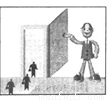
If you come to a door and someone is following you, hold the door. If the door opens by pulling, pull it open, stand to the side, and allow the other person to pass through first, then you can walk through. If the door opens by pushing, hold the door after you pass through.

After a few weeks of seeing kids try to get through doors in the school and watching them enter restaurants as the door hit other people, I knew I had to discuss the problem with my students. Teaching them small acts of kindness, such as letting someone else go through a door first as they hold it open, may seem unimportant, but it can go along way toward helping students realize how to be polite and thank others. Once they’ve been told, they’re halfway there.

When we have to go up moving stairs, we will stand to the right. That will give others who are in a hurry a choice of walking up the left-hand side of the moving stairs. When we are going to enter a lift, the underground, or a doorway, we will wait for others to exit before we enter.

After college when I moved to London, I was surprised at how polite everyone was in the subways. I was even more touched when I traveled to Japan. In both places, people made efforts to make way for others. On moving stairs, everyone stood to the right and walked to the left. On lifts, everyone would stand over to the side and allow others to exit before they would begin to enter.

1.When you cough or sneeze, you should ________.

A. touch everything B. cover your mouth

C. point out to the kids D. pass the germs to others

2.If you come to a door and someone is following you, you’d better _______.

A. hold the door B. pass through C. close the door D. stand to the side

3.Why should we stand to the right of moving stairs?

A. Because it’s dangerous to stand to the left.

B. Because it’s a traffic rule which we must follow.

C. Because we must wait for others to move first.

D. Because we should make way for people in a hurry.

4.From the passage we can know the writer is a ________.

A. doctor B. traveler C. parent D. teacher

5.The passage is mainly about ______.

A. the rules of acts in public B. the ways of communication

C. the problems of meeting people D. the knowledge of social life

违法和不良信息举报电话:027-86699610 举报邮箱:58377363@163.com

精英家教网