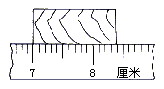
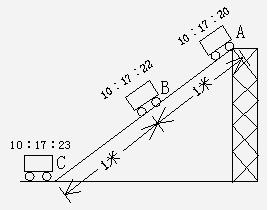
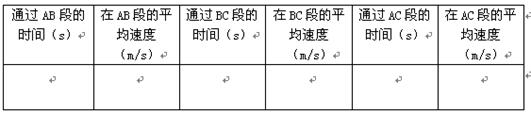
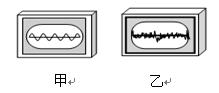
如图所示,将钢尺的一端紧压在桌面上,拨动伸出桌面的一端会听到声音,轻拨和重拨,则钢尺发出声音的 _______;显著改变刻度尺伸出桌面的长度,两次相同的力拨动,能够听出声音的_______发生了变化.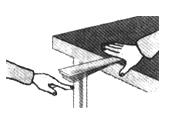
Grown-ups know that people and objects are solid. At the movies, we know that if we reach out to touch Tom Cruise, all we will feel is air. But does a baby have this understanding?
To see whether babies know objects are solid. T. Bower designed a method for projecting an optical illusion (视觉影像) of a hanging ball. His plan was to first give babies a real ball, one they could be expected to show surprised in their faces and movements. All the 16 to 24-week-old babies tested were surprised when they reached for the illusion and found that the ball was not there.
Grown-ups also have a sense of object permanence. We know that if we put a box in a room and lock the door, the box will still be there when we come back. But does a baby realize that a ball that rolls under a chair does not disappear and go to never-never land?
Experiments done by Bower suggest that babies develop a sense of object permanence when they are about 18 weeks old. In his experiments, Bower used a toy train that went behind a screen. When 16-week-old and 22-week-old babies watched the toy train disappear behind the left side of the screen, they looked to the right, expecting it to re-appear. If the experiment took the train off the table and lifted the screen, all the babies seemed surprised not to see the train. This seems to show that all the babies had a sense of object permanence. But the second part of the experiment showed that this was not really the case. The researcher substituted (替换) a ball for the train when it went behind the screen. The 22-week-old babies seemed surprised and looked back to the left side for the train. But the 16-week-old babies did not seem to notice the switch (更换). Thus, the 16-week-old babies seemed to have a sense of “something permanence,” while the 22-week-old babies had a sense of object permanence related to a particular object.
【小题1】The passage is mainly about .
【小题2】In Paragraph 3, “object permanence” means that when out of sight, an object .
【小题3】What did Bower use in his experiments?
【小题4】Which of the following statements is true?
To see whether babies know objects are solid. T. Bower designed a method for projecting an optical illusion (视觉影像) of a hanging ball. His plan was to first give babies a real ball, one they could be expected to show surprised in their faces and movements. All the 16 to 24-week-old babies tested were surprised when they reached for the illusion and found that the ball was not there.
Grown-ups also have a sense of object permanence. We know that if we put a box in a room and lock the door, the box will still be there when we come back. But does a baby realize that a ball that rolls under a chair does not disappear and go to never-never land?
Experiments done by Bower suggest that babies develop a sense of object permanence when they are about 18 weeks old. In his experiments, Bower used a toy train that went behind a screen. When 16-week-old and 22-week-old babies watched the toy train disappear behind the left side of the screen, they looked to the right, expecting it to re-appear. If the experiment took the train off the table and lifted the screen, all the babies seemed surprised not to see the train. This seems to show that all the babies had a sense of object permanence. But the second part of the experiment showed that this was not really the case. The researcher substituted (替换) a ball for the train when it went behind the screen. The 22-week-old babies seemed surprised and looked back to the left side for the train. But the 16-week-old babies did not seem to notice the switch (更换). Thus, the 16-week-old babies seemed to have a sense of “something permanence,” while the 22-week-old babies had a sense of object permanence related to a particular object.
【小题1】The passage is mainly about .
| A.babies’ sense of sight | B.effects of experiments on babies |
| C.babies’ understanding of objects | D.different tests on babies’ feelings |
| A.still exists | B.keeps its shape | C.still stays solid | D.is beyond reach |
| A.A chair | B.A screen | C.A film | D.A box |
| A.The babies didn’t have a sense of direction. |
| B.The older babies preferred toy trains to balls. |
| C.The younger babies liked looking for missing objects |
| D.The babies couldn’t tell a ball from its optical illusion. |
Grown-ups know that people and objects are solid. At the movies, we know that if we reach out to touch Tom Cruise, all we will feel is air. But does a baby have this understanding?
To see whether babies know objects are solid. T. Bower designed a method for projecting an optical illusion (视觉影像) of a hanging ball. His plan was to first give babies a real ball, one they could be expected to show surprised in their faces and movements. All the 16 to 24-week-old babies tested were surprised when they reached for the illusion and found that the ball was not there.
Grown-ups also have a sense of object permanence. We know that if we put a box in a room and lock the door, the box will still be there when we come back. But does a baby realize that a ball that rolls under a chair does not disappear and go to never-never land?
Experiments done by Bower suggest that babies develop a sense of object permanence when they are about 18 weeks old. In his experiments, Bower used a toy train that went behind a screen. When 16-week-old and 22-week-old babies watched the toy train disappear behind the left side of the screen, they looked to the right, expecting it to re-appear. If the experiment took the train off the table and lifted the screen, all the babies seemed surprised not to see the train. This seems to show that all the babies had a sense of object permanence. But the second part of the experiment showed that this was not really the case. The researcher substituted (替换) a ball for the train when it went behind the screen. The 22-week-old babies seemed surprised and looked back to the left side for the train. But the 16-week-old babies did not seem to notice the switch (更换). Thus, the 16-week-old babies seemed to have a sense of “something permanence,” while the 22-week-old babies had a sense of object permanence related to a particular object.
【小题1】The passage is mainly about .
【小题2】In Paragraph 3, “object permanence” means that when out of sight, an object .
【小题3】What did Bower use in his experiments?
【小题4】Which of the following statements is true?
To see whether babies know objects are solid. T. Bower designed a method for projecting an optical illusion (视觉影像) of a hanging ball. His plan was to first give babies a real ball, one they could be expected to show surprised in their faces and movements. All the 16 to 24-week-old babies tested were surprised when they reached for the illusion and found that the ball was not there.
Grown-ups also have a sense of object permanence. We know that if we put a box in a room and lock the door, the box will still be there when we come back. But does a baby realize that a ball that rolls under a chair does not disappear and go to never-never land?
Experiments done by Bower suggest that babies develop a sense of object permanence when they are about 18 weeks old. In his experiments, Bower used a toy train that went behind a screen. When 16-week-old and 22-week-old babies watched the toy train disappear behind the left side of the screen, they looked to the right, expecting it to re-appear. If the experiment took the train off the table and lifted the screen, all the babies seemed surprised not to see the train. This seems to show that all the babies had a sense of object permanence. But the second part of the experiment showed that this was not really the case. The researcher substituted (替换) a ball for the train when it went behind the screen. The 22-week-old babies seemed surprised and looked back to the left side for the train. But the 16-week-old babies did not seem to notice the switch (更换). Thus, the 16-week-old babies seemed to have a sense of “something permanence,” while the 22-week-old babies had a sense of object permanence related to a particular object.
【小题1】The passage is mainly about .
| A.babies’ sense of sight | B.effects of experiments on babies |
| C.babies’ understanding of objects | D.different tests on babies’ feelings |
| A.still exists | B.keeps its shape | C.still stays solid | D.is beyond reach |
| A.A chair | B.A screen | C.A film | D.A box |
| A.The babies didn’t have a sense of direction. |
| B.The older babies preferred toy trains to balls. |
| C.The younger babies liked looking for missing objects |
| D.The babies couldn’t tell a ball from its optical illusion. |
Grown-ups know that people and objects are solid. At the movies, we know that if we reach out to touch Tom Cruise, all we will feel is air. But does a baby have this understanding?
To see whether babies know objects are solid. T. Bower designed a method for projecting an optical illusion (视觉影像) of a hanging ball. His plan was to first give babies a real ball, one they could be expected to show surprised in their faces and movements. All the 16 to 24-week-old babies tested were surprised when they reached for the illusion and found that the ball was not there.
Grown-ups also have a sense of object permanence. We know that if we put a box in a room and lock the door, the box will still be there when we come back. But does a baby realize that a ball that rolls under a chair does not disappear and go to never-never land?
Experiments done by Bower suggest that babies develop a sense of object permanence when they are about 18 weeks old. In his experiments, Bower used a toy train that went behind a screen. When 16-week-old and 22-week-old babies watched the toy train disappear behind the left side of the screen, they looked to the right, expecting it to re-appear. If the experiment took the train off the table and lifted the screen, all the babies seemed surprised not to see the train. This seems to show that all the babies had a sense of object permanence. But the second part of the experiment showed that this was not really the case. The researcher substituted (替换) a ball for the train when it went behind the screen. The 22-week-old babies seemed surprised and looked back to the left side for the train. But the 16-week-old babies did not seem to notice the switch (更换). Thus, the 16-week-old babies seemed to have a sense of “something permanence,” while the 22-week-old babies had a sense of object permanence related to a particular object.
【小题1】The passage is mainly about .
【小题2】In Paragraph 3, “object permanence” means that when out of sight, an object .
【小题3】What did Bower use in his experiments?
【小题4】Which of the following statements is true?
0 65051 65059 65065 65069 65075 65077 65081 65087 65089 65095 65101 65105 65107 65111 65117 65119 65125 65129 65131 65135 65137 65141 65143 65145 65146 65147 65149 65150 65151 65153 65155 65159 65161 65165 65167 65171 65177 65179 65185 65189 65191 65195 65201 65207 65209 65215 65219 65221 65227 65231 65237 65245 235360
To see whether babies know objects are solid. T. Bower designed a method for projecting an optical illusion (视觉影像) of a hanging ball. His plan was to first give babies a real ball, one they could be expected to show surprised in their faces and movements. All the 16 to 24-week-old babies tested were surprised when they reached for the illusion and found that the ball was not there.
Grown-ups also have a sense of object permanence. We know that if we put a box in a room and lock the door, the box will still be there when we come back. But does a baby realize that a ball that rolls under a chair does not disappear and go to never-never land?
Experiments done by Bower suggest that babies develop a sense of object permanence when they are about 18 weeks old. In his experiments, Bower used a toy train that went behind a screen. When 16-week-old and 22-week-old babies watched the toy train disappear behind the left side of the screen, they looked to the right, expecting it to re-appear. If the experiment took the train off the table and lifted the screen, all the babies seemed surprised not to see the train. This seems to show that all the babies had a sense of object permanence. But the second part of the experiment showed that this was not really the case. The researcher substituted (替换) a ball for the train when it went behind the screen. The 22-week-old babies seemed surprised and looked back to the left side for the train. But the 16-week-old babies did not seem to notice the switch (更换). Thus, the 16-week-old babies seemed to have a sense of “something permanence,” while the 22-week-old babies had a sense of object permanence related to a particular object.
【小题1】The passage is mainly about .
| A.babies’ sense of sight | B.effects of experiments on babies |
| C.babies’ understanding of objects | D.different tests on babies’ feelings |
| A.still exists | B.keeps its shape | C.still stays solid | D.is beyond reach |
| A.A chair | B.A screen | C.A film | D.A box |
| A.The babies didn’t have a sense of direction. |
| B.The older babies preferred toy trains to balls. |
| C.The younger babies liked looking for missing objects |
| D.The babies couldn’t tell a ball from its optical illusion. |