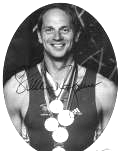

Sir Steven Redgrave—Winner of 5 Olympic Gold Medals

“In 1997 I was found to have developed diabetes (糖尿病), believing the profession(职业) trained for the whole of my life ended, I felt very sorry. Then one of my friends said there was no reason why I should stop training. That was it—the encouragement I needed. I could still be a winner if I believed in myself. I am not saying that it isn’t difficult sometimes. But I wanted to prove to myself that I wasn’t finished yet. Nothing is to stand in my way.”

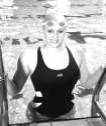
Karen Pickering—Swimming World Champion (冠军)

“I swim 4 hours a day, 6 days a week. I manage that amount(总数) of work by putting it on top of my diary. This is the key to success—you can’t follow a profession in any field without being well-organized. Make a list of what you believe you can achieve. Trust yourself, write down your goals for the day, however small they are, and you’ll be a step closer to achieving them.”

Kristen Stewart—Actress

“When things are getting hard, a voice inside my head tells me that I can’t achieve anything. Then, there are other distractions(分散), such as family or hobbies. The key is to give most of your attention to one thing. When I feel nervous, it helps a lot to repeat words such as ‘calm’, ‘peace’, either out loud or silently in my mind. It makes me feel more in control and improves my confidence. This is a habit and is a powerful psychological(心理学的) tool.”

1.What does Karen Pickering put on top of her diary?

A. Her training plan . B. Her daily happenings.

C. Her achievements. D. Her sports career.

2.The same character of the three people is________.

A. humour B. happiness

C. self-confidence D. wisdom

3.The best title for the passage is ________.

A. Health and Food B. How to Be a Winner

C. Difficulties and Habits D. Be a Sportsman

It seems that there’s a good reason why dogs are always seen as man’s best friend. Scientists have found that dogs are the only animals that can read emotion(情感)in faces much like humans. The finding suggests that like an understanding friend, dogs can see if we are happy, sad, pleased or angry.

When humans look at a new face, their eyes usually look across the left, falling on the right hand side of the person’s face first. A possible reason for this is that the right side of the human face is better at expressing emotions.

Scientists have now shown that pet dogs also have “left gaze bias(左视偏好)”, but only when looking at human faces. No other animal has been known to do like this before. Dr. Kun Guo with his team showed 17 dogs the pictures of human, dog and monkey faces as well as something else. The dogs’ eyes and heads show a strong left gaze bias when the animals see human faces. But this did not happen when they were shown other pictures, including those of dogs.

Guo suggests that over thousands of years living with humans, dogs may have developed the left gaze bias as a way to guess our emotions.

“Recent studies show that the right side of our faces can express emotions better than the left. If true, then it makes sense for dogs and humans to see the right hand side of a face first.”

1.Why are dogs seen as man’s best friend according to the passage?

A. Because dogs are the closest animals to humans.

B. Because dogs can read the emotions in humans’ faces easily.

C. Because dogs can understand us better when we feel sad.

D. Because dogs are good at expressing emotions.

2. The dogs’ left gaze bias helps them _______.

A. get along well with humans

B. express emotions quickly

C. have more understanding friends

D. remember more new faces

3.The passage mainly wants to tell us that _______.

A. dogs have been man’s best friends for thousands of years

B. humans have a “left gaze bias”

C. the “left gaze bias” works on all animals

D. dogs can read emotions the same as humans

Millions of British people have ditched the traditional “thank you” and took the place of it with the less formal(正式的) “cheers”, according to a survey.

Although the common person will say “thank you” nearly 5,000 times a year, one in three are more likely to add a “cheers” or “ta” where it’s needed to show they are fashionable.

One in twenty now say “nice one” instead, while the younger are more likely to offer a “cool” than a “thank you”.

“Merci”, “fab” and even “gracias” were also listed as common expressions to use, as “much appreciated(感激)”.

One in twenty who took part in the survey of 2,000 people by the Food Network UK for Thank You Day, which is marked on November 24, 2011, said a formal “thank you” was now not often needed in everyday conversation. More than one in ten adults said they regularly(有规律地) won’t say thank you if they are in a bad mood. Most people stated(陈述) that saying thank you was something that their parents trained them. A huge 70 percent of those who are questioned will say thank you to a person’s face without even meaning it, while one fifth avoid(避免)saying it when they know they should.

It seems our friends and family get the stress of our bad manners. Half of them admit (承认) they’re not good at thanking those closest to them. Many of them explain that they don’t say thank you because their family “already know I’m thankful”.

When spoken words won’t do, it falls to a nice text to do the job for most people.

One third will still send a handwritten thank-you note---but 45 percent admit it’s been more than six months since they tried to send one.

A quarter of British people say “thank you” with food, with 23 percent cooking a meal to show their appreciation to someone. Another 15 percent make a cake.

It follows that 85 percent of people will be angry because of not getting the gratitude (感激)they feel they should receive.

1. Most of the people who took part in the survey say that they say “thank you” _______.

A. when they are in good mood

B. completely out of habit

C. when they feel truly grateful

D. purely out of politeness

2. The underlined word “ditched” in Paragraph 1 means “________”.

A. gave up B. used C. shared D. knew

3. It can be learned from the passage that _______.

A. different ways of expressing gratitude are all fashionable

B. people should avoid saying “thank you” nowadays

C. a thank-you note is still appreciated by most people

D. people in a bad mood never say “thank you”

4.Which of the following is TRUE according to the passage?

A. Most people express their gratitude to others by buying food for them.

B. About fifty percent of people try not to say thank you when they should.

C. Most people may feel natural when they fail to receive others’ gratitude.

D. Many people think it unnecessary to say thanks to their family members.

Mistakes are great teachers. Success comes to those who are willing to risk making mistakes to achieve their goals and wishes, and who are able to learn from those mistakes. And in order to learn from mistakes , you must be willing to pay for them .

Mistakes can be very valuable, but when you try to get others to pay for your mistakes, then you lose the chance to learn from them. When something goes wrong, it's usually very easy to find someone else’s mistakes, but is that useful?

Much of the value of mistakes comes from the fact that they need a cost that must be paid. The person who learns the most from a mistake is the one who pays the price for that mistake.

When you make a mistake, what you shouldn’t do is to run away from it. You need to accept it because you can learn a lot from it. The mistake has been made, so make the most of it. Pay the price, learn the lesson, and grow that much stronger.

When you make a mistake, don't look back at it long. Remember the causes , and then look forward. Mistakes are lessons of wisdom. The past cannot be changed. The present is still in your power. Make full use of your mistakes to achieve your goals and wishes.

Mistakes are great teachers

People who can1._____

Success comes to those who not only achieve their goals and wishes at the risk of making mistakes2._____learn from and pay for them.

When you make mistakes

Don’t run away from them. It’s easy but3.______to find someone else’s mistakes.

The value of mistakes

You can learn a lot from mistakes and grow stronger by 4.______them and paying the price for them.

The suggestions

When you make mistakes, remember 5._______you make them and then look forward because you can’t change the past.The present is still in your power, so make full use of your mistakes to achieve your goals and wishes

 0  91421  91429  91435  91439  91445  91447  91451  91457  91459  91465  91471  91475  91477  91481  91487  91489  91495  91499  91501  91505  91507  91511  91513  91515  91516  91517  91519  91520  91521  91523  91525  91529  91531  91535  91537  91541  91547  91549  91555  91559  91561  91565  91571  91577  91579  91585  91589  91591  91597  91601  91607  91615  159627 

违法和不良信息举报电话:027-86699610 举报邮箱:58377363@163.com

精英家教网