网址:http://m.1010jiajiao.com/timu3_id_3142270[举报]
Last Christmas was a very difficult time for me. My family and all of my close friends were back home in Florida, and I was all alone in a rather cold California. I was working too many hours and became very sick.
I was working a double shift at the Southwest Airlines ticket counter, it was about 9:00 PM on Christmas Eve, and I was feeling really miserable inside. There were a few of us working and very few customers waiting to be helped. When it was time for me to call the next person to the counter, I looked out to see the sweetest-looking old man standing with a cane. He walked very slowly over to the counter and in the faintest voice told me that he had to go to New Orleans. I tried to explain to him that there were no more flights that night and that he would have to go in the morning. He looked so confused and very worried. I tried to find out more information by asking if he had a reservation or if he remembered when he was supposed to travel, but he seemed to become more confused with each question. He just kept saying, “She said I have to go to New Orleans.”
After much time, I was able to at least find out that this old man had been dropped off at the curb on Christmas Eve by his sister-in-law and told to go to New Orleans, where he had family. She had given him some cash and told him just to go inside and buy a ticket. When I asked if he could come back tomorrow, he said that she was gone and that he had no place to stay. He then said he would wait at the airport until tomorrow. Naturally, I felt a little ashamed. Here I was feeling very sorry for myself about being alone on Christmas, when this angel named Clarence MacDonald was sent to me to remind me of what being alone really meant. It broke my heart.
Immediately, I told him we would get it all straightened out, and our Customer Service agent helped to book him a seat for the earliest flight the next morning. We gave him the senior citizen’s fare, which gave him some extra money for travelling. About this time he started to look very tired, and when I stepped around the counter to ask him if he was all right, I saw that his leg was wrapped in a bandage. He had been standing on it that whole time, holding a plastic bag full of clothes.
I called for a wheelchair. When the wheelchair came, we all stepped around to help him in, and I noticed a small amount of blood on his bandage. I asked how he hurt his leg, and he said that he had just had bypass surgery and an artery was taken from his leg. Can you imagine? This man had had heart surgery, and then shortly afterward, was dropped off at the curb to buy a ticket with no reservation to fly to New Orleans, alone!
I never really had a situation like this, and I wasn’t sure what I could do. I went back to ask my supervisors if we could find a place for him to stay. They both said yes, and they obtained a hotel voucher for Mr. MacDonald for one night and a meal ticket for dinner and breakfast. When I came back out, we got his plastic bag of clothes and cane together and gave the porter a tip to take him downstairs to wait for the airport shuttle. I bent down to explain the hotel, food and itinerary (行程) again to Mr. MacDonald, and then patted him on the arm and told him everything would be just fine.
As he left he said, “Thank you,” bent his head and started to cry. I cried too. When I went back to thank my supervisor, she just smiled and said, “I love stories like that. He is your Christmas Man.”
1.Last Christmas the writer had a miserable time because ______.
A.there were more customers than usual waiting to be helped
B.it was freezing cold in California at Christmas time
C.she was working all alone at the ticket counter
D.she was far away from her family and friends
2.The writer’s first impression of the old man was that he was ______.
A.gentle-looking and weak B.tired out and worried
C.confused and very sick D.sad and anxious
3.The old man wanted to fly to New Orleans to ______.
A.see his friends there
B.spend the Christmas with his family
C.visit his sister-in-law
D.undergo heart surgery
4.On hearing the old man say that he would wait at the airport the whole night, the writer felt a bit ashamed. This is because ______.
A.she felt sorry that she couldn’t do the old man a favor
B.she realized that someone was even more miserable than she felt
C.it took her a long time to find out how helpless the old man was
D.the old man was like an angel in the writer’s eyes
5.The writer called for a wheelchair for the old man because ______.
A.the old man had broken his leg when he was dropped off at the curb
B.the old man could spend the whole night on it at the airport
C.the old man was carrying a whole lot of clothes
D.the old man had had surgery just before and was very weak by then
6. By calling the old man the writer’s Christmas Man, the writer’s supervisor implied that ______.
A.the old man had told the writer a love story on Christmas
B.the old man had caused a lot of trouble for the writer on Christmas
C.the old man was the best gift the writer could have received on Christmas
D.the old man was the only customer the writer had served on Christmas
查看习题详情和答案>>
My Way to Success
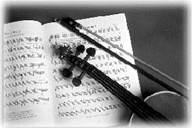
From the day I signed up for the Naumburg Competition, everything changed. I had made a decision to start again, to save my life, and that meant a 360-degree turnaround.
I kept on practicing. An enormous amount of work had to be done in two months. I went from not practicing at all to thirteen hours a day.
I spent two weeks just playing scales. If I thought I sounded bad before, now I sounded worse than awful.
At the time I lived on 72nd Street, close to West End Avenue. I had an apartment with a window the size of a shoebox. I didn't do mylaundry. I left my apartment only to walk to Juilliard─and not onBroadway like everyone else. I walked up Amsterdam Avenue because I didn't want to see anybody, didn't want to run into anybody, didn't want anyone to ask what I was doing.
I stopped going to classes and became a hermit. I even talked Miss DeLay into giving my lesson at night.
My eating habits were awful. I lived on fried sausages, a pint of peanut butter/chocolate ice cream, and a gallon of Coca-Cola every day. That's all I ate for eight weeks.
I was nuts. I was completely obsessed with getting back into shape, with doing well in this competition. If I could, people would know I was still on earth. Not to count me out; to stop asking, “Whatever happened to Nadja?”
The last week before the Naumburg auditions, I couldn't touch the violin. I had worked and worked and worked and worked and then I just couldn't work anymore.
I certainly could have used it. I wasn't as prepared as I should have been. But I simply had to say, “Nadja, you've dedicated yourself to this thing. Ready or not, do your best.”
Fifty violinists from around the world auditioned for the competition on May 25, 26, and 27, 1981. Those that made it past thepreliminaries would go on to the semifinals. Those that passed that stage would go to the finals. In years past, one violinist was chosen as winner and two received second and third place.
On May 26, the day of my audition, I went to the Merkin Concert Hall at 67th Street and Broadway. I waited, played for twenty minutes, and went home. I couldn't tell whether the preliminary judges were impressed or not. I'd find out the next evening.
Maybe subconsciously I was trying to keep busy; that night, when I fried the sausages, I accidentally set my apartment on fire. I grabbed my cat and my violin, and ran out the door. The fire was put out, but everything in my place was wrecked.
Fortunately, the phone was okay and on the evening of May 27, I had the news from Lucy Rowan Mann of Naumburg. Thirteen of us had made it.
Talk about mixed emotions. I was thrilled to be among the thirteen; a group that included established violinists, some of whom had already made records. But it also meant I had to play the next day in the semifinals of the competition.
Everyone entering the competition had been given two lists of concertos. One was a list of standard repertory pieces. The other list was twentieth-century repertory. For our big competition piece, we were to choose from each list and play a movement from one in the semifinals, and a movement from the other in the finals─if we made it that far.
From the standard repertory list, I chose the Tchaikovsky Concerto. I had been playing the Tchaik for three years, so it was a good piece for me.
From the twentieth-century list, I chose the Prokofiev G minor Concerto. I had never played it onstage before.
My goal had been just passing the auditions, but now my thought pattern began to change. If I wanted a sliver of a chance of advancing again, my brain said, “Play your strong piece first.”
Logically, I should play the Tchaikovsky in the semifinals just to make it to the next stage. Who cared if that left me with a piece I probably wouldn't play as well in the finals of the competition? It'd be a miracle to get that far.
There wouldn't be more than seven violinists chosen for the final round, and if I were in the top seven of an international group, that was plenty good enough.
The semifinals were held on May 28 in Merkin Concert Hall. You were to play for thirty minutes: your big piece first, then the judges would ask to hear another.
There was a panel of eight judges. They had a piece of paper with my choices of the Tchaikovsky and the Prokofiev in front of them. “Which would you like to play?” they asked.
I said meekly, “Prokofiev.”
My brain and all the logic in the world had said, “Play your strong piece.” My heart said, “Go for it all. Play your weak piece now, save Tchaikovsky for the finals.”
Maybe I don't listen to logic so easily after all.
My good friend, the pianist Sandra Rivers, had been chosen as accompanist for the competition. She knew I was nervous. There had been a very short time to prepare; I was sure there'd be memory slips, that I'd blank out in the middle and the judges would throw me out. My hands were like ice.
The first eight measures of the Prokofiev don't have accompaniment. The violin starts the piece alone. So I started playing.
I got through the first movement and Sandra said later my face was as white as snow. She said I was so tense, I was beyond shaking. Just a solid brick.
It was the best I'd ever played it. No memory slips at all. Technically, musically, it was there.
I finished it thinking, “Have I sold my soul for this? Is the devil going to visit me at midnight? How come it went so well?”
I didn't know why, but often I do my best under the worst of circumstances. I don't know if it's guts or a determination not to disappoint people. Who knows what it is, but it came through for me, and I thank God for that.
As the first movement ended, the judges said, “Thank you.” Then they asked for the Carmen Fantasy.
I turned and asked Sandy for an A, to retune, and later she said the blood was just rushing back into my face.
I whispered, “Sandy, I made it. I did it.”
“Yeah,” she whispered back, kiddingly, “too bad you didn't screw up. Maybe next time.”
At that point I didn't care if I did make the finals because I had played the Prokofiev so well. I was so proud of myself for coming through.
I needed a shot in the arm; that afternoon I got evicted. While I was at Merkin, my moped had blown up. For my landlord, that was the last straw.
What good news. I was completely broke and didn't have the next month's rent anyway. The landlord wanted me out that day. I said, “Please, can I have two days. I might get into the finals, can I please go through this first?”
I talked him into it, and got back to my place in time for the phone call. “Congratulations, Nadja,”“they said. “You have made the finals.”
I had achieved the ridiculously unlikely, and I had saved my best piece. Yet part of me was sorry. I wanted it to be over already. In the three days from the preliminaries to the semifinals, I lost eight pounds. I was so tired of the pressure.
There was a fellow who advanced to the finals with me, an old, good friend since Pre-College. Competition against friends is inevitable in music, but I never saw competition push a friendship out the window so quickly. By the day of the finals, I hated him and he hated me. Pressure was that intense.
The finals were held on May 29 at Carnegie Hall and open to the public. I was the fourth violinist of the morning, then there was a lunch break, and three more violinists in the afternoon.
I played my Tchaikovsky, Saint-Sa‘ns’s Havanaise, and Ravel's Tzigane for the judges: managers, famous violinists, teachers, and critics. I went on stage at five past eleven and finished at noon. Those fifty-five minutes seemed like three days.
I was so relieved when I finished playing; I was finished! It's impossible to say how happy I was to see the dressing room. I went out for lunch with my friends. It was like coming back from the grave. We laughed and joked and watched TV.
As I returned to Carnegie Hall to hear the other violinists, I realized I'd made a big mistake: they might ask for recalls. A recall is when they can't decide between two people and they want you to play again. It's been done; it's done all the time in competitions. No way was I in shape to go onstage and play again.
In the late afternoon, the competition was over. Everybody had finished playing. Quite luckily─no recalls.
The judges deliberated for an hour. The tension in the air was unbelievable. All the violinists were sitting with their little circle of friends. I had my few friends around me, but no one was saying much now.
Finally, the Naumburg Foundation president Robert Mann came on stage.
“It's always so difficult to choose ...” he began.
“Every year we hold this competition,” Robert Mann said. “And in the past, we've awarded three prizes. This year we've elected to only have one prize, the first prize.”
My heart sank. Nothing for me. Not even Miss Congeniality.
“We have found,” Mann went on, “that second place usually brings great dismay to the artist because they feel like a loser. We don't want anyone here to feel like a loser. Every finalist will receive five hundred dollars except the winner, who will receive three thousand dollars.”
And then he repeated how difficult it was to choose, how well everyone had played ...dah, dah, dah.
I was looking down at the floor.
“The winner is ...”
And he said my name.
A friend next to me said, “Nadja, I think you won!”
I went numb. My friends pulled me up and pointed me toward the stage. It was a long walk because I had slipped into a seat in the back. Sitting up in front was my old friend. I would have to walk right past him and I was dreading it, but before I could, he got up and stopped me.
He threw his arms around me and I threw my arms around him. I kept telling him how sorry I was. I was holding him and started to cry, saying, “I'm sorry, I'm sorry, I'm sorry.” I didn't want to lose, but I really didn't want him to lose either. And he was holding me and saying, “Don't be sorry. I'm so proud of you.” It was over, and we would be friends again.
I took my bow, then ran to Juilliard. Ten blocks uptown, one block west, to give Miss DeLay the news. She could be proud of me now, too.
Suddenly, everything was clear. Playing the violin is what I'd do with my life. Heaven handed me a prize: “You've been through a lot, kid. Here's an international competition.”
Everything had changed when I prepared for the Naumburg, and now everything changed again. I made my first recording. Between September 1981 and May 1982, I played a hundred concerts in America, made one trip to Europe, then two months of summer festivals. And people asked me back.
There was a great deal of anxiety playing in Europe for the first time. But I was able to rely on my self-confidence to pull me through.
Self-confidence onstage doesn't mean a lack of nerves backstage. The stakes had increased. This wasn't practice anymore, this was my life. I'd stare into a dressing-room mirror and say, “Nadja, people have bought tickets, hired baby-sitters, you've got to calm down; go out there and prove yourself.”
Every night I'd prove myself again. My life work had truly begun
- 1.
In a gesture to prepare for the competition, Nadja did all the following except _________
- A.preoccupying herself in practice
- B.trying to carry out her deeds secretly
- C.abandoning going to school for classes
- D.consuming the best food to get enough energy
- A.
- 2.
How many violinists does the passage mention advanced to the finals?
- A.Four
- B.Five
- C.Six
- D.Seven
- A.
- 3.
After Nadja finished playing at the finals, she went out for a while and when she came back to hear the other violinists she realized she had made a mistake because _________
- A.she forgot that there was going to be a recall
- B.she didn’t get hold of the permission to leave
- C.chances were that she had to replay and she was off guard
- D.there was another play she had to take part in in the afternoon
- A.
Red roses were her favorites; her name was also Rose. And every year her husband sent them, tied with pretty bows. The year he died, the roses were delivered to her door. The card said, “Be my Valentine(情人),” like all the years before.
Each year he sent her roses, and the note would always say, “I love you even more this year, than last year on this day. My love for you will always grow, with every passing year.” She knew this was the last time that the roses would appear. She thought, he ordered roses in advance before this day. Her loving husband did not know that he would pass away. He always liked to do things early. Then, if he got too busy, everything would work out fine. She cut away some stems, placed them in a very special vase, and set the vase beside the picture of his smiling face. She would sit for hours in her husband’s favorite chair, staring at his photo and the roses sitting there.
A year went by, and it was hard to live without her mate. Loneliness and solitude had become her fate. Then, the very hour, as on Valentine’s Day before, the doorbell rang, and there were roses, sitting by her door. She brought the roses in, and just looked at them in shock. Then, she went to get the telephone to call the florist(花匠)shop. The owner answered, and she asked him, if he would explain why someone would do this to her, causing her such pain.
“I know your husband passed away, more than a year ago,” the owner said, “I knew you'd call, and you would want to know. The flowers you received today were paid for in advance. Your husband always planned ahead. He left nothing to chance.”
“There is a standing order that I have on file down here. And he has paid, well in advance; you'll get them every year. There is also another thing that I think you should know. He wrote a special little card ... he did this years ago.” “Then, should ever, I find out that he's no longer here. That’s the card ... that should be sent to you the following year.” She thanked him and hung up the phone, her tears now flowing hard. Her fingers shaking, she slowly reached to get the card. Inside the card, she saw that he had written her a note. Then, as she stared in total silence, this is what he wrote: “Hello my love, I know it’s been a year since I was gone. I hope it hasn’t been too hard for you to overcome. I know it must be lonely, and the pain is very real. If it was the other way, I know how I would feel. The love we shared made everything so beautiful in life. I loved you more than words can say. You were the perfect wife.”
“You were my friend and lover; you satisfied my every need. I know it’s only been a year, but please try not to grieve. I want you to be happy, even when you shed your tears. That is why the roses will be sent to you for years.”
“When you get these roses, think of all the happiness that we had together, and how both of us were blessed. I have always loved you and I know I always will. But, my love, you must go on; you have some living still.”
“Please ... try to find happiness, while living out your days. I know it is not easy, but I hope you find some ways. The roses will come every year, and they will only stop when your door’s not answered, when the florist stops to knock. He will come five times that day, in case you have gone out. But after his last visit, he will know without a doubt. To take the roses to the place, where I’ve instructed him, and place them where we are, together once again.”
69. How did Rose feel when she received roses a year after her husband’s death?
A. Puzzled and disappointed. B. Sad and surprised
C. Proud but frightened. D. Happy but confused.
70. What can we know about Rose's husband when he was alive?
A. He preferred to make arrangements ahead of time.
B. He knew his wife loved roses more than himself.
C. He gave his wife a pleasant surprise every Valentine’s Day.
D. He was so busy that he had to order roses in advance each year.
71. The underlined word “grieve” (Paragraph 7) is closest in meaning to_______
A. kill yourself B. marry again C. feel deeply sad D. buy roses
72. It can be inferred from the last paragraph that_______
A. roses won't be delivered anywhere if no one answers the door
B. Rose won’t be able to get through the difficult days without her husband
C. sometimes the florist comes five times a day to check whether Rose is out
D. someday roses will be sent where Rose and her husband are buried
73. Which of the following is the best title for the passage?
A. An Unexpected Gift B. Be My Valentine
C. Roses for Rose D. A Loving Couple
查看习题详情和答案>>