网址:http://m.1010jiajiao.com/timu3_id_3098890[举报]
Last week, we published an article about modern marriage.A recent research showed that in England 51% of married women go out to work.People were asked what they thought of “working wives”.The results were as follows:
Men Women
In favor 70% 80%
Against 10% 20%
Don’t know 20% 0%
We asked readers to write and tell us their opinions.Here are some of the hundreds of letters we got.
I’m a woman photographer.I make plenty of money, travel a lot, and see a lot of people.I enjoy my work, and wouldn’t have to stay at home.I would never marry a man who wanted me to give up my work .
Ms Joji O’Leary Hampstead
At present there are over 1,000,000 men who were out of work in Britain.If a woman gets a job, she puts one more man out of work.Perhaps that man has a wife and twelve children to support.Let women stay at home as they used to.
Ted Stubbs Southend
I’m the mother of twelve children.When I go to work, my husband, looks after the children.He is good with children and enjoys staying at home with them.And I enjoy the job as a bus driver.
Mrs. F.Boot Battersea
1.________of men are on the side of working wives.
A.Most.
B.None
C.100%
D.A few
2.The Woman photographer would not marry a man who ________.
A.had less money than her
B.forbade her to work
C.was not very gentle
D.wanted to stay at home
3.Ted Stubbs thought that women’s going out to work would ________.
A.weaken the rights of the husband at home
B.be better than men
C.make men lose chances
D.make their husbands useless for work
4.in England, 51% ________.
A.of.working women are married
B.of the women who have been married go out to work.
C.of the married women want to go to work
D.of the people are in favor of married women’s going out to work
查看习题详情和答案>>
阅读理解:
Women in Ghana
Most women in Ghana the educated and illiterate (文盲), the urban and rural, the young and oldwork to earn an income in addition to maintaining their roles as housewives and mothers. Their reputation for economic independence, self-reliance, and hard work is well known and well deserved.
Nine out of ten women fifteen years of age and over are married. Women say they would like to have six or more children, and in fact an average of seven children is born to every women. In short, the normal life pattern for most Ghanaian women is to combine an active role in the economy with an active role as wife and mother of a large family.
How do these working mothers cope with their multiple responsibilities in the home and on the job? Some new ideas are being tried. One of these is family planning to help reduce family size. Another helpful solution is the Day-care Center, but this is available mainly in urban areas, and usually the fees are too high for the poor. Ghanaians realize that more day-care centers are needed. Ghana today is looking for new ways to meet the needs of women and their families, so women can continue to play their multiple roles both in the home and in the economy.
1.Which of the following may best summarize paragraph 1?
[ ]
A.Ghanaian women are quite unlucky.
B.Women in Ghana are independent.
C.Women in Ghana have double tasks.
D.Most mothers in Ghana are young.
2.“Their reputation is well deserved” in the first paragraph means ________.
[ ]
A.they have not been well respected
B.husbands want them to work harder
C.they should work harder
D.there are good reasons why they are respected
3.In fact a Ghanaian woman has on an average ________ children.
4.What new ideas are being tried to help Ghanaian women?
5.The author of this passage probably agrees that ________.
A.women should continue both their roles
B.women should not be so busy
C.women should not work
D.women should stay at home
查看习题详情和答案>>Men Women
In favor 70% 80%
Against 10% 20%
Don’t know 20% 0%
We asked readers to write and tell us their opinions.Here are some of the hundreds of letters we got.
I’m a woman photographer.I make plenty of money, travel a lot, and see a lot of people.I enjoy my work, and wouldn’t have to stay at home.I would never marry a man who wanted me to give up my work .
Ms Joji O’Leary Hampstead
At present there are over 1,000,000 men who were out of work in Britain.If a woman gets a job, she puts one more man out of work.Perhaps that man has a wife and twelve children to support.Let women stay at home as they used to.
Ted Stubbs Southend
I’m the mother of twelve children.When I go to work, my husband, looks after the children.He is good with children and enjoys staying at home with them.And I enjoy the job as a bus driver.
Mrs. F.Boot Battersea
1.________of men are on the side of working wives.
A.Most.
B.None
C.100%
D.A few
2.The Woman photographer would not marry a man who ________.
A.had less money than her
B.forbade her to work
C.was not very gentle
D.wanted to stay at home
3.Ted Stubbs thought that women’s going out to work would ________.
A.weaken the rights of the husband at home
B.be better than men
C.make men lose chances
D.make their husbands useless for work
4.in England, 51% ________.
A.of.working women are married
B.of the women who have been married go out to work.
C.of the married women want to go to work
D.of the people are in favor of married women’s going out to work
查看习题详情和答案>>
Want to know more about how World Food Programme helps women all over the world? Here is a quick look at the valuable things it has done.
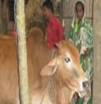 Investing(投资) In Bulls, Woman Begins To Escape From Poverty
In Shahinoor’s household there were days when she struggled to put even one meal on the family table. She and her husband are among Bangladesh’s poorest: those with no land, no wealth and little hope of breaking out of hunger and poverty. But a new programme to unlock the entrepreneurial(创业的) spirit of Bangladeshi women has transformed her life.
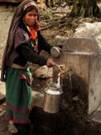 Food Aid Brings Fresh Water To Nepalese Village
Kanukura, 33, says that carrying water up the mountain slopes to her village used to be the hardest part of her day. It’s a job that mainly fell to women in this part of Nepal, who faced a difficult and tiring climb when they needed water. But that’s changed now, thanks to a new village tap, from which women like Kanukura can get clean drinking water whenever they need it.
In Colombia, Food Assistance Is Part Of Response To Violence Against Women
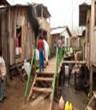 In Colombia, WFP assists many victims of sexual and gender-based violence, providing them with food assistance as they recover. As part of her work for WFP, Mariangela Bizzarri recently visited a town on Colombia’s Pacific coast to meet some of these women and to assess the effect of the violence they have experienced. She sent us this personal account of one day of meetings.
Afghanistan Diary - Day Six
 On the final day of Silke’s trip to central Afghanistan, she meets three women, each of whom impresses her with their determination to improve their own lives, and those of their families and their community. One of them is thrilled at simply having a job in a government office. As a child the idea of working outside her home had seemed impossible.
60. Who lives in a place where water used to be difficult to get according to the passage?
A. Silke B. Kanukura C. Shahinoor D. Mariangela
61. We learn from the passage that women in Colombia ________.
A. may give birth to 5 children
B. can’t go to school all their life
C. have to work in a government office
D. are more likely to get harmed than men
62. Women in Bangladesh now become not so poor as they used to be by ________.
A. raising bulls with the help of WFP
B. working more hours in the fields
C. doing part-time jobs in the evening
D. receiving money from the government
63. Which of the following is TRUE according to the passage?
A. There are many victims of sexual violence in Nepal.
B. Getting clean drinking water is easier in Bangladesh.
C. The social position of women in Afghanistan has greatly changed.
D. Children in Colombia sometimes have only one meal a day.
查看习题详情和答案>>
| |||||||||||||||||||||||||||||||||||||||||||||||||||||||||||||||||||||||||||||||||||||||||||||||||||||||||||||||||||||||||||||||||||||||||||||||||||||||||||||||||||||||||||||||||||||||||||||||||||||||||||||||||||||||||||||||||||||||||||||||||||||||||||||||||||||||||||||||||||||||||||