网址:http://m.1010jiajiao.com/timu3_id_3097022[举报]
第一节 听力理解(5段共15小题;每小题2分,满分30分)
每段播放两遍。各段后有几个小题,各段播放前每小题有5秒钟的阅题时间。请根据 各段播放内容及其相关小题,在5秒钟内从题中所给的A、B、C项中,选出最佳选项,并在答题卡上将该项涂黑。
听第一段对话,回答第1—3题。
1.What does the girl want her father to buy7
A. A ruler. B. High-tech things. C. Pencils and erasers.
2.Which of the following does the father consider buying for his daughter?
A. A calculator. B. A computer. C. An MP3.
3.Which of the following could be a reason for her father to buy what she wants7
A. She volunteers to use some of her own money.
B. She asks her father to buy a cheap one online.
C. She tells her father she is the best in school.
听第二段对话,回答第4—6题。
4.What do the speakers think of San Francisco?
A. It is a big city. B. They both love the city. C. It isn't so expensive to live there.
5.What does the woman think of cell phone interruption?
A. She likes it. B. She doesn't mind it. C. She considers it rude.
6.What reason does the man give to answer his cell phone?
A. He feels like answering.
B. He wants to know who's calling.
C. He thinks that it could be something important.
听第三段对话,回答第7—9题。
7.What is the man complaining about?
A. Not accepting any gift from his friend.
B. Not receiving any answer from his friend.
C. Not hearing any good news from his friend.
8.According to the woman, when should you write a thank-you card?
A. You receive a gift from your friend.
B. You are invited to a birthday party.
C. You spend a holiday with your friend.
9.What's the speakers' attitude towards writing thank-you cards?
A. They think it out-dated. B. They think it inconvenient.
C. They think it good to keep the custom.
听第四段独白,回答第10—12题。
10.What does the speaker imply about traffic in big cities?
A. Buses are slow, but comfortable.
B. Parking in the rush hour is very difficult.
C. All the people use private transport instead of public transport.
11.What does the speaker recommend to do to improve the situation?
A. To enlarge city centers.
B. To move to the areas outside the city.
C. To make good use of existing space.
12.How many aspects of our lives does the speaker mention as affected by overcrowding?
A. Two. B. Three. C. Four.
听第五段对话,回答第13—15题。
13.Why does the man like The Times?
A. It has 20 pages every day.
B. It carries a lot of sports news.
C. It doesn't devote 5 pages every day to baseball results.
14.In what way is the jobs section on The Times useful to the local people?
A. It carries job ads from the local businesses.
B. It is the place where local businesses hire people.
C. It provides much information about local economy.
15.What does the woman think will happen to job ads if The Times closes down?
A. The other two newspapers will open a local jobs newspaper.
B. The local economy will be much affected but not destroyed.
C. The job ads will be carried in either of the other two newspapers.
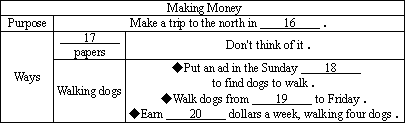
第二节 听取信息(共5小题;每小题1分,满分5分)
听下面一段独白,请根据题目要求,从所听到的内容中获取必要的信息,填入答题卡 标号为16.—20.的空格中。听录音前,你将有10秒钟的阅题时间。录音读两遍,你将有80秒钟的作答时间。
|
Season |
Period |
Temperature |
Weather |
Activities |
|
winter |
December~early March |
Drop (16.) |
snowy |
skiing, snowshoeing |
|
spring |
from(17.) |
around 50 degrees during the day |
windy |
going on a picnic, strolling through parks and playing (18.) |
|
summer |
from June |
around 80 defrees |
rry with (19.) |
hiking, fishing, etc. |
|
fall |
from late September |
|
cool |
rriving into the mountains, viewing the fall colors, cleaning up (20.) |
查看习题详情和答案>>
听力
第一节听力理解(5段共15小题;每小题2分,满分30分)
每段播放两遍。各段后有几个小题,各段播放前每小题有5秒钟的阅题时间。请根据各段播放内容及其相关小题,在5秒钟内从题中所给的A、B、C项中,选出最佳选项。
听第一段对话,回答第1至3题。现在,你有15秒钟的时间阅读这三个小题。
1.What is the probable relationship between the two speakers?
A.Son and mother.
B.Waiter and guest.
C.Friends.
2.How many kinds of food do they mention?
A.Two.
B.Three.
C.Four.
3.What’s the man speaker going to do for the day.
A.He is going to the baseball game.
B.He is going to teach the woman computer.
C.He is going to learn to use a new maths program on the computer.
听第二段材料,回答第4至6题。现在,你有15秒钟的时间阅读这三个小题。
4.What did the man enjoy about his visit?
A.The dinner and the gift.
B.The dinner and the atmosphere.
C.The gift and the atmosphere.
5.The woman visited ________.
A.Dennis’ family
B.Mr.Queens’ family
C.The Smiths family
6.How many are there people in Mr.Queens’ family?
A.Six.
B.Seven.
C.Eight.
听第三段材料,回答第7至9题。现在,你有15秒钟的时间阅读这三个小题。
7.Where are the two speakers now?
A.In the UK.
B.In the USA.
C.In Canada.
8.The man should be at work on ________.
A.Saturday.
B.Friday.
C.Thanksgiving Day.
9.What can we know from the conversation?
A.The man comes from Thailand.
B.It’s no need for the man to pay for his meals.
C.The man should work for a fixed time from Monday to Friday.
听第四段材料,回答第10至12题。现在,你有15秒钟的时间阅读这三个小题。
10.How much does the man intend to ask the woman for extra fare?
A.Twenty-five.
B.Twenty.
C.Fifteen.
11.According to the man, how many people are there in his family?
A.Four.
B.Five.
C.Six.
12.What can be learned from the conversation?
A.The woman comes from the conversation?
B.It’s the first time for the woman to be in the place.
C.The woman calls the police.
听第五段材料,回答第13至15题。现在,你有15秒钟的时间阅读这三个小题。
13.What is the main idea of the passage?
A.It’s about what a laser is.
B.It’s about various uses of lasers.
C.It’s about medical uses of lasers.
14.What senses light according to the passage?
A.The retina.
B.The outer part of the eye.
C.The inner part of the eye.
15.What can we infer from the passage about a detached(脱落的)retina?
A.It can be possibly cured by using lasers.
B.It means the loss of sight of a patient.
C.It is still a dangerous disease.
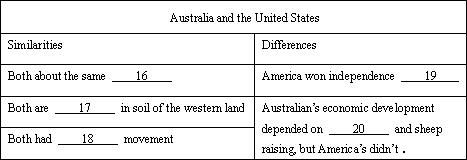
第二节:听取信息(共5小题;每小题1分,满分5分)
听下面一段独白,请根据题目要求,从所听到的内容中获取必要的信息,填入标号为16-20的空格中。听录音前,你将有10秒钟的阅题时间。录音读两遍,你将有80秒钟的作答时间。
听力理解(共两节,满分20分)
第一节(共5小题;每题1分,满分5分)
听下面五段对话,每段对话后有一个小题,从题中所给的A、B、C三个选项中选出最佳选项。听完每段对话后,你都有10秒钟的时间来回答有关小题和阅读下一小题。每段对话仅读一遍。
1.When will Susan arrive?
A.At 4∶30.
B.At 4∶45.
C.At 5∶20.
2.Why can’t the woman go to see the film today?
A.Because she is not feeling well.
B.Because she doesn’t like the film.
C.Because she has another plan.
3.How much is the jacket?
A.600 US dollars.
B.100 Hong Kong dollars.
C.600 Hong Kong dollars.
4.What does the man have for this meal?
A.Soup, noodles and iced coffee.
B.A sandwich, noodles and hot coffee.
C.Soup, noodles and hot coffee.
5.Who is Mr.Smith?
A.A friend of the girl’s father’s.
B.The girl’s brother.
C.The girl’s father.
第二节(共15小题;每题1分,满分15分)
听下面五段对话或独白,每段对话或独白后有几个小题,从题中所给的A、B、C三个选项中选出最佳选项。听每段对话或独白前,你将有时间阅读各个小题,每小题5秒钟;听完后,各小题将给出5秒钟的作答时间。每段对话或独白读两遍。
听第6段材料,回答第6至8题。
6.Where does the conversation take place?
A.At a post office.
B.At a baker’s shop.
C.At a restaurant.
7.When was the parcel posted?
A.Two days ago.
B.Two weeks ago.
C.Two months ago.
8.What do we know about the man?
A.He lives at 128 Devon Street.
B.He is very angry about the service.
C.He sent his mother a parcel.
听第7段材料,回答第9至11题。
9.What do we know about No.6 Station Road?
A.It has the man’s lucky number.
B.It has four bedrooms.
C.It has a garage.
10.What is good about No.4 Candy Street?
A.It is in a quieter place.
B.It has bigger rooms.
C.It is closer to shops.
11.Which one have they decided on?
A.The one with a big garden.
B.The one next to the station.
C.The one closer to town.
听第8段材料,回答第12至14题。
12.What is the man planning to do with his friends?
A.Watch a football game.
B.Go for a drive and have a picnic.
C.Have dinner and see a movie.
13.Why does the woman hesitate to go with them?
A.Because she has to study for an exam.
B.Because she has to attend a party.
C.Because she doesn’t have enough money.
14.When does the woman want to be back?
A.By 11∶30 p. m.
B.By 10∶30 p. m.
C.By 6∶00 p. m.
听第9段材料,回答第15至17题。
15.Why didn’t the man want to go dancing?
A.Because he thought it was dull.
B.Because he didn’t like dancing.
C.Because he was very tired.
16.What did the man suggest?
A.Walking on the bridge.
B.Inviting friends to watch the bridge.
C.Inviting some friends to play bridge.
17.When will Janet come around?
A.At about 8 a. m.
B.At about 4 p. m.
C.At about 8 p. m.
听第10段材料,回答第18至20题。
18.Who is speaking?
A.The radio host.
B.The singer.
C.The director.
19.When are tickets available to the winning people?
A.Before Saturday night.
B.Before Thursday morning.
C.Before Wednesday morning.
20.Through which phone number can people find the speaker?
A.683-3019.
B.693-3019.
C.693-3091.
听力理解(共三节,共15分)
第一节(共5小题;每小题1分,共5分)
听下面5段对话,每段对话后有一道小题,从每题所给的A、B、C三个选项中选出最佳选项。听完每段对话后,你将有10秒钟的时间来回答有关小题和阅读下一小题。每段对话你将听一遍。
1.Where are the speakers probably?
A.At a party.
B.At a meeting.
C.At Judy's home.
2.What are the speakers going to do?
A.Fix a bike.
B.Buy a bike.
C.Take a bike ride.
3.When may the man visit Mr.Black?
A.On November 1st
B.On November 2nd.
C.On November 3rd.
4.What is the probable relationship between the speakers?
A.Customer and waitress.
B.Teacher and student.
C.Boss and secretary.
5.Where is the man from?
A.Australia.
B.New Zealand.
C.Canada.
第二节(共5小题;每小题1分,共5分)
听下面2段对话或独白,每段对话或独白后几道小题,从每题所给的A、B、C三个选项中选出最佳选项。听每段对话或独白前,你将有5秒钟的时间阅读每小题。听完后,每小题将给出5秒钟的作答时间。每段对话或独白你将听两遍。
听第6段材料,回答第6至7题。
6.Where did the man find the woman's wallet?
A.In the restroom.
B.Under the table.
C.On the table.
7.How does the woman feel in the end?
A.Tired.
B.Angry.
C.Sorry.
听第7段材料,回答第8至10题。
8.Where will the man go?
A.To a theatre.
B.To a cinema.
C.To a bookshop.
9.Which country does the man come from?
A.America.
B.Britain.
C.France.
10.How will the man go there?
A.By taxi.
B.On foot.
C.By bus.
第三节(共5小题;每小题1分,共5分)
听下面一段对话,完成第11至第15五道小题,每小题仅填写一个词。听对话前,你将有20秒钟的时间阅读试题,听完后你将有60秒钟的作答时间,这段对话你将听两遍。

听力理解(共两节,满分30分)
第一节(共5小题;每小题1.5分,满分7.5分)
听下面5段对话.每段对话后有一个小题,从题中所给的A、B、C三个选项中选出最佳选项.听完每段对话后,你都有10秒钟的时间来回答有关小题和阅读下一小题.每段对话仅读一遍.
1.What does the man speaker suggest the woman do?
A.Open the door carefully.
B.Have John fix the lock.
C.Fix the door in time.
2.What's the probable relationship between the speakers?
A.Husband and wife.
B.Teacher and student.
C.Boss and secretary.
3.What was the lecture about?
A.Effective ways to give up smoking.
B.The harmful effects of second-hand smoke.
C.Prof.Smith's new invention.
4.Where are the speakers at the moment?
A.At home.
B.In a restaurant.
C.In the street.
5.Why does the man go to see the doctor?
A.He fell off a step and twisted his ankle.
B.He fell off a bike and hurt his legs.
C.He hurt his ankle in a football match.
第二节(共10小题;每题1.5分,满分15分)
听下面4段对话或独白.每段对话或独白后有几个小题,从题中所给的A,B,C三个选项中选出最佳选项.听每段对话或独白前,你将有时间阅读各个小题,每小题5秒钟;听完后,每小题将给出5秒钟的作答时间.每段对话或独白读两遍.
听第6段材料,回答第6至7题.
6.Why does the man make the call?
A.To make an apology.
B.To make a complaint.
C.To make an appointment.
7.When will the woman come to the man's home?
A.At 3∶00 pm on Friday.
B.At 11∶00 am on Saturday.
C.At 3∶00 pm on Saturday.
听第7段材料,回答第8至9题.
8.What do we know about the man's dad?
A.He was angry with the man.
B.He met with his friends last night.
C.He has been bad-tempered in the last month.
9.What does the doctor say the man's dad might have to do?
A.Stay at home.
B.Go into hospital.
C.Have a heart operation.
听第8段材料,回答第10至12题.
10.What will the woman do on Thursday after having a piano lesson?
A.Read a book.
B.Watch a movie.
C.Take care of children.
11.What will the woman be busy doing on Tuesday?
A.Practising her violin.
B.Helping her neighbours.
C.Writing her English paper.
12.How does the woman feel about her life?
A.Too busy.
B.Very easy.
C.Too boring,
听第9段材料,回答第13至15题.
13.What's the plan about?
A.Television commercials.
B.Costs of advertisements.
C.New production methods and advertisements.
14.Who has the woman been trying to talk to about the human resources?
A.Finance section.
B.Personnel and staff.
C.Personnel and finance section.
15.Why should the company use television commercials?
A.It's not expensive any more to do that.
B.Advertising in the papers is out of date.
C.They want to keep ahead of the competitors.
第三节(共5小题;每小题1.5分,共7.5分)
听下面一段对话白,完成第16至20五道小题,每小题仅填写一个词.听对话前,你将有20秒钟的时间阅读试题,听完后你将有60秒钟的作答时间.这段对话你将听两遍.