网址:http://m.1010jiajiao.com/timu3_id_3079689[举报]
The dream of flying like Buzz Lightyear never dies. For years, space-age inventors have tested one wearable jet pack after another. And time after time, the designs have been grounded by dangerous fuels, excessive weight, or very loud noise levels. Now a Canadian inventor has sidestepped those weaknesses with an aquatic jet pack. Designed for travel over lakes or oceans, it’s driven by pressurized water, not burning rocket fuel.
When Raymond Li first told the idea for the aquatic jet pack to his friends, they said he must be nuts. How could a jet pack carry that much water? Its thrust-to-weight rate would be so low and it would never become airborne. Thrust-to-weight rate is a measure of the forward force produced compared with the weight of the vehicle. A vehicle with a low thrust-to-weight rate is relatively heavy for the amount of force it generates.
Li's genius idea was to place the jet pack’s engine and its water pump in a separate boat. The pump would draw water from the lake the boat was floating on. It would then force the water under pressure through a hose connected to the jet pack. The hose would be long enough to let the pack go up as high as 8.5 meters (28 feet) in the air.
Today, Li's invention, the Jetlev-Flyer, is ready to go into production. The pack itself, complete with jet nozzles (管嘴) and handlebars, weighs just 14 kilograms. The boat is a floating pod. To take off, the operator hits a trigger on a handlebar, which starts the pump, and then turns the throttle. Two streams of high-velocity water shoot through the hose and out the nozzles, lifting the operator into the air. The operator hovers there or pushes down on the handlebars, zooming forward at speeds of up to 64 kilometers per hour, pulling the pod behind.
All the following factors contribute to the failure of inventing a wearable jet pack EXCEPT ______.
A. excessive water B. unbearable noise C. unsafe fuels D. too much weight
The underlined word “sidestepped” in Para. 1 most probably means ________.
A. improved B. reduced C. avoided D. solved
Raymond Li’s friends found his idea for the aquatic jet pack was ________.
A. exciting B. crazy C. realistic D. creative
Which of the following is TRUE according to the passage?
A. His friends encouraged him to do the invention.
B. He put the engine and its water pump in the same boat.
C. The success of his invention lies in his bravery.
D. His invention finally succeeded and will go into production.
Which is the right order to make the Jetlev-Flyer take off?
a. The throttle is turned. b. The operator is lifted into the air.
c. A trigger is hit. d. Two streams of water shoot out.
The pump is started.
A. c, e, a, d, b B. c, e, a, b, d C. e, c, d, b, a D. e, a, c, d, b
查看习题详情和答案>> The dream of
flying like Buzz Lightyear never dies. For years, space-age inventors have
tested one wearable jet pack after another. And time after time, the designs
have been grounded by dangerous fuels, excessive weight, or very loud noise
levels. Now a Canadian inventor has sidestepped those weaknesses with an
aquatic jet pack. Designed for travel over lakes or oceans, it’s driven by
pressurized water, not burning rocket fuel.
The dream of
flying like Buzz Lightyear never dies. For years, space-age inventors have
tested one wearable jet pack after another. And time after time, the designs
have been grounded by dangerous fuels, excessive weight, or very loud noise
levels. Now a Canadian inventor has sidestepped those weaknesses with an
aquatic jet pack. Designed for travel over lakes or oceans, it’s driven by
pressurized water, not burning rocket fuel.
When Raymond Li first told the idea for the aquatic jet pack to his friends, they said he must be nuts. How could a jet pack carry that much water? Its thrust-to-weight rate would be so low and it would never become airborne. Thrust-to-weight rate is a measure of the forward force produced compared with the weight of the vehicle. A vehicle with a low thrust-to-weight rate is relatively heavy for the amount of force it generates.
Li's genius idea was to place the jet pack’s engine and its water pump in a separate boat. The pump would draw water from the lake the boat was floating on. It would then force the water under pressure through a hose connected to the jet pack. The hose would be long enough to let the pack go up as high as 8.5 meters (28 feet) in the air.
Today, Li's invention, the Jetlev-Flyer, is ready to go into production. The pack itself, complete with jet nozzles (管嘴) and handlebars, weighs just 14 kilograms. The boat is a floating pod. To take off, the operator hits a trigger on a handlebar, which starts the pump, and then turns the throttle. Two streams of high-velocity water shoot through the hose and out the nozzles, lifting the operator into the air. The operator hovers there or pushes down on the handlebars, zooming forward at speeds of up to 64 kilometers per hour, pulling the pod behind.
1.All the following factors contribute to the failure of inventing a wearable jet pack EXCEPT ______.
A. excessive water B. unbearable noise C. unsafe fuels D. too much weight
2. The underlined word “sidestepped” in Para. 1 most probably means ________.
A. improved B. reduced C. avoided D. solved
3. Raymond Li’s friends found his idea for the aquatic jet pack was ________.
A. exciting B. crazy C. realistic D. creative
4.Which of the following is TRUE according to the passage?
A. His friends encouraged him to do the invention.
B. He put the engine and its water pump in the same boat.
C. The success of his invention lies in his bravery.
D. His invention finally succeeded and will go into production.
5.Which is the right order to make the Jetlev-Flyer take off?
a. The throttle is turned. b. The operator is lifted into the air.
c. A trigger is hit. d. Two streams of water shoot out.
The pump is started.
A. c, e, a, d, b B. c, e, a, b, d C. e, c, d, b, a D. e, a, c, d, b
查看习题详情和答案>>
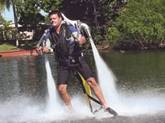 The dream of flying like Buzz Lightyear never dies. For years, space-age inventors have tested one wearable jet pack after another. And time after time, the designs have been grounded by dangerous fuels, excessive weight, or very loud noise levels. Now a Canadian inventor has sidestepped those weaknesses with an aquatic jet pack. Designed for travel over lakes or oceans, it’s driven by pressurized water, not burning rocket fuel.
When Raymond Li first told the idea for the aquatic jet pack to his friends, they said he must be nuts. How could a jet pack carry that much water? Its thrust-to-weight rate would be so low and it would never become airborne. Thrust-to-weight rate is a measure of the forward force produced compared with the weight of the vehicle. A vehicle with a low thrust-to-weight rate is relatively heavy for the amount of force it generates.
Li's genius idea was to place the jet pack’s engine and its water pump in a separate boat. The pump would draw water from the lake the boat was floating on. It would then force the water under pressure through a hose connected to the jet pack. The hose would be long enough to let the pack go up as high as 8.5 meters (28 feet) in the air.
Today, Li's invention, the Jetlev-Flyer, is ready to go into production. The pack itself, complete with jet nozzles (管嘴) and handlebars, weighs just 14 kilograms. The boat is a floating pod. To take off, the operator hits a trigger on a handlebar, which starts the pump, and then turns the throttle. Two streams of high-velocity water shoot through the hose and out the nozzles, lifting the operator into the air. The operator hovers there or pushes down on the handlebars, zooming forward at speeds of up to 64 kilometers per hour, pulling the pod behind.
61. All the following factors contribute to the failure of inventing a wearable jet pack EXCEPT ______.
A. excessive water B. unbearable noise C. unsafe fuels D. too much weight
62. The underlined word “sidestepped” in Para. 1 most probably means ________.
A. improved B. reduced C. avoided D. solved
63. Raymond Li’s friends found his idea for the aquatic jet pack was ________.
A. exciting B. crazy C. realistic D. creative
64. Which of the following is TRUE according to the passage?
A. His friends encouraged him to do the invention.
B. He put the engine and its water pump in the same boat.
C. The success of his invention lies in his bravery.
D. His invention finally succeeded and will go into production.
65. Which is the right order to make the Jetlev-Flyer take off?
a. The throttle is turned. b. The operator is lifted into the air.
c. A trigger is hit. d. Two streams of water shoot out.
e. The pump is started.
A. c, e, a, d, b B. c, e, a, b, d C. e, c, d, b, a D. e, a, c, d, b
查看习题详情和答案>> The dream of flying like Buzz Lightyear never dies. For years, space-age inventors have tested one wearable jet pack after another. And time after time, the designs have been grounded by dangerous fuels, excessive weight, or very loud noise levels. Now a Canadian inventor has sidestepped those weaknesses with an aquatic jet pack. Designed for travel over lakes or oceans, it’s driven by pressurized water, not burning rocket fuel.
When Raymond Li first told the idea for the aquatic jet pack to his friends, they said he must be nuts. How could a jet pack carry that much water? Its thrust-to-weight rate would be so low and it would never become airborne. Thrust-to-weight rate is a measure of the forward force produced compared with the weight of the vehicle. A vehicle with a low thrust-to-weight rate is relatively heavy for the amount of force it generates.
Li's genius idea was to place the jet pack’s engine and its water pump in a separate boat. The pump would draw water from the lake the boat was floating on. It would then force the water under pressure through a hose connected to the jet pack. The hose would be long enough to let the pack go up as high as 8.5 meters (28 feet) in the air.
Today, Li's invention, the Jetlev-Flyer, is ready to go into production. The pack itself, complete with jet nozzles (管嘴) and handlebars, weighs just 14 kilograms. The boat is a floating pod. To take off, the operator hits a trigger on a handlebar, which starts the pump, and then turns the throttle. Two streams of high-velocity water shoot through the hose and out the nozzles, lifting the operator into the air. The operator hovers there or pushes down on the handlebars, zooming forward at speeds of up to 64 kilometers per hour, pulling the pod behind.
61. All the following factors contribute to the failure of inventing a wearable jet pack EXCEPT ______.
A. excessive water B. unbearable noise C. unsafe fuels D. too much weight
62. The underlined word “sidestepped” in Para. 1 most probably means ________.
A. improved B. reduced C. avoided D. solved
63. Raymond Li’s friends found his idea for the aquatic jet pack was ________.
A. exciting B. crazy C. realistic D. creative
64. Which of the following is TRUE according to the passage?
A. His friends encouraged him to do the invention.
B. He put the engine and its water pump in the same boat.
C. The success of his invention lies in his bravery.
D. His invention finally succeeded and will go into production.
65. Which is the right order to make the Jetlev-Flyer take off?
a. The throttle is turned. b. The operator is lifted into the air.
c. A trigger is hit. d. Two streams of water shoot out.
e. The pump is started.
A. c, e, a, d, b B. c, e, a, b, d C. e, c, d, b, a D. e, a, c, d, b
查看习题详情和答案>>A lady and her husband stepped off the train in Boston. They walked without an appointment into the outer 36 of Harvard’s president. But they were 37 by his secretary and kept waiting. For hours, the secretary took no notice of them, 38 that the couple would finally become 39 and go away. But they didn’t. The secretary finally decided to disturb the president, though 40 .
A few minutes later, the president walked towards the couple with a 41 face. The lady told them, “We had a son that 42 Harvard for one year. He loved Harvard. He was 43 here. But about a year ago, he was accidentally killed. My husband and I would like to 44 a memorial (纪念物) to him, somewhere on campus.”
The president wasn’t 45 .Instead, he was shocked. “Madam,” he said, “We can’t put up a statue for every person who studied at Harvard and died. If we did, this 46 would look like a cemetery (墓地)。”“Oh, no,” the lady 47 quickly, “We don’t want to put up a statue. We would like to give a 48 to Harvard.” The president rolled his eyes and 49 at the couple and then exclaimed,” A building! Do you have any
50 how much a building costs? We have spent over $7,500,000 on the campus building at Harvard.” For a moment the lady was silent. The president was __51___, because he could get rid of them now. Then the lady turned to her husband and said quietly, “Is that all it costs to start a 52 ? Why don’t we just start our own?” Her husband nodded. 53 their offer was turned down, Mr. And Mrs. Stanford traveled to California where they founded the University that bears their 54 ,a memorial to a son that Harvard no longer 55 about.
36.A.lab B.library C.hall D.office
37.A.watched B.stopped C.followed D.interviewed
38.A.hoping B.finding C.realizing D.imagining
39.A.surprised B.disappointed C.worried D.troubled
40.A.hopelessly B.carefully C.unexpectedly D.unwillingly
41.A.pleasant B.funny C.cold D.sad
42.A.attended B.visited C.studied D.served
43.A.clever B.brave C.proud D.happy
44.A.set about B.set up C.take down D.take over
45.A.satisfied B.excited C.moved D.ashamed
46.A.house B.part C.garden D.place
47.A.explained B.expressed C.refused D.admitted
48.A.building B.yard C.playground D.square
49.A.laughed B.shouted C.glanced D.called
50.A.suggestion B.idea C.thought D.opinion
51.A.bored B.astonished C.interested D.pleased
52.A.department B.university C.business D.club
53.A.Once B.While C.Since D.Though
54.A.name B.character C.picture D.sign
55.A.talked B.knew C.heard D.cared
查看习题详情和答案>>