网址:http://m.1010jiajiao.com/timu3_id_3078801[举报]
HK’s Family Affair
The 32nd Hong Kong Art Festival, to be held early next year, will be based on the theme of “family”.
The art festival, considered to be Asia’s best, began in 1973.
“We hope that people from Beijing and from all over the world will go to Hong Kong to enjoy the multiple performances in our art festival,”Douglas Gautier, the festival’s management director, said in a press conference in the capital.
In the 29 days of the festival, which runs from February 8 to March 7, 2004, the audience can choose from 111 performances of 51 programmes staged by 700 foreign performers, 450 local artists and 160 actors from the mainland.
Programmes vary from classical music, jazz, world music, Western and Peking opera, drama and dance to outdoor spectaculars.
The programmes include Beethoven’s only opera Fidelio, Shakespeare’s drama Rromeo and Juliet, the ballet Mozartina and African dances, to name just a few.
The lineup(阵容)includes the English Touring Theatre, Prague Chamber Orchestra, Zurich Ballet, The Spanish National Dance Troupe, as well as Europe Galante, the Petersen Quartet, pianists Angela Hewitt and Marc-Andre Hamelin, and saxophonist Jan Garbarek.
In an effort to increase attendance, hotels and airlines are offering discount packages along with art festival ticket sales, most of which are at 20% and 30% discounts.
For more information, please check:
www. hk. artsfestival. org
1.The press conference must have been held ________.
|
A.in Hong Kong |
B.in Europe |
|
C.in Beijing |
D.in England |
2.By means of“discount packages”you can pay ________.
|
A.nothing for the cost |
|
B.less than the usual cost |
|
C.for the air ticket but not for the festival ticket |
|
D.for the festival ticket but not for hotel rooms |
3.According to the text, we do NOT have any information about ________.
|
A.who will perform on stage |
B.what programmes there will be |
|
C.when the 32nd Art Festival will be held |
D.which theatres will put on performances |
4.The main purpose in writing this text is ________.
|
A.to make the 32nd Art Festival known |
B.to announce the plan of the art festival |
|
C.to introduce the cost of the art festival |
D.to sell a service during the art festival |
查看习题详情和答案>>
The striving of countries in Central Europe to enter the European Union may offer an unprecedented chance to the continent’s Gypsies (or Roman) to be recognized as a nation, albeit one without a defined territory. And if they were to achieve that they might even seek some kind of formal place—at least a total population outnumbers that of many of the Union’s present and future countries. Some experts put the figure at 4m-plus; some proponents of Gypsy rights go as high as 15m.
Unlike Jews, Gypsies have had no known ancestral land to hark back to. Though their language is related to Hindi, their territorial origins are misty. Romanian peasants held them to be born on the moon. Other Europeans (wrongly) thought them migrant Egyptians, hence the derivative Gypsy. Most probably they were itinerant metal workers and entertainers who drifted west from India in the 7th century.
However, since communism in Central Europe collapsed a decade ago, the notion of Romanestan as a landless nation founded on Gypsy culture has gained ground. The International Romany Union, which says it stands for 10m Gypsies in more than 30 countries, is fostering the idea of “self-rallying”. It is trying to promote a standard and written form of the language; it waves a Gypsy flag (green with a wheel) when it lobbies in such places as the United Bations; and in July it held a congress in Prague, The Czech capital. Where President Vaclav Havel said that Gypsies in his own country and elsewhere should have a better deal.
At the congress a Slovak-born lawyer, Emil Scuka, was elected president of the International Tomany Union. Later this month a group of elected Gypsy politicians, including members of parliament, mayors and local councilors from all over Europe (OSCE), to discuss how to persuade more Gypsies to get involved in politics.
The International Romany Union is probably the most representative of the outfits that speak for Gypsies, but that is not saying a lot. Of the several hundred delegates who gathered at its congress, few were democratically elected; oddly, none came from Hungary, whose Gypsies are perhaps the world’s best organized, with some 450 Gypsy bodies advising local councils there. The union did, however, announce its ambition to set up a parliament, but how it would actually be elected was left undecided.
So far, the European Commission is wary of encouraging Gypsies to present themselves as a nation. The might, it is feared, open a Pandora’s box already containing Basques, Corsicans and other awkward peoples. Besides, acknowledging Gypsies as a nation might backfire, just when several countries, particularly Hungary, Slovakia and the Czech Republic, are beginning to treat them better, in order to qualify for EU membership. “The EU’s whole premise is to overcome differences, not to highlight them,” says a nervous Eurocrat.
But the idea that the Gypsies should win some kind of special recognition as Europe’s largest continent wide minority, and one with a terrible history of persecution, is catching on . Gypsies have suffered many pogroms over the centuries. In Romania, the country that still has the largest number of them (more than 1m), in the 19th century they were actually enslaved. Hitler tried to wipe them out, along with the Jews.
“Gypsies deserve some space within European structures,” says Jan Marinus Wiersma, a Dutchman in the European Parliament who suggests that one of the current commissioners should be responsible for Gypsy affairs. Some prominent Gypsies say they should be more directly represented, perhaps with a quota in the European Parliament. That, they argue, might give them a boost. There are moves afoot to help them to get money for, among other things, a Gypsy university.
One big snag is that Europe’s Gypsies are, in fact, extremely heterogeneous. They belong to many different, and often antagonistic, clans and tribes, with no common language or religion, Their self-proclaimed leaders have often proved quarrelsome and corrupt. Still, says, Dimitrina Petrova, head of the European Roma Rights Center in Budapest, Gypsies’ shared experience of suffering entitles them to talk of one nation; their potential unity, she says, stems from “being regarded as sub-human by most majorities in Europe.”
And they have begun to be a bit more pragmatic. In Slovakia and Bulgaria, for instance, Gypsy political parties are trying to form electoral blocks that could win seats in parliament. In Macedonia, a Gypsy party already has some—and even runs a municipality. Nicholas Gheorge, an expert on Gypsy affairs at the OSCE, reckons that, spread over Central Europe, there are now about 20 Gypsy MPS and mayors, 400-odd local councilors, and a growing number of businessmen and intellectuals.
That is far from saying that they have the people or the cash to forge a nation. But, with the Gypsy question on the EU’s agenda in Central Europe, they are making ground.
1. The Best Title of this passage is
[A]. Gypsies Want to Form a Nation. [B]. Are They a Nation.
[C]. EU Is Afraid of Their Growth. [C]. They Are a Tribe
2. Where are the most probable Gypsy territory origins?
[A]. Most probably they drifted west from India in the 7th century.
[B]. They are scattered everywhere in the world.
[C]. Probably, they stemmed from Central Europe.
[D]. They probably came from the International Romany Union.
3. What does the International Romany lobby for?
[A]. It lobbies for a demand to be accepted by such international organizations as EU and UN.
[B]. It lobbies for a post in any international Romany Union.
[C]. It lobbies for the right as a nation.
[D]. It lobbies for a place in such international organizations as the EU or UN.
4. Why is the Europe Commission wary of encouraging Gypsies to present themselves as a nation?
[A]. It may open a Pandora’s Box.
[B]. Encouragement may lead to some unexpected results.
[C]. It fears that the Basgnes, Corsicans and other nations seeking separation may raise the same demand.
[D]. Gyspsies’ demand may highlight the difference in the EU.
5. The big problem lies in the fact that
[A]. Gypsies belong to different and antagonistic clans and tribes without a common language or religion.
[B]. Their leaders prove corrupt.
[C]. Their potential unity stems from “being regarded as sub-human”.
[D]. They are a bit more pragmatic.
查看习题详情和答案>>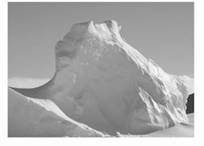 At the bottom of the world lies a mighty continent still wrapped in the Ice Age and, until recent times, unknown to man. It is a great landmass with mountain ranges whose extent and elevation are still uncertain. Much of the continent is a complete blank on our maps. Man has explored, on foot, less than one percent of its area.
Antarctica differs fundamentally from the Arctic regions. The Arctic is an ocean, covered with drifting packed ice and hemmed in by the landmasses of Europe, Asia, and North America. The Antarctica is a continent almost as large as Europe and Australia combined, centered roughly on the South Pole and surrounded by the most unobstructed water areas of the world—the Atlantic, Pacific, and Indian Oceans.
The continental ice sheet is more than two miles high in its center; thus, the air over the Antarctica is far more iced than it is over the Arctic regions. This cold air current from the land is so forceful that it makes the nearby seas the stormiest in the world and makes unlivable those regions whose counterparts (配对物) at the opposite end of the globe are livable. Thus, more than a million persons live within 2, 000 miles of the North Pole in an area that includes most of Alaska, Siberia, and Scandinavia—a region rich in forest and mining industries. Apart from a handful of weather stations, within the same distance of the South Pole there is not a single tree, industry or settlement.
66. The best title for this passage would be________ .
A. Iceland
B. Land of Opportunity
C. Utopia at Last
D. The Unknown Continent
67. At the time this article was written, our knowledge about Antarctica was______.
A. very limited B. vast
C. fairly rich D. non-existent
68. What’s the fundamental difference between Antarctica and the Arctic?
A. The Arctic is an ocean while Antarctica is a continent.
B. The Arctic is inhabited by people while Antarctica is uninhabitable.
C. The Arctic is covered with ice while Antarctica is surrounded by water.
D. The Arctic is surrounded by continents while Antarctica is bordered by oceans.
69. The Antarctica is made uninhabitable primarily by________.
A. ice B. calm seas
C. cold air D. lack of water
70. According to this article,________ .
A. 2, 000 people live on the Antarctica Continent
B. a million people live within 2, 000 miles of the South Pole
C. weather conditions make settlements impractical
D. only a handful of natives inhabit Antarctica
查看习题详情和答案>>
附加题(共10小题;每小题2分,满分20分)
按每小题后的要求做题,将答案写在题上。(每横线上写一词)
1. He loves his parents deeply. Both of his parents are very kind to him. (合并成一个句子)
He loves his parents deeply, _____ _____ _____ are very kind to him.
2. You will be better soon if you take the medicine once _______ ________ ________. (每六小时)
3. I have almost _______ _______ _______ my money. (用完)
4. Asia is four times as big as Europe. (改为同义句)
Asia is three times _____ _____ Europe.
5. What he said at the conference _____ _____. (听上去有趣)
6. Our car _____ _____ and we had to draw it to a garage. (故障)
7. At the moment, she still ________ _________ every word she said. (信守)
8. The article is worthy of being studied. (改为同义句)
The article is _____ _____.
9. Taking exercise benefits us a lot. (改为同义句)
We _____ a lot _____ taking exercise.
10. The girl will lead the way, so we are sure to find the cave. (改为同义句)
_____ the girl _____ _____ the way, we are sure to find the cave.
查看习题详情和答案>>
| |||||||||||||||||||||||||||||||||||||||||||||||||||||||||||
