网址:http://m.1010jiajiao.com/timu3_id_3073113[举报]
(You may read the questions first.)

Transformers: Dark of the Moon
Theatrical Release Date: July 1, 2011
Studio: Paramount Pictures
Director: Michael Bay
Genre: Action︱Adventure︱Sequel︱ Sci-Fi︱ 3D
The Autobots, led by Optimus Prime, are back in action, taking on the evil Decepticons. The Autobots and Decepticons become involved in a dangerous space race. The Autobots learn of a Cybertronian spacecraft on the Moon and must race against the Decepticons to find its secrets, which could turn the tide in the Transformers’ final battle. Shockwave, a longtime “Transformers” character, rules Cybertron while the Autobots and Decepticons battle it out on Earth.
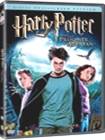
Harry Potter and the Deathly Hallows: Part II
Theatrical Release Date: July 15, 2011
Studio: Warner Bros. Pictures
Director: David Yates
Genre: Action︱Adventure︱Sequel︱Fantasy︱3D
In part II, the battle between the good and evil forces of the Wizarding world evolves into an all-out war. This final adventure continues Harry, Ron, and Hermione’s attempt to find and destroy Voldemort’s remaining Horcruxes. Harry Potter is called upon to make the ultimate sacrifice to bring an end to his nemesis.
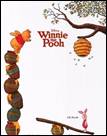
Winnie the Pooh
Theatrical Release Date: July 15, 2011
Studio: Walt Disney Pictures
Director: Don Hall, Stephen J. Anderson
Genre: Sequel︱Family Animation
Winnie the Pooh is a 2011 American traditionally animated feature film produced by Walt Disney Animation Studios. Based upon the characters of the children’s books Winnie-the-Pooh, The House at Pooh Corner by A. A. Milne and Return to the Hundred Acre Wood by David Benedictus, the film features two previously unadapted stories from the original books.
In the movie, Owl sends the whole gang to save Christopher Robin from an imaginary bad character, and it turns out to be a very busy day for Winnie the Pooh who simply set out to find some honey.
1.Which of the following is not the genre of Transformers: Dark of the Moon?
A. Action. B. Sequel. C. Fantasy. D. 3D
2.According to the Movie Express above, Harry Potter and the Deathly Hallows: Part II is mainly about ______.
A. a journey of Harry, Ron, and Hermione
B. high risks of the final adventure
C.a fear of Lord Voldemort
D. an all-out war between good and evil forces
3.Who might be most interested in the Movie Express of Winnie the Pooh?
A. Would-be parents. B. Families with children.
C. Writers of children’s books. D. Honey lovers.
查看习题详情和答案>>
Fish Ears Tell Fish Tales
Fish have ears. Really. They’re quite small and have no opening to the outside world carrying sound through the body. For the past seven years, Simon Thorrold, a university professor, has been examining fish ears, small round ear bones called otoliths (耳石).
As fish grow, so do their otoliths. Each day, their otoliths gain a ring of calcium carbonate (碳酸钙). By looking through a microscope and counting these rings, Thorrold can determine the exact age of a young fish. As a fish gets older, its otoliths no longer get daily rings. Instead, they get yearly rings, which can also be counted, giving information about the fish’s age, just like the growth rings of a tree.
Ring counting is nothing new to fish scientists. But Thorrold has turned to a new direction. They’re examining the chemical elements (元素) of each otolith ring.
The daily ring gives us the time, but chemistry tells us about the environment in which the fish swam on any given day. These elements tell us about the chemistry of the water that the fish was in. It also says something about water temperature, which determines how much of these elements will gather within each otolith ring.
Thorrold can tell, for example, if a fish spent time in the open ocean before entering the less salty water of coastal areas. He can basically tell where fish are spending their time at any given stage of history.
In the case of the Atlantic croaker, a popular saltwater food fish, Thorrold and his assistant have successfully followed the travelling of young fish from mid-ocean to the coast, a journey of many hundreds of miles.
This is important to managers in the fish industry, who know nearly nothing about the whereabouts of the young fish for most food fish in the ocean. Eager to learn about his technology, fish scientists are now lending Thorrold their ears.
【小题1】What can we learn about fish ears from the text?
| A.They are small soft rings. |
| B.They are not seen from the outside. |
| C.They are openings only on food fish. |
| D.They are not used to receive sound. |
| A.Trees gain a growth ring each day. |
| B.Trees also have otoliths. |
| C.Their growth rings are very small. |
| D.They both have growth rings. |
| A.The elements of the otoliths can tell the history of the sea. |
| B.Chemical contents of otoliths can tell how fast fish can swim. |
| C.We can know more about fish and their living environment. |
| D.Scientists can know exactly how old a fish is. |
| A.They are very interested in Thorrold’s research findings. |
| B.They want to know where they can find fish. |
| C.They lend their fish for chemical studies. |
| D.They wonder if Thorrold can find growth rings from their ears. |
请认真阅读下列短文,根据所读内容在文后71~80的空格里填上适当的单词。(每空1词)
A great life doesn’t happen by accident.A great life is the result of arranging wisely Your time,energy,thoughts,and hard work towards what you want your life to be.A great life is the result of using what you get in a creative and thoughtful way,instead of just what comes next.Make these”secrets”to fit your own needs and style,and start creating your own great life today!
Simplify.People don’t interpret what simplify means in a correct way.It’s not a way to
remove work from your life.When you focus on simplifying your life,you free up energy and
time for the work that you enjoy and the purpose for which you are here.
Effort.Creating a great life requires that you make some adjustments.It may mean
re.evaluating how you spend your time,or choosing to spend your money in a different way.
It may mean looking for new ways to spend your energy.Life will reward your best effort.
Create priorities.It’s easy to spend your days just responding to the next thing that gets
your attention,instead of intentionally using the time,energy and money you have in a way
that’s important to you.Focus on getting rid of the obstacles that get in the way of you making
sure you are honoring your priorities.
Reserves.A great life is the result of having reserves--reserves of things,time,space,
energy,money.Reserves are important because they reduce the fear of consequences,and that
allows you to make decisions that are based on what you really want instead of what the fear
decides for you.
Eliminate distractions.Look around at someone’s life you admire.Ask them how they did
it.Find ways to free up your mental energy for things that are more important to you.
Thoughts.A great life is the result of controlling your thoughts so that you accept and
allow for the possibility that it actually can happen to you! People who have specific goals
look for ways to achieve them.Believing there is a solution to the same old problems you
meet with year after year is really important to creating a life that you love.
Start.There’s the old saying everyone’s familiar with”a journey of a thousand miles
begins with a single step.”There’s no better time to start than today.Today,right now,is the
right day to start to take a step in the direction of your heart’s desires.It’s what you do
TODAY that will make a difference in your life tomorrow.
|
A brief introduction |
A great life doesn’t happen by 71 ____________ A great life 72 __________ from arranging wisely your time energy,thoughts and hard work towards what you want your life to be A great life is the result of suing what you get in a creative and thoughtful way 73_______ than just what comes next |
|
Seven 74 ________to a great life |
When you focus on simplifying your life you 75______ energy and time to the work that you enjoy and the purpose for which you are here |
|
It is 76______ that you should make some adjustments in order to create a great life |
|
|
Focus on 77______ the obstacles that get in the way of you making sure you are honoring your priorities |
|
|
Reserves are important because they reduce the fear of consequences and that allows you to make decisions 78_________ on what you really want instead of what the fear decides for you |
|
|
Fin ways to devote yourself to things that are more important to you |
|
|
Believing there is a solution to the same old problems you 79_______ into year after year is really important to creating a life that you love |
|
|
The old saying “ a journey of a thousand miles begins with a single step” is familiar 80_______ us all It’s what you do TODAY that will make a difference in your life tomorrow |
查看习题详情和答案>>
A Book Review—The Snake-Stone by Berlie Doherty
The setting: Urban England (the cities), but also rural England (the countryside) including remote English villages.
The theme: The main theme is a teenage research of self-discovery, in this case the search for a mother from whom the hero was separated at an early age.Its other concerns are love, getting on with others, being persistent and courageous and trying to deal with doubts, troubles and worries.As the book moves to a close, James’ swimming coach says to him: “You are not like a kid obeying instructions any more.You are diving like a young man who knows where he is going.”
The characters: James is the hero of the story.He is a championship diver, and has a comfortable life with his foster parents (养父母).Yet he also has the qualities to take him on a long journey to find his birth mother.The other characters in The Snake-Stone, James’ parents, his diving instructor, best friend, the villagers, people he meets on his journey, are pictured realistically.
The turning point: The turning point in the story comes while James’ foster parents are away in London, and he wonders about the identity of his birth mother.The only clue he has is a fossil, “the snake stone” which she left behind along with a note on which she had written: “Take good care of Sammie.It was written on a torn envelope with parts of an address still there.
The journey: Instead of going to London, James decides to find his birth mother.With help from his geography teacher, James sets out for the remote country village where his mother might be found.James has painful, challenging, but also humorous and happy travels.The mother he finally meets, Anne, has a minor yet powerful voice in the novel.He comes to understand why she left him at a stranger’s door fifteen years before.Although the meeting is not long, it leaves him with a feeling of completeness.As a journey of self-discovery The Snake-Stone also provides its readers with a happy ending.Its hero says, on returning to his foster parents, “I was home.”
1.What is the main theme of the novel?
|
A.A journey of self-discovery. |
|
B.Life in the world of diving. |
|
C.Life with foster parents. |
|
D.A travel around the country. |
2. What do the coach’s words in Paragraph 2 suggest?
|
A.James is a successful diver. |
|
B.James is an independent young man. |
|
C.James is an outgoing young man. |
|
D.James is a hopeful swimmer. |
3. The snake stone in the novel is .
|
A.a stone with an address on it |
|
B.a gift from the swimming coach |
|
C.a clue left by the birth mother |
|
D.a fossil left by the foster parents |
4.Which of the following is true about the novel?
|
A.The story has a sad ending. |
|
B.The story takes place in the city of London. |
|
C.The characters are vividly described. |
|
D.The turning point comes after the hero meets his birth mother. |
5.It can be concluded that James’ journey is _________.
|
A.disappointing |
B.boring |
|
C.comfortable |
D.worthwhile |
查看习题详情和答案>>
Fish Ears Tell Fish Tales
Fish have ears. Really. They’re quite small and have no opening to the outside world carrying sound through the body. For the past seven years, Simon Thorrold, a university professor, has been examining fish ears, small round ear bones called otoliths (耳石).
As fish grow, so do their otoliths. Each day, their otoliths gain a ring of calcium carbonate (碳酸钙). By looking through a microscope and counting these rings, Thorrold can determine the exact age of a young fish. As a fish gets older, its otoliths no longer get daily rings. Instead, they get yearly rings, which can also be counted, giving information about the fish’s age, just like the growth rings of a tree.
Ring counting is nothing new to fish scientists. But Thorrold has turned to a new direction. They’re examining the chemical elements (元素) of each otolith ring.
The daily ring gives us the time, but chemistry tells us about the environment in which the fish swam on any given day. These elements tell us about the chemistry of the water that the fish was in. It also says something about water temperature, which determines how much of these elements will gather within each otolith ring.
Thorrold can tell, for example, if a fish spent time in the open ocean before entering the less salty water of coastal areas. He can basically tell where fish are spending their time at any given stage of history.
In the case of the Atlantic croaker, a popular saltwater food fish, Thorrold and his assistant have successfully followed the travelling of young fish from mid-ocean to the coast, a journey of many hundreds of miles.
This is important to managers in the fish industry, who know nearly nothing about the whereabouts of the young fish for most food fish in the ocean. Eager to learn about his technology, fish scientists are now lending Thorrold their ears.
1.What can we learn about fish ears from the text?
A. They are small soft rings.
B. They are not seen from the outside.
C. They are openings only on food fish.
D. They are not used to receive sound.
2.Why does the writer compare the fish to trees?
A. Trees gain a growth ring each day.
B. Trees also have otoliths.
C. Their growth rings are very small.
D. They both have growth rings.
3.Why is it important to study the chemistry of otolith rings?
A. The elements of the otoliths can tell the history of the sea.
B. Chemical contents of otoliths can tell how fast fish can swim.
C. We can know more about fish and their living environment.
D. Scientists can know exactly how old a fish is.
4.How would you understand “fish scientists are now lending their ears”?
A. They are very interested in Thorrold’s research findings.
B. They want to know where they can find fish.
C. They lend their fish for chemical studies.
D. They wonder if Thorrold can find growth rings from their ears.
查看习题详情和答案>>