网址:http://m.1010jiajiao.com/timu3_id_3067567[举报]
I came here ___ to tell you the good news that you had won the first prize in the singing contest.
A. particular B. specially C. especially D. peculiarly
查看习题详情和答案>>
When I was young, I went looking for gold in California. I never found enough to make a rich strike. But I did discover a beautiful part of the country called Stanislau. Like Heaven on Earth, it had bright green hills and deep forests where soft winds touched the trees. By the time I arrived, the charming paradise had been deserted because miners’ good luck didn’t last.
Then, I realized I was not alone after all.
A man was smiling at me as he stood in front of his little house. Its front yard was full of blue and yellow flowers. White curtains hung from the windows and floated in the soft summer wind.
Still smiling, the man invited me inside. My spirit seemed to come to life again. I saw a bright rug on the shining wooden floor. And on little tables there were seashells, books and china vases full of flowers. A woman had made this house into a home. The delight in my heart showed on my face. The man read my thoughts. “All her work.” He said affectionately, “Nothing here hasn’t felt the touch of her hand.”
One picture on the wall was not hanging straight. He went to fix it. He stepped back several times to make sure the picture was straight. Then he gave it a gentle touch. “She always does that,” he explained, “It is like the finishing pat a mother gives her child’s hair after she has brushed it. I don’t know why I do it. I just do it.”
As he talked, I went to a little black-walnut shelf that held a small picture of the most beautiful creature I had ever seen. There was a sweetness and softness in the woman’s expression. The man stared at the picture. “Nineteen her last birthday. That was the day we married. When you see her...ah, just wait until you meet her!” “Where is she now?” I asked. “Oh, she is away visiting her parents. This is Wednesday,” he said slowly. “She will be back on Saturday, in the evening.”
That night, I stayed. The man told me his name was Henry.
Thursday evening we had two visitors, Tom and Joe. “We just drop over to ask when little madam is coming home. Any news from her?” “Oh yes,” the man replied. “A letter.” He took a yellowed letter out of his wallet and read it. It was full of loving messages. While reading, he glimpsed his friends and cried out, “Oh no, you are doing it again, Tom! Take your hands away and let me see your eyes. I’m going to tell her this time!” “No, you mustn’t do that, Henry,” the grey-haired miner said. “I am getting old. And any little sorrow makes me cry. Lord, we miss her so.”
Saturday finally came.
I was glad to see his two friends, Tom and Joe, with guitars, coming down the road as the sun began to set. They put the flowers they brought in vases and began to play some fast and lively songs.
Henry’s friends kept giving him glasses of whiskey. When I reached for one of the two remaining glasses, Tom stopped my arm. “Drop that! Take the other.” he whispered. I did so. Henry was served last. He had hardly swallowed his drink when the clock struck midnight. His face grew pale and paler. “Boys,” he said, “I am sick with fear. Help! I want to lie down.” Henry was asleep almost before the words were out of his mouth.
In a moment, those handy men had his clothes off and tucked him into his bed. They seemed to be getting ready to leave. So I said, “Please don’t go, gentlemen. She won’t know me. I am a stranger.” They glanced at each other. Then Joe said, “She? Poor thing, she’s been dead nineteen years!” “Dead?” I whispered. “That or worse.” he said.
“She went to see her folks half a year after she got married. On her way back, on a Saturday evening in June, when she was almost here, the Indians captured her. She’s never been heard of since. Henry went insane. But he only gets bad when that time of year comes round. Then we drop in here, three days before she’s due, to encourage him up and listen to him read the letter. Saturday we all come and get everything ready for a dance. We’ve done it for nineteen years. The first Saturday there were twenty-seven of us, but only two now. We drug him to sleep through the night. Then he’s all right for another year.”
The two old men opened the door and disappeared into the darkness of Stanislau.
1.You can sense the existence of a woman from the following sentences EXCEPT “______”.
A. Soft winds touched the trees in Stanislau.
B. There was a bright rug on the shining wooden floor.
C. There were seashells, books and china vases full of flowers.
D. A little black shelf held a small picture of a woman.
2.Tom cried when Henry read the yellowed letter, because ______.
A. he was getting older and older
B. he was moved by the loving messages in the letter
C. he felt sad at the thought of Henry’s wife
D. he was disappointed that Henry’s wife would arrive so late
3.Tom stopped my reaching for whiskey because ______.
A. there was not enough whiskey for Henry B. he didn’t want me to get drunk
C. that glass of whiskey was drugged D. it was for Henry’s wife
4.The underlined word “insane” probably means “______”.
A. depressed B. disappointed C. mad D. sick
5.It can be inferred from the passage that ______.
A. Henry’s wife was 38 when she was last seen
B. Tom and Joe have heard the letter many times
C. the author stayed in Henry’s house because he was lost
D. the two miners came on Saturday to share past memories
6.The story is mainly about ______.
A. ever-lasting love B. lifelong friendship
C. an unforgettable experience D. charming Stanislau
查看习题详情和答案>>
When I was young, I went looking for gold in California. I never found enough to make a rich strike. But I did discover a beautiful part of the country called Stanislau. Like Heaven on Earth, it had bright green hills and deep forests where soft winds touched the trees. By the time I arrived, the charming paradise had been deserted because miners’ good luck didn’t last.
Then, I realized I was not alone after all.
A man was smiling at me as he stood in front of his little house. Its front yard was full of blue and yellow flowers. White curtains hung from the windows and floated in the soft summer wind.
Still smiling, the man invited me inside. My spirit seemed to come to life again. I saw a bright rug on the shining wooden floor. And on little tables there were seashells, books and china vases full of flowers. A woman had made this house into a home. The delight in my heart showed on my face. The man read my thoughts. “All her work.” He said affectionately, “Nothing here hasn’t felt the touch of her hand.”
One picture on the wall was not hanging straight. He went to fix it. He stepped back several times to make sure the picture was straight. Then he gave it a gentle touch. “She always does that,” he explained, “It is like the finishing pat a mother gives her child’s hair after she has brushed it. I don’t know why I do it. I just do it.”
As he talked, I went to a little black-walnut shelf that held a small picture of the most beautiful creature I had ever seen. There was a sweetness and softness in the woman’s expression. The man stared at the picture. “Nineteen her last birthday. That was the day we married. When you see her...ah, just wait until you meet her!” “Where is she now?” I asked. “Oh, she is away visiting her parents. This is Wednesday,” he said slowly. “She will be back on Saturday, in the evening.”
That night, I stayed. The man told me his name was Henry.
Thursday evening we had two visitors, Tom and Joe. “We just drop over to ask when little madam is coming home. Any news from her?” “Oh yes,” the man replied. “A letter.” He took a yellowed letter out of his wallet and read it. It was full of loving messages. While reading, he glimpsed his friends and cried out, “Oh no, you are doing it again, Tom! Take your hands away and let me see your eyes. I’m going to tell her this time!” “No, you mustn’t do that, Henry,” the grey-haired miner said. “I am getting old. And any little sorrow makes me cry. Lord, we miss her so.”
Saturday finally came.
I was glad to see his two friends, Tom and Joe, with guitars, coming down the road as the sun began to set. They put the flowers they brought in vases and began to play some fast and lively songs.
Henry’s friends kept giving him glasses of whiskey. When I reached for one of the two remaining glasses, Tom stopped my arm. “Drop that! Take the other.” he whispered. I did so. Henry was served last. He had hardly swallowed his drink when the clock struck midnight. His face grew pale and paler. “Boys,” he said, “I am sick with fear. Help! I want to lie down.” Henry was asleep almost before the words were out of his mouth.
In a moment, those handy men had his clothes off and tucked him into his bed. They seemed to be getting ready to leave. So I said, “Please don’t go, gentlemen. She won’t know me. I am a stranger.” They glanced at each other. Then Joe said, “She? Poor thing, she’s been dead nineteen years!” “Dead?” I whispered. “That or worse.” he said.
“She went to see her folks half a year after she got married. On her way back, on a Saturday evening in June, when she was almost here, the Indians captured her. She’s never been heard of since. Henry went insane. But he only gets bad when that time of year comes round. Then we drop in here, three days before she’s due, to encourage him up and listen to him read the letter. Saturday we all come and get everything ready for a dance. We’ve done it for nineteen years. The first Saturday there were twenty-seven of us, but only two now. We drug him to sleep through the night. Then he’s all right for another year.”
The two old men opened the door and disappeared into the darkness of Stanislau.
55. You can sense the existence of a woman from the following sentences EXCEPT “______”.
A. Soft winds touched the trees in Stanislau.
B. There was a bright rug on the shining wooden floor.
C. There were seashells, books and china vases full of flowers.
D. A little black shelf held a small picture of a woman.
56. Tom cried when Henry read the yellowed letter, because ______.
A. he was getting older and older
B. he was moved by the loving messages in the letter
C. he felt sad at the thought of Henry’s wife
D. he was disappointed that Henry’s wife would arrive so late
57. Tom stopped my reaching for whiskey because ______.
A. there was not enough whiskey for Henry B. he didn’t want me to get drunk
C. that glass of whiskey was drugged D. it was for Henry’s wife
58. The underlined word “insane” probably means “______”.
A. depressed B. disappointed C. mad D. sick
59. It can be inferred from the passage that ______.
A. Henry’s wife was 38 when she was last seen
B. Tom and Joe have heard the letter many times
C. the author stayed in Henry’s house because he was lost
D. the two miners came on Saturday to share past memories
60. The story is mainly about ______.
A. ever-lasting love B. lifelong friendship
C. an unforgettable experience D. charming Stanislau
查看习题详情和答案>>My Way to Success
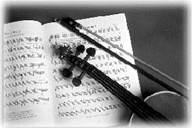
From the day I signed up for the Naumburg Competition, everything changed. I had made a decision to start again, to save my life, and that meant a 360-degree turnaround.
I kept on practicing. An enormous amount of work had to be done in two months. I went from not practicing at all to thirteen hours a day.
I spent two weeks just playing scales. If I thought I sounded bad before, now I sounded worse than awful.
At the time I lived on 72nd Street, close to West End Avenue. I had an apartment with a window the size of a shoebox. I didn't do mylaundry. I left my apartment only to walk to Juilliard─and not onBroadway like everyone else. I walked up Amsterdam Avenue because I didn't want to see anybody, didn't want to run into anybody, didn't want anyone to ask what I was doing.
I stopped going to classes and became a hermit. I even talked Miss DeLay into giving my lesson at night.
My eating habits were awful. I lived on fried sausages, a pint of peanut butter/chocolate ice cream, and a gallon of Coca-Cola every day. That's all I ate for eight weeks.
I was nuts. I was completely obsessed with getting back into shape, with doing well in this competition. If I could, people would know I was still on earth. Not to count me out; to stop asking, “Whatever happened to Nadja?”
The last week before the Naumburg auditions, I couldn't touch the violin. I had worked and worked and worked and worked and then I just couldn't work anymore.
I certainly could have used it. I wasn't as prepared as I should have been. But I simply had to say, “Nadja, you've dedicated yourself to this thing. Ready or not, do your best.”
Fifty violinists from around the world auditioned for the competition on May 25, 26, and 27, 1981. Those that made it past thepreliminaries would go on to the semifinals. Those that passed that stage would go to the finals. In years past, one violinist was chosen as winner and two received second and third place.
On May 26, the day of my audition, I went to the Merkin Concert Hall at 67th Street and Broadway. I waited, played for twenty minutes, and went home. I couldn't tell whether the preliminary judges were impressed or not. I'd find out the next evening.
Maybe subconsciously I was trying to keep busy; that night, when I fried the sausages, I accidentally set my apartment on fire. I grabbed my cat and my violin, and ran out the door. The fire was put out, but everything in my place was wrecked.
Fortunately, the phone was okay and on the evening of May 27, I had the news from Lucy Rowan Mann of Naumburg. Thirteen of us had made it.
Talk about mixed emotions. I was thrilled to be among the thirteen; a group that included established violinists, some of whom had already made records. But it also meant I had to play the next day in the semifinals of the competition.
Everyone entering the competition had been given two lists of concertos. One was a list of standard repertory pieces. The other list was twentieth-century repertory. For our big competition piece, we were to choose from each list and play a movement from one in the semifinals, and a movement from the other in the finals─if we made it that far.
From the standard repertory list, I chose the Tchaikovsky Concerto. I had been playing the Tchaik for three years, so it was a good piece for me.
From the twentieth-century list, I chose the Prokofiev G minor Concerto. I had never played it onstage before.
My goal had been just passing the auditions, but now my thought pattern began to change. If I wanted a sliver of a chance of advancing again, my brain said, “Play your strong piece first.”
Logically, I should play the Tchaikovsky in the semifinals just to make it to the next stage. Who cared if that left me with a piece I probably wouldn't play as well in the finals of the competition? It'd be a miracle to get that far.
There wouldn't be more than seven violinists chosen for the final round, and if I were in the top seven of an international group, that was plenty good enough.
The semifinals were held on May 28 in Merkin Concert Hall. You were to play for thirty minutes: your big piece first, then the judges would ask to hear another.
There was a panel of eight judges. They had a piece of paper with my choices of the Tchaikovsky and the Prokofiev in front of them. “Which would you like to play?” they asked.
I said meekly, “Prokofiev.”
My brain and all the logic in the world had said, “Play your strong piece.” My heart said, “Go for it all. Play your weak piece now, save Tchaikovsky for the finals.”
Maybe I don't listen to logic so easily after all.
My good friend, the pianist Sandra Rivers, had been chosen as accompanist for the competition. She knew I was nervous. There had been a very short time to prepare; I was sure there'd be memory slips, that I'd blank out in the middle and the judges would throw me out. My hands were like ice.
The first eight measures of the Prokofiev don't have accompaniment. The violin starts the piece alone. So I started playing.
I got through the first movement and Sandra said later my face was as white as snow. She said I was so tense, I was beyond shaking. Just a solid brick.
It was the best I'd ever played it. No memory slips at all. Technically, musically, it was there.
I finished it thinking, “Have I sold my soul for this? Is the devil going to visit me at midnight? How come it went so well?”
I didn't know why, but often I do my best under the worst of circumstances. I don't know if it's guts or a determination not to disappoint people. Who knows what it is, but it came through for me, and I thank God for that.
As the first movement ended, the judges said, “Thank you.” Then they asked for the Carmen Fantasy.
I turned and asked Sandy for an A, to retune, and later she said the blood was just rushing back into my face.
I whispered, “Sandy, I made it. I did it.”
“Yeah,” she whispered back, kiddingly, “too bad you didn't screw up. Maybe next time.”
At that point I didn't care if I did make the finals because I had played the Prokofiev so well. I was so proud of myself for coming through.
I needed a shot in the arm; that afternoon I got evicted. While I was at Merkin, my moped had blown up. For my landlord, that was the last straw.
What good news. I was completely broke and didn't have the next month's rent anyway. The landlord wanted me out that day. I said, “Please, can I have two days. I might get into the finals, can I please go through this first?”
I talked him into it, and got back to my place in time for the phone call. “Congratulations, Nadja,”“they said. “You have made the finals.”
I had achieved the ridiculously unlikely, and I had saved my best piece. Yet part of me was sorry. I wanted it to be over already. In the three days from the preliminaries to the semifinals, I lost eight pounds. I was so tired of the pressure.
There was a fellow who advanced to the finals with me, an old, good friend since Pre-College. Competition against friends is inevitable in music, but I never saw competition push a friendship out the window so quickly. By the day of the finals, I hated him and he hated me. Pressure was that intense.
The finals were held on May 29 at Carnegie Hall and open to the public. I was the fourth violinist of the morning, then there was a lunch break, and three more violinists in the afternoon.
I played my Tchaikovsky, Saint-Sa‘ns’s Havanaise, and Ravel's Tzigane for the judges: managers, famous violinists, teachers, and critics. I went on stage at five past eleven and finished at noon. Those fifty-five minutes seemed like three days.
I was so relieved when I finished playing; I was finished! It's impossible to say how happy I was to see the dressing room. I went out for lunch with my friends. It was like coming back from the grave. We laughed and joked and watched TV.
As I returned to Carnegie Hall to hear the other violinists, I realized I'd made a big mistake: they might ask for recalls. A recall is when they can't decide between two people and they want you to play again. It's been done; it's done all the time in competitions. No way was I in shape to go onstage and play again.
In the late afternoon, the competition was over. Everybody had finished playing. Quite luckily─no recalls.
The judges deliberated for an hour. The tension in the air was unbelievable. All the violinists were sitting with their little circle of friends. I had my few friends around me, but no one was saying much now.
Finally, the Naumburg Foundation president Robert Mann came on stage.
“It's always so difficult to choose ...” he began.
“Every year we hold this competition,” Robert Mann said. “And in the past, we've awarded three prizes. This year we've elected to only have one prize, the first prize.”
My heart sank. Nothing for me. Not even Miss Congeniality.
“We have found,” Mann went on, “that second place usually brings great dismay to the artist because they feel like a loser. We don't want anyone here to feel like a loser. Every finalist will receive five hundred dollars except the winner, who will receive three thousand dollars.”
And then he repeated how difficult it was to choose, how well everyone had played ...dah, dah, dah.
I was looking down at the floor.
“The winner is ...”
And he said my name.
A friend next to me said, “Nadja, I think you won!”
I went numb. My friends pulled me up and pointed me toward the stage. It was a long walk because I had slipped into a seat in the back. Sitting up in front was my old friend. I would have to walk right past him and I was dreading it, but before I could, he got up and stopped me.
He threw his arms around me and I threw my arms around him. I kept telling him how sorry I was. I was holding him and started to cry, saying, “I'm sorry, I'm sorry, I'm sorry.” I didn't want to lose, but I really didn't want him to lose either. And he was holding me and saying, “Don't be sorry. I'm so proud of you.” It was over, and we would be friends again.
I took my bow, then ran to Juilliard. Ten blocks uptown, one block west, to give Miss DeLay the news. She could be proud of me now, too.
Suddenly, everything was clear. Playing the violin is what I'd do with my life. Heaven handed me a prize: “You've been through a lot, kid. Here's an international competition.”
Everything had changed when I prepared for the Naumburg, and now everything changed again. I made my first recording. Between September 1981 and May 1982, I played a hundred concerts in America, made one trip to Europe, then two months of summer festivals. And people asked me back.
There was a great deal of anxiety playing in Europe for the first time. But I was able to rely on my self-confidence to pull me through.
Self-confidence onstage doesn't mean a lack of nerves backstage. The stakes had increased. This wasn't practice anymore, this was my life. I'd stare into a dressing-room mirror and say, “Nadja, people have bought tickets, hired baby-sitters, you've got to calm down; go out there and prove yourself.”
Every night I'd prove myself again. My life work had truly begun
- 1.
In a gesture to prepare for the competition, Nadja did all the following except _________
- A.preoccupying herself in practice
- B.trying to carry out her deeds secretly
- C.abandoning going to school for classes
- D.consuming the best food to get enough energy
- A.
- 2.
How many violinists does the passage mention advanced to the finals?
- A.Four
- B.Five
- C.Six
- D.Seven
- A.
- 3.
After Nadja finished playing at the finals, she went out for a while and when she came back to hear the other violinists she realized she had made a mistake because _________
- A.she forgot that there was going to be a recall
- B.she didn’t get hold of the permission to leave
- C.chances were that she had to replay and she was off guard
- D.there was another play she had to take part in in the afternoon
- A.
Listening Comprehension
Section A
Directions:In section A, you will hear ten short conversations between two speakers.At the end of each conversation, a question will be asked about what was said.The conversation and the question will be spoken only once.After you hear a conversation and the question about it, read the four possible answers on your paper, and decide which one is the best answer to the question you have heard.
1.
W:Can you describe what you do?
M:I wash office building windows.I go high up in the basket to reach the windows.
Q:What is the man's job?
A.A basketball player.
B.A laundry worker.
C.A window washer.
D.A rock climber
2.
M:Should we go out or eat in tonight?
W:I am too tired to do any cooking.
Q:What does the woman imply?
A.She is not hungry.
B.She wants to cook.
C.She is not tired.
D.She wants to dine out.
3.
M:Hi, Grace.Tell me something about your hometown.
W:It's so beautiful and peaceful.But it's really far away from everything.
Q:What does the woman think of her hometown?
A.Promising
B.Isolated
C.Crowded
D.Modern
4.
W:My printer is out of paper.I will run and get some.
M:I will go with you.I need some fresh air.
Q:Where will the speakers probably go?
A.To a stationery shop.
B.To a gymnasium.
C.To a paint store.
D.To a news stand.
5.
M:I don't like the prices on the menu.They always seem too high.
W:You will have a different view after eating the delicious food.
Q:What does the woman mean?
A.The man can see a different view.
B.The food is not tasty enough.
C.The man cannot afford the food.
D.The food is worth the price.
6.M:I had a hard time getting through the novel.
W:I know how you feel.Who could remember the names of 35 different characters?
Q:What does the woman imply?
A.She reads different kinds of books.
B.She also finds the book difficult to read.
C.She is impressed by the characters.
D.She knows well how to remember names.
7.W:Why haven't we received any newspapers yet?
M:Well, sometimes it takes a while for the post office to deliver it.
Q:What can we learn from the conversation?
A.The man will go to the post office.
B.The post office is closed for the day.
C.The woman is expecting the newspaper.
D.The delivery boy has been dismissed.
8.M:My roommate and I are going to see a film tonight.And we are leaving at7∶40.Do you want to join us?
W:Sure.But my class ends at 7:30.And the professor never finishes on time.
Q:What can we learn about the woman?
A.She is not sure if she can join them.
B.She will skip the class to see the film.
C.She will ask the professor for leave.
D.She does not want to see a film.
9.W:Now that you are on the business, what's your advice for someone to become a fashion designer?
M:Go to school.I mean it.Find a good school and learn as much as you can.
Q:What does the man mean?
A.Fashion designing is a booming business.
B.School learning is a must for fashion designers.
C.He hopes to attend a good fashion school.
D.The woman should become a fashion designer.
10.W:Slow down.You are passing every car on the road.
M:Most drivers usually ignore the speed limit unless they think the police will stop them.
Q:What does the man mean?
A.Few people drive within the speed limit.
B.Drivers usually obey traffic rules.
C.The speed limit is really reasonable.
D.The police stop most drivers for speeding
Section B
Directions:In section B, you will hear two short passages, and you will be asked three questions on each of the passages.The passages will be read twice, but the questions will be spoken only once.When you hear a question, read the four possible answers on your paper, and decide which one would be the best answer to the question you have heard.
Questions 11 through 13 are based on the following passage.
I am Lynn.My previous job was as principal of a language school, where I received awards for training teachers to teach more effectively.A year ago, I started an international company.I spent months conducting programs in the US and Russia.During this time, some Russian immigrants came to stay at my house.Fortunately, these visitors helped a lot at home and made life easier.At the same time, I wrote several books to be published by my company and coedited a book for a major publisher.
I am grateful I have a photographic memory, so I can remember everything I see.Otherwise, I might not be that productive.In addition to my work, I have a family at home.Some of my children have had serious health problems from birth, but I try to handle those problems well and efficiently.With tremendous help from my parents, the kids are fed, and clothed, and educated.
I am busy from the time I get up until the time I go to bed.My time has to be carefully planned.I do not like to be interrupted because I want to accomplish my goals.
Questions:
11.What was the speaker's previous job?
12.What helps to make the speaker productive according to the passage?
13.What does the passage mainly tell us?
11.A.A book publisher.
B.A company manager.
C.A magazine editor.
D.A school principal.
12.A.Some training experience.
B.A happy family.
C.Russian assistants' help.
D.A good memory.
13.A.Lynn's devotion to the family.
B.Lynn's busy and successful life.
C.Lynn's great performance at work.
D.Lynn's efficiency in conducting programs.
Questions 14 through 16 are based on the following passage.
Job interviews can generally be divided into three types.
The first is what I would call the traditional interview.This is usually just a series of standard questions about qualifications, work experience and expectations.So what you have here is basically a list of quite direct questions, like what duties did you have in your previous job.This is still the model for a lot of interviews today.In my view it's not the best to select staff.
Then there is the case interview.Here the interviewer presents a problem and a series of questions to find out how the candidate would approach the problem.It might go something like this, ‘A company wants to hire more graduates without spending more than its current budget.What would you advise them to do? ’This can be particularly challenging, for you need to analyze the problem and solve it.
The third type is known as the behavioral interview.The questions are usually designed to find out about how the candidates handle tricky situations in the past.A typical question might be ‘Can you give me an example of a situation where you had to follow orders that you didn't agree with? ’ This opens up a lot of information and the interviewer gets to see more of the candidate.
Questions:
14.What kind of questions are usually asked in the traditional interview?
15.What does the case interview focus on about the candidate?
16.What does the speaker mainly talk about?
14.A.Economic questions.
B.Routine questions.
C.Academic questions.
D.Challenging questions.
15.A.Work experience.
B.Educational qualifications.
C.Problem-solving abilities.
D.lnfomation-gathering abilities.
16.A.Features of different types of interview.
B.Skills in asking interview questions.
C.Changes in three interview models.
D.Suggestions for different job interviews.
Section C
Directions:In section C, you will hear two longer conversations.The conversations will be read twice.After you hear each conversation, you are required to fill in the numbered blanks with the information you have heard.Write your answers on your answer sheet.
1.
W:Hi, Bruce, it's Naomi.
M:Hi, Naomi.
W:I'm calling about the conference in Shanghai on November 8th.We have to make some changes.
M:OK, go ahead.
W:I don't think the peace guardian will be big enough.We need a center that can seat at least 600.
M:That many? Any suggestions?
W:The Palace Center will be free that day, but it will mean increasing the registration fee by $50.From $800 to $850.
M:That won't be a problem.Anything else?
W:Milan University says they are sending Carla Marisco instead of Professor Bertoni.But the talk would be the same, Opportunities and Risks in the African Market.
M:Fine.Make those changes and all inform everyone at my end.
Complete the form.Write ONE WORD for each answer.

2.W:David, we all know you took up skateboarding at ten.But did your parents support you?
M:Yeah, my parents even let me skate in the house.
W:Did they?
M:Yeah, they were pretty cool.
W:How about your school work?
M:That was fine.I was able to get my school work done with good grades.My only problem was that I had so much physical energy that I could not sit still in class.Then some teachers started taking my skateboard away.
W:That couldn't stop you from staking?
M:No way.The cool thing was that my parents managed to find me a different school.The headmaster there was wonderful.He let us plan our own P.E.classes.So guess what class I created.
W:Skateboarding.
M:You got it.That was my P.E.class.By that time I was turning professional and starting to show off some techniques at competitions.
W:Is that when your new style became famous?
M:Yeah.Other skaters had this smooth flowing style, but I was kind of like a robot always coming up with new tricks.
Complete the form.Write NO MORE THAN THREE WORDS for each answer.
