网址:http://m.1010jiajiao.com/timu3_id_3050718[举报]
The lady said that ________.
A. she would come there on time. B. she will come here on time
C. she will go there on time D. she would go there on time
查看习题详情和答案>>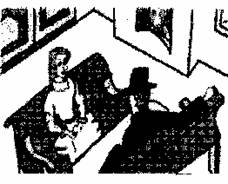
"My aunt will come down soon, Mr.Nuttel," said a young lady of fifteen.
Framton Nuttel attempted to say something to please the niece. Privately he doubted whether this visit would do much towards helping with his nerve problem.
"I know how it will be," his sister had said, "People there are nice. I shall just give you letters of introduction to all the people I know there." Framton wondered whether Mrs.Sappleton, the lady to whom he was presenting one of the letters ofintroduction came into the nice division.
"Do you know many of the people round here?" asked the niece.
"Hardly a soul," said Framton.
"Then you know practically nothing about my aunt. Her great tragedy(悲剧) happened
just three years ago," said the child, “Out through that window, her husband and her two young brothers went off for their day's shooting. They never came back. Poor aunt always thinks that they will come back someday. She has often told me about Ronnie, her youngest brother, singing ‘Bertie, why do you bound?"'
At this time, Mrs. Sappleton came in, greeting,“I hope you don't mind the open window." She talked on cheerfully about the shooting. To Framton it was all purely horrible. He made a desperate but only partially successful effort to tum the talk on to a less scary topic. "The doctors agree in ordering me complete rest, and an absence of mental excitement." he announced, "On the matter of diet they are not so much in agreement," he continued.
"No?" said Mrs. Sappleton, in a voice which only replaced a yawn at the last moment. "Here they are at last!" she suddenly cried. In the deepening dusk out came three figures with a tired brown spaniel (猎犬).And then a young voice rang out of the dusk, "I said, Bertie, why do you bound?"
Framton grabbed wildly at his stick and hat, without a word of goodbye, and rushed out of sight.
“What is up?" Mrs. Sappleton was confused.
"I expect it was the spaniel," said the niece calmly, "He told me that he was once hunted into a tomb by a pack of dogs, and had to spend the night in a newly dug tomb with the creatures barking just above him. Enough to make anyone lose their nerve."
Romance at short notice was her specialty.
72. According to the passage, we leam that Mrs. Sappleton .
A. felt sorrow about the shooting B. got along well with Ronnie
C. listened carefully to Framton D. trusted and spoiled her niece
73. As for Framton's nerve problem, his doctors .
A. recommended him to go off for a shooting
B. suggested to him a rest cure in the countryside
C. advised him to keep his mind off excitement
D. agreed on the treatment of his diet
74. Which word can best describe Framton?
A. Cheerful. B. Brave. C. Fragile. D. Wise.
75. What can be inferred about the niece from the last sentence?
A. She was good at making up a story in a short time.
B. She showed a strong love for scary stories.
C. She fell in love with Framton in no time.
D. She took no notice of strange visitors.
查看习题详情和答案>>| 完形填空。 | ||||
| I was shopping in the supermarket when I heard a young voice. "Mom, come here! There's a lady here my size!" The mother rushed to her son, then she turned to me to 1 . I smiled and told her, "It's okay." Then I 2 the boy, "Hi, I'm Darryl Kramer. How are you?" He studied me 3 , and asked, "Are you a little mommy?" "Yes, I have a son," I answered. " 4 are you so little?" he asked in curiosity. "It's 5 I was born," I said. "Some people are little. Some are tall. I'm just not going to grow any 6 ." After I answered his other questions, I shook the boy's hand and left. My life as a little person is 7 with stories like that. I enjoy talking to children and explaining why I look 8 from their parents. It takes only one glance to see my 9 . I stand three feet nine inches tall. I was a born dwarf (侏儒). 10 this, I did all the things other kids did when I was growing up. I didn't realize how short I was 11 I started school. 12 kids picked on me, calling me names (嘲笑我). Then I knew, I began to 13 the first day of school each year. New students would always stare at me as I struggled to 14 the school bus stairs. But I learned to smile and accept the 15 that I was going to be noticed my whole life. I decided to make my uniqueness and advantage rather than a disadvantage. What I lacked in height, I make up for in 16 . It's the children's questions that make my life 17 . I enjoy answering their questions. My hope is that I will 18 them to accept their peers (同龄人) whatever 19 and shape they come in, and treat them 20 . | ||||
|
I grew up in New Hampshire, a small town in South Canada, where in my father’s words for the seasons were “Spring, Summer, Fairtime and Winter!” At that time, a week-long fair was held in the town every autumn. Thousands of people from other towns came to sell and buy things. It was the busiest time of the year.
When “Fairtime” came, my grandma became the most “useful” and busiest person of the family. Grandma was a kind, well-educated old lady. She was good at cooking. All her rrelatives liked the foodshe cooked. During “fairtime”, they would come to live in her house and have meals there. Grandma was always happy to look after them.
Year after year, many people moved to big cities. There was no loner “Fairtime”. Grandma became very old and was gradually going blind. My parents and I moved to live with Granma in her house. We did our best to make her day-to-day life as comfortable as possible. I was at high school then. What I often did at home was to help Grandma with the daily newspaper’s crossword puzzle. However, she didn’t look happy. She often sat in her room for hours, without saying a word.
To attract people to move back, the Town Hall decided to reopen the Fair. One day, when I came back room school, I saw Grandma wearing her glasses, washing the dishes in the kitchen. With a big smile on her face, she looked a lot much younger. She told me that her two nieces would come. “They said the food I cooked was very delicious and they want to stay in my house again.” Grandma said happily. “They will stay here for one week and we can have a big party. That must be the busiest week I’ve had in years!”
I suddenly realized that Grandma didn’t want to be looked after. She wanted to be “useful”, appreciated and helpful.
1.Thousands of people came to the town to __________ at the Fair.
A. enjoy Grandma’s food B. sell and buy things
C. learn to cook D. have a big party
2.Why was Grandma unhappy?
A.She was too busy. B. No one lived with her.
B.She was not “useful”. D. She couldn’t see anything
3.Which of the following is NOT TRUE according to the passage?
A. Grandma was good at cooking
B. Many people moved to big cities.
C. Grandma didn’t like “Fairtime”
D. Grandma was a kind old lady.
4.What’s the best title for the passage?
A. Fairtime B. My “Old” Grandma
C. A Small Town D. Grandma’s Family
查看习题详情和答案>>
| |||||||||||||||||||||||||||||||||||||||||||||||||||||||||||
 verb(stuck, stuck)
 [+adv./prep.] to push sth, usually a sharp object, into sth; to be pushed into sth:[VN] The nurse stuck the needle into my arm.◆ Don't stick your fingers through the bars of the cage.◆ [V] I found a nail sticking in the tyre.
 [+adv./prep.] to fix sth to sth else, usually with a sticky substance; to become fixed to sth in this way:[VN] He stuck a stamp on the envelope.◆ We used glue to stick the broken pieces together.◆ I stuck the photos into an album.◆ [V] Her wet clothes were sticking to her body.◆ The glue's useless-the pieces just won't stick.
 [VN +adv./prep.](informal)to put sth in a place, especially quickly or carelessly:Stick your bags down there.◆ He stuck his hands in his pockets and strolled off.◆ Can you stick this on the noticeboard? ◆ Peter stuck his head around the door and said, 'Coffee, anyone?' ◆(spoken)Stick 'em up!(=put your hands above your head-I have a gun)
 [V]~(in sth)to become fixed in one position and impossible to move:The key has stuck in the lock.◆ This drawer keeps sticking.
 (BrE, informal)(usually used in negative sentences and questions)to accept a difficult or unpleasant situation or person:[VN] I don't know how you stick that job.◆ They're always arguing-I can't stick it any longer.◆ The problem is, my mother can't stick my boyfriend.◆ [V -ing] John can't stick living with his parents.
 [V] to become accepted:The police couldn't make the charges stick(=show them to be true).◆ His friends called him Bart and the name has stuck(=has become the name that everyone calls him).
 [V] to not take any more cards
 [C](informal, especially AmE)a handle used to change the GEARS of a vehicle
 [C] a BATON, used by the person who CONDUCTS an orchestra
 [U](BrE, informal)criticism or harsh words:The referee got a lot of stick from the home fans.
 (the sticks)[pl.](informal)country areas, a long way from cities:We live out in the sticks.
 [C](old-fashioned, BrE, informal)a person:He's not such a bad old stick.