网址:http://m.1010jiajiao.com/timu3_id_3031757[举报]
Unfortunately, George cannot be with us today so I am pleased to accept this award____ him. w.w.
A.in honor of B. instead of C.on behalf of D. for lack of
查看习题详情和答案>>When Mary Moore began her high school in 1951, her mother told her, "Be sure and take a typing course so when this show business thing doesn't work out, you'll have something to rely on." Mary responded in typical teenage fashion. From that moment on, "the very last thing I ever thought about doing was taking a typing course," she recalls.
The show business thing worked out, of course. In her career, Mary won many awards. Only recently, when she began to write Growing Up Again, did she regret ignoring her mom," I don't know how to use a computer," she admits.
Unlike her 1995 autobiography, After All, her second book is less about life as an award-winning actress and more about living with diabetes (糖尿病). All the money from the book is intended for the Juvenile Diabetes Research Foundation (JDRF), an organization she serves as international chairman. "I felt there was a need for a book like this," she says. "I didn't want to lecture, but I wanted other diabetics to know that things get better when we're self-controlled and do our part in managing the disease."
But she hasn't always practiced what she teaches. In her book, she describes that awful day, almost 40 years ago, when she received two pieces of life-changing news. First, she had lost the baby she was carrying, and second, tests showed that she had diabetes. In a childlike act, she left the hospital and treated herself to a box of doughnuts (甜甜圈). Years would pass before she realized she had to grow up--again---and take control of her diabetes, not let it control her. Only then did she kick her three-pack-a-day cigarette habit, overcome her addiction to alcohol, and begin to follow a balanced diet.
Although her disease has affected her eyesight and forced her to the sidelines of the dance floor, she refuses to fall into self-pity. "Everybody on earth can ask, 'why me?' about something or other," she insists. "It doesn't do any good. No one is immune (免疫的) to heartache, pain, and disappointments. Sometimes we can make things better by helping others. I've come to realize the importance of that as I've grown up this second time. I want to speak out and be as helpful as I can be."
1.Why did Mary feel regretful?
A. She didn't achieve her ambition.
B. She didn't take care of her mother.
C. She didn't complete her high school.
D. She didn't follow her mother's advice.
2.We can know that before 1995 Mary 。
A. had two books published B. received many career awards
C. knew how to use a computer D. supported the JDRF by writing
3.Mary's second book Growing Up Again is mainly about her ________.
A. living with diabetes B. successful show business
C. service for an organization D. remembrance of her mother
4.When Mary received the life-changing news, she __.
A. lost control of herself B. began a balanced diet
C. tired to get a treatment D. behaved in an adult way
5.What can we know from the last paragraph?
A. Mary feels pity for herself.
B. Mary has recovered from her disease.
C. Mary wants to help others as much as possible.
D. Mary determines to go back to the dance floor.
查看习题详情和答案>>
When Mary Moore began her high school in 1951, her mother told her, "Be sure and take a typing course so when this show business thing doesn't work out, you'll have something to rely on." Mary responded in typical teenage fashion. From that moment on, "the very last thing I ever thought about doing was taking a typing course," she recalls.
The show business thing worked out, of course. In her career, Mary won many awards. Only recently, when she began to write Growing Up Again, did she regret ignoring her mom," I don't know how to use a computer," she admits.
Unlike her 1995 autobiography, After All, her second book is less about life as an award-winning actress and more about living with diabetes (糖尿病). All the money from the book is intended for the Juvenile Diabetes Research Foundation (JDRF), an organization she serves as international chairman. "I felt there was a need for a book like this," she says. "I didn't want to lecture, but I wanted other diabetics to know that things get better when we're self-controlled and do our part in managing the disease."
But she hasn't always practiced what she teaches. In her book, she describes that awful day, almost 40 years ago, when she received two pieces of life-changing news. First, she had lost the baby she was carrying, and second, tests showed that she had diabetes. In a childlike act, she left the hospital and treated herself to a box of doughnuts (甜甜圈). Years would pass before she realized she had to grow up--again---and take control of her diabetes, not let it control her. Only then did she kick her three-pack-a-day cigarette habit, overcome her addiction to alcohol, and begin to follow a balanced diet.
Although her disease has affected her eyesight and forced her to the sidelines of the dance floor, she refuses to fall into self-pity. "Everybody on earth can ask, 'why me?' about something or other," she insists. "It doesn't do any good. No one is immune (免疫的) to heartache, pain, and disappointments. Sometimes we can make things better by helping others. I've come to realize the importance of that as I've grown up this second time. I want to speak out and be as helpful as I can be."
1.Why did Mary feel regretful?
A. She didn't achieve her ambition. B. She didn't take care of her mother.
C. She didn't complete her high school. D. She didn't follow her mother's advice.
2.We can know that before 1995 Mary 。
A. had two books published B. received many career awards
C. knew how to use a computer D. supported the JDRF by writing
3.Mary's second book Growing Up Again is mainly about her ________.
A. living with diabetes B. successful show business
C. service for an organization D. remembrance of her mother
4.When Mary received the life-changing news, she __.
A. lost control of herself B. began a balanced diet
C. tired to get a treatment D. behaved in an adult way
5.What can we know from the last paragraph?
A. Mary feels pity for herself.
B. Mary has recovered from her disease.
C. Mary wants to help others as much as possible.
D. Mary determines to go back to the dance floor.
查看习题详情和答案>>
D
Awardwinning author Emma Donoghue's latest book, Room, is a unique and amazing story about a boy's experience living in a small,windowless room with his mother. The 11' x 11' space between the walls of the room is actually all the boy knows because he was born there and has never left. Room will horrify ,surprise, sadden, and finally delight you. Attracted from the start, readers of all sorts won't want to put Room down.
◆First published in the U. S. in September 2010
◆Publisher: Little Brown
◆321 Pages 
Literary master Ian McEwan returns with Solar, a novel about a Nobel prizewinning physicist. The physicist's personal life is in a mess as his fifth marriage breaks,but this time he actually loves his wife and wants to make things better. Solar is a funny story, completely unusual and as good as anything the writer has ever written.
◆Published in March 2010
◆Publisher: Knopf Doubleday
◆304 Pages 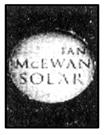
One Day by David Nicholls was an international bestseller before it was released in the U. S. in June. Although it is well written and funny at times, don't be fooled—this isn't a goodfeeling romantic comedy. If you decide to read it, be prepared for some heavy moments.
◆Published in the U.S. in June 2010
◆Publisher: Vintage Contemporaries
◆437 Pages 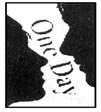
Fall of Giants by Ken Follett is the first book in a new trilogy (three books)that will take readers through the major events of the twentieth century by following five families. In Fall of Giants, most of the action centers on World War I and the Bolshevik Revolution. Although Fall of Giants is more than 1,000 pages and has many characters,the story is remarkably connected.
◆Published in September 2010
◆Publisher: Dutton
◆1,008 Pages 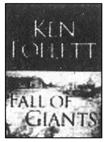
1.Which of the following is NOT true according to the text?
A. Ian McEwan once won the Nobel Prize.
B. Fall of Giants is mostly set in wars.
C. One day is written by David Nicholls.
D. Solar is a funny story about a physicist.
2.We can know from the text that ________.
A. the main character of Room has a wide range of knowledge
B. Solar is the only book that Ian McEwan has ever written
C. all the four books were not published in the same month
D. One Day is a funny romantic comedy that sells very well
3.We can infer from the passage that ________.
A. the sixth of Ian McEwan's marriages broke
B. Room by Emma Donoghue has a happy ending
C. the publisher of One Day is Little Brown
D. Dutton and Ken Follett are both publishers
查看习题详情和答案>>