网址:http://m.1010jiajiao.com/timu3_id_3014416[举报]
In the United States, it is important to be on time, or punctual, for an appointment, a class, a meeting, etc. However, this may not be true in all countries. An American professor discovered this difference while teaching a class in a Brazilian university. The two-hour class was scheduled (制定) to begin at 10 a. m and end at 12 a. m. On the first day, when the professor arrived on time, no one was in the classroom Many students came after 10 a. m. Several arrived after 10:30 a. m. Two students came after 11 a. m. Although all the students greeted the professor as they arrived, few apologized for their lateness. Were these students being rude? He decided to study the students' behavior.
The professor talked to American and Brazilian students about lateness in both an informal and a formal situation: lunch with a friend and in a university class, respectively. He gave them an example and asked them how they would react. If they had a lunch appointment with a friend, the average American student defined (定义) lateness as 19 minutes after the agreed time. On the other hand, the average Brazilian student felt the friend was late after 33 minutes.
In an American university, students are expected to arrive at the appointed hour. In contrast, in Brazil, neither the teacher nor the students always arrive at the appointed hour. Classes not only begin at the scheduled time in the United States, but they also end at the scheduled time. In the Brazilian class, only a few students leave the class at noon; many remain past 12:30 to discuss the class and ask more questions. While arriving late may not be very important in Brazil, neither is staying late.
The explanation for these differences isn't simple. People from Brazilian and North American cultures have different feelings about lateness. In Brazil, the students believe that a person who usually arrives late is probably more successful than a person who is always on time. In fact, Brazilians expect a person with high social position to arrive late, while in the United States lateness is usually considered to be disrespectful and unacceptable. As a result, if a Brazilian is late for an appointment with a North American, the American may misread the reason for the lateness and become angry.
As a result of his study, the professor learned that the Brazilian students were not being disrespectful to him. Instead, they were simply behaving in the appropriate (合适的) way for a Brazilian student in Brazil. In the end, the professor was able to change his own behavior so that he could feel comfortable in the new culture.
(1) What is the main idea of the passage?
[ ]
A.Lateness is a way of disrespect.
B.It is important to be on time for class.
C.The importance of being on time differs among cultures.
D.People should learn the importance of time when they are children.
(2) Why did the professor study the Brazilian students' behavior?
[ ]
A.To make the students polite.
B.To make the students come to class on time.
C.To understand why the students came late.
D.To change his own behavior.
(3) Which of the following is right according to the passage?
[ ]
A.Most North Americans think a person who is late is disrespectful.
B.Few American students leave immediately after the class is finished.
C.In a Brazilian class, the students leave immediately after the class is finished.
D.As a result of the study, the professor changed the Brazilian students' behavior.
(4) What do you think will happen according to the passage?
[ ]
A.An American host will feel unhappy if a guest arrives at the party 20 minutes late.
B.An American student will think he is more successful if he is late for class.
C.A Brazilian guest will say sorry to the host if he is 20 minutes late.
D.A Brazilian teacher will go on with his class after the ending time.
查看习题详情和答案>>If you do not use your arms or your legs for some time, they become weak. When you 1 using them again, they 2 become strong again. Everybody knows this and nobody would think of 3 this fact. 4 there are many people who do not 5 to know that memory works in the 6 way.
7 someone says that he has a good memory; he 8 means that he 9 his memory by practising exercising it. When someone 10 says that his memory is poor, he actually means that he 11 give it enough chances to become 12 .Have you ever 13 that people who cannot read or write usually have 14 memories than those who can? This is 15 those who 16 read or write 17 remember things. They have to remember dates, places, names, songs and stories. So their memory is the whole time 18 .So 19 you want to have a good memory, you should learn from those people, 20 by remembering what you see, hear, feel and write. If so, you must have a good memory.
1. A. begin B. go on C. stop D. continue
2. A. quickly B. slowly C. soon D. at once
3. A. doing B. agreeing C. questioning D. answering
4. A. Yet B. Still C. So D. Certainly
5. A. want B. seem C. get D. hope
6. A. other B. usual C. same D. opposite
7. A. As B. What C. While D. When
8. A. real B. actually C. true D. then
9. A. wants B. builds up C. makes D. keeps
10.A.again B. else C. more D. once
11.A.do not B. is not C. never D. does not
12.A.poor B. weak C. strong D. healthy
13.A.seen B. heard of C. noticed D. thought of
14.A.worse B. better C. more D. less
15.A.why B. how C. because D. the reason
16.A.used to B. cannot C. try to D. have to
17.A.will not B. have to C. refuse D. cannot
18.A.ready B. being used C. busy D. training
19.A.if B. that C. though D. thus
20.A.please B. try C. train D. enjoy
查看习题详情和答案>>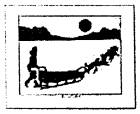
Now, Julie's team ran up and down over the snowy hills. They 5 only to rest and eat. They wanted to stay 6 of the other teams. The racers had to go a thousand miles across Alaska. Alaska is one of the 7 places on Earth. The dogs' thick fur coats helped 8 them warm in the cold wind. In many places along the way, the snow was deep. Pieces of ice were as 9 as a knife. The ice could cut the dogs' feet. To keep that from 10 , Julie had put special boots on their feet.
At first, the dogs seemed to 11 the sled very slowly. They were 12 getting used to the race. But on the third day out, they began to run more 13 . They worked 14 a team and passed many of the other racers. Once, one of the sled's runners fell into a hole and 15 . Julie could have given up then, but she didn't. She fixed it and they kept going.
When they finally reached the finish line, they found that they had come in first place! It was a great day for Julie and her dogs.
|
1.A. lined |
B. looked |
C. called |
D. picked |
|
2.A. runners |
B. hands |
C. dogs |
D. eyes |
|
3.A. Begin |
B. Rush |
C. Hurry |
D. Go |
|
4.A. game |
B. race |
C. play |
D. test |
|
5.A. went |
B. ran |
C. stopped |
D. asked |
|
6.A. tired |
B. ahead |
C. afraid |
D. free |
|
7.A. wettest |
B. highest |
C. coolest |
D. coldest |
|
8.A. keep |
B. make |
C. find |
D. leave |
|
9.A. strong |
B. hard |
C. thick |
D. sharp |
|
10.A. coming |
B. hurting |
C. happening |
D. cutting |
|
11.A. push |
B. pull |
C. walk |
D. drive |
|
12.A. still |
B. already |
C. usually |
D. almost |
|
13.A. hardly |
B. happily |
C. quickly |
D. quietly |
|
14.A. as |
B. on |
C. for |
D. with |
|
15.A. died |
B. failed |
C. broke |
D. disappeared |
查看习题详情和答案>>
| |||||||||||||||||||||||||||||||||||||||||||||||||||||||||||
The dogsled race was about to begin. Julie's team of dogs was lined up at the starting gate. Julie stood behind them. Other teams were 1 up, too, and the dogs were excited. Julie kept her 2 on the clock. At exactly ten o'clock, she and the other racers shouted, “Mush!” The dogs knew that meant, “ 3 !” They jumped forward and the 4 started!
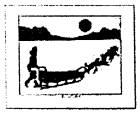
Now, Julie's team ran up and down over the snowy hills. They 5 only to rest and eat. They wanted to stay 6 of the other teams. The racers had to go a thousand miles across Alaska. Alaska is one of the 7 places on Earth. The dogs' thick fur coats helped 8 them warm in the cold wind. In many places along the way, the snow was deep. Pieces of ice were as 9 as a knife. The ice could cut the dogs' feet. To keep that from 10 , Julie had put special boots on their feet.
At first, the dogs seemed to 11 the sled very slowly. They were 12 getting used to the race. But on the third day out, they began to run more 13 . They worked 14 a team and passed many of the other racers. Once, one of the sled's runners fell into a hole and 15 . Julie could have given up then, but she didn't. She fixed it and they kept going.
When they finally reached the finish line, they found that they had come in first place! It was a great day for Julie and her dogs.
|
1.A. lined |
B. looked |
C. called |
D. picked |
|
2.A. runners |
B. hands |
C. dogs |
D. eyes |
|
3.A. Begin |
B. Rush |
C. Hurry |
D. Go |
|
4.A. game |
B. race |
C. play |
D. test |
|
5.A. went |
B. ran |
C. stopped |
D. asked |
|
6.A. tired |
B. ahead |
C. afraid |
D. free |
|
7.A. wettest |
B. highest |
C. coolest |
D. coldest |
|
8.A. keep |
B. make |
C. find |
D. leave |
|
9.A. strong |
B. hard |
C. thick |
D. sharp |
|
10.A. coming |
B. hurting |
C. happening |
D. cutting |
|
11.A. push |
B. pull |
C. walk |
D. drive |
|
12.A. still |
B. already |
C. usually |
D. almost |
|
13.A. hardly |
B. happily |
C. quickly |
D. quietly |
|
14.A. as |
B. on |
C. for |
D. with |
|
15.A. died |
B. failed |
C. broke |
D. disappeared |
查看习题详情和答案>>