网址:http://m.1010jiajiao.com/timu3_id_3001311[举报]
假设你是李华,John是你的英国笔友。他对中国西南五个省发生的持续超过半年的严重旱灾非常关切,发来邮件向你询问此事。请你用英文给他发一封电子邮件,主要内容包括:
|
1、旱灾原因分析; |
|
|
2、旱灾造成的后果; |
|
|
3、你们学校组织的捐赠活动; |
|
|
4、你对身边的浪费水的现象的看法。 |
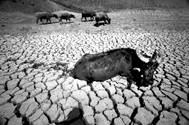
注意: 1. 词数100左右,邮件的格式已为你写好。2. 可根据内容要点适当增加细节,以使行文连贯。
3. 文中不得提及考生所在学校和本人姓名。
4. 参考词汇:旱灾—drought 庄稼—crops 捐赠—donate vt. donation n.
Hi, John!
I’m glad to receive your e-mail. In your e-mail, ___________________________________________
_________
_______________________________________________________________________________________
Best wishes!
Li Hua
查看习题详情和答案>>
根据短文内容,从短文后的选项中选出能填入空白处的最佳选项。选项中有两项为多余选项。
Laughter and tears are part of living. But do you find enough time for laughter? I am not
asking if you experience lots of good times. Of course we should laugh during the happy times.
1
Erma Bombeck is known for her humorous books, but she wrote one that covered a more
serious topic: cancer in children. Erma talks with lots of children with cancer and learns an important life lesson from them. 2
She tells the experience of 15-year-old Jessica from Burlington, VT. Jessica’s leg was amputated (锯掉) at the knee because of cancer. Jessica tells about playing soccer. She kicked the ball hard and it flew off in one direction while her artificial leg flew another way. Then “the tall, pretty person that I am,” she said, “sat on the floor in laughter.”
Jessica may not have laughed about her cancer, but she laughed about dealing with its results. 3
Then there is the story of 17-year-old Betsy. She made her way to the radiation room(放射室) for
her regular radiation therapy. As usual, she dropped her hospital coat and, wearing only her birthday suit, climbed onto the table and waited. After a couple of moments she began to realize something disturbing: the extra people in the room were not the medical students she had thought, but rather painters giving an estimate on painting! 4 And like Jessica, her ability to laugh helped her to deal with one of the most difficult things a young person can endure(忍受) — cancer.
There is a time to weep and a time to laugh. 5 And you’ll smile at the end.
| A.She was learning to wear an artificial leg. |
| B.And her laughter helped her cope. |
| C.You would be happy if you find reasons to laugh. |
| D.Betsy laughed heartily about the incident. |
F. If you can laugh even when the going gets rough, you’ll make it.
G. She learns that all cancer survivors prefer to laugh. 查看习题详情和答案>>
A .Office Systems Technology
Courses: Keyboarding, Introduction to Information Systems, Records & Data Base Management, Business English,Document Formatting &Word Processing, Medical Terminology
Total Credit Hours: 18
Certificates: Data Entry Receptionist, Medical Admissions Clerk
Contact Information: Wilma Clapp一Project Coordinator Bldg A, Room,119 Leestown Campus 164 Opportunity Way, Lexington, KY 40511 Tel: (859)246-6821
B. Chemical Engineering at Cambridge
Our course concentrates on the scientific principles that underpin modern chemical and biochemical engineering. The aim is to produce graduates that meet the needs of today’s process industries by providing technical competence, training in transferable skills, and a thorough understanding of the subject. We have strong links with industry. The course is supported by a consortium of 10 industrial companies. These links also mean that there are opportunities for vacation placements with some of the world’s top companies.
Contact details: admissions@ceb.cam.ac.uk or www. ceb. cam. ac. uk
C. English Learning at Cambridge
UCAS code: Q300 BA/E
Duration: 3 years
Colleges: Available at all colleges
Related courses: Anglo-Saxon, Norse, and Celtic
Classes: History, Linguistics, Modern and Medieval Languages, Theology and Religious Studies
Contact details: english-faculty@lists.cam.ue.ukculty@Iists.cam.ack.uk or www english. cam. ac. uk
D. The SIT TESOI, Certificate Course
Teaches you the fundamentals of teaching English to speakers of other languages
Gives you hands-on, trainer-observed teaching practice and includes workshop sessions and supported lesson planning by experienced trainers
Provides you with modern teaching methods that help you to connect effectively with learners’ individual needs and motivations.
Helps you develop confidence in your ability to teach English as a foreign language
Mailing Address: PO,Box 676, 1 Kipling Road, Brattleboro, VT 05302 USA
E. Skills for Life (English and Maths)
Skills for Life courses give you the English and maths skills you need to manage your life at home, at work and in all aspects of your life.
Skills for Life courses can also be a stepping stone to other courses, such as Skills for Learning. All of these courses are at Entry 3/Level I.
These courses are FREE of charge including all accommodation, meals, tuition and learning resources.
If you have any questions then please contact Yvonne Godwin at Fircroft College on 0121 472 0116.
F. Human, Social, and Political Sciences
UCAS code: L000 BA/HSPS
Duration: 3 years
Colleges: Available at all colleges except Peterhouse
Related courses: Asian and Middle Eastern Studies
Classes: Geography, History, Psychological and Behavioural Sciences, Theology and Religious Studies
Contact details: enquiries@hsps.cam.ac.uk or www hsps.cam.ac.uk/undergraduate
以下是相关人物信息,请将相关的人物信息与他们需要的课程匹配起来。
1.Eva will become an English teacher in September this year. Before working as a teacher, she wants to get some training and learn some modem teaching methods.
2.Joe lives with his mother near Fircroft College. His mother is too poor to afford his education. So he intends to find a course which offers free accommodation, meals and tuition.
3.Linda who majors in English plans to write a thesis about Anglo-Saxon people, including their life and history. Recently she has been collecting information about them.
4.Li Lei is going to finish his senior middle school and plans to study biochemical engineering at a world-famous college. So he decides to learn more about it during the summer vacation.
5. Wang Li is a reporter. She is asked to write a passage about Asia and Middle East. Because she isn’t familiar with them at all, she has to learn about them.
查看习题详情和答案>>
根据短文内容,从短文后的选项中选出能填入空白处的最佳选项。选项中有两项为多余选项。
Laughter and tears are part of living. But do you find enough time for laughter? I am not
asking if you experience lots of good times. Of course we should laugh during the happy times.
1
Erma Bombeck is known for her humorous books, but she wrote one that covered a more
serious topic: cancer in children. Erma talks with lots of children with cancer and learns an important life lesson from them. 2
She tells the experience of 15-year-old Jessica from Burlington, VT. Jessica’s leg was amputated (锯掉) at the knee because of cancer. Jessica tells about playing soccer. She kicked the ball hard and it flew off in one direction while her artificial leg flew another way. Then “the tall, pretty person that I am,” she said, “sat on the floor in laughter.”
Jessica may not have laughed about her cancer, but she laughed about dealing with its results. 3
Then there is the story of 17-year-old Betsy. She made her way to the radiation room(放射室) for
her regular radiation therapy. As usual, she dropped her hospital coat and, wearing only her birthday suit, climbed onto the table and waited. After a couple of moments she began to realize something disturbing: the extra people in the room were not the medical students she had thought, but rather painters giving an estimate on painting! 4 And like Jessica, her ability to laugh helped her to deal with one of the most difficult things a young person can endure(忍受) — cancer.
There is a time to weep and a time to laugh. 5 And you’ll smile at the end.
A. She was learning to wear an artificial leg.
B. And her laughter helped her cope.
C. You would be happy if you find reasons to laugh.
D. Betsy laughed heartily about the incident.
E. But do you also laugh during the difficult times?
F. If you can laugh even when the going gets rough, you’ll make it.
G. She learns that all cancer survivors prefer to laugh.
查看习题详情和答案>>
1.I had a very happy day today because we had no school though it is Tuesday today. I played football with my friends on the playground in our school. Then we had a big dinner with a lot of our friends.
2.Today was a special day. After the bell rang for the lesson, we all sat up straight, waiting for our maths teacher. Today in former years we would place something on the top of the door so that when someone entered, it would fall onto that person. But this year, we put nothing on the top of the door. But as our maths teacher was entering, we all shouted “Take care”. The teacher got a surprise and raised his head but saw nothing. We all laughed and said “April fool”.
3.Early this morning I got up and woke up my sister Jane. Together we went from door to door to call on my friends. It was a day for us to play. We gathered on the square of the town with our New Year’s gift. We exchanged our gifts and played all kinds of games on the square. How happy we were!
4.This evening we had a Halloween party in the open. We were all dressed in witch’s outfit and wore masks. We sang and danced happily. We couldn’t figure out who was who though we were all such close friends or neighbors.
5.Today I gave a kiss to the girl I love most in front of all my classmates. I didn’t say anything before. But today I was brave enough to kiss her on the face with my classmates and my history teacher near at hand.
A.Near Year’s Day
It falls on the first day of the year. The year should begin happily, they say, so that it will end happily. And on the first morning of the New Year, children in Scotland, Wales and the English border countries rise early so that they may make the round of their friends and neighbors. “On January 1st,” writes a 13-year-old Scottish girl, “I always go New Year’s Gifting with my sister and friends, about four of us. I get up about 7 o’clock and call for my friends and go round the houses and farms.”
B.Shrove Tuesday
For centuries Shrove Tuesday has been a day of high festival for apprentices (学徒) and schoolchildren. It has been a day of feasting, and cock fighting, a day for football , and rowdiness (吵闹). And it is pleasing to find that it is still a special day for children in some parts of England, where “Pancake Day (薄煎饼日),” as they call it, is kept as a school holiday.
C.Kissing Friday
A teacher writing to the Yorkshire Post tells how after Ash Wednesday, comes Kissing Friday. A few days ago, when she arrived at a country school and was taking a mixed class of 13-year-old children in country dancing, she saw the leading boy suddenly lean across and kiss his partner, who showed no sign of embarrassment. When, as teacher, she expressed her surprise, the boy said, “It’s all right, Miss. You see, it’s Kissing Friday”. And he explained that on Friday following Shrove Tuesday any boy had the right to kiss any girl without being resisted.
D.April Fool’s Day
The first day of April ranks amongst the most joyous days in the juvenile (青少年) calendar. It is a day when you hoax (愚弄) friends of yours with jokes like sending them to the shop for some pigeon’s milk, or telling them to dig a hole because the dog has died; when they come back and ask where the dead dog is, you say “April fool” and laugh at them.
E. May Day
On the first of May, in country districts, young maidens (少女) rise early and go out into the dawn, as they have done for centuries, to wash their faces in the May dew (露水). In Somerset children call this “kissing the dew”. In most places, the girls do so to ensure that they shall have a beautiful complexion (肤色) for the rest of the year.
F. Halloween
It falls on October 31. Many children attend Halloween parties. “The best thing about the party is that you should go in fancy dress, ” says a girl. The most popular dress is a Witch’s outfit, or something to do with lucky charms. It is said that one of the luckiest things at a Halloween party is for a person to come in with a lump (块) of coal.
查看习题详情和答案>>