网址:http://m.1010jiajiao.com/timu3_id_2999509[举报]
There are three different kinds of friends in our life. I classify (分类) them according to how well I know them and how well they know me.
The first type of friend is just an acquaintance (熟人).This means that you only know their name. You might not even remember what they look like if you go away for a short vacation. You don’t miss them when they are elsewhere. It is also this type of friend who gives you the most amount of aggravation (恼怒).Since most of the time you are placed in a position where you have to act friendly. You would not normally tell an acquaintance when he or she is doing something that makes you feel angry,such as tapping the fingers on a table or shouting loudly. I call them “pest friends”.
The second kind of friend is a “guest friend”.They are just social partners. You meet them at a certain location and at the end of the meeting you go your separate way and they go theirs. You don’t talk too often with this sort of friend,and you don’t share each other’s secrets.
Lastly,we have “best friends”.This sort of friend is there when you need them. They know you as a person and they are there through thick and thin. Best friends are the ones that you can lean and depend on no matter what happens. If you need a listening ear,they will be the one to lend support.
Friends come in all different shapes and sizes. Every friend has an influence on our life....
67.What is this passage mainly about?
A.What a true friend is like.
B.Three kinds of friends in our life.
C.The role that friends play in our life.
D.Why there are different kinds of friends.
68.According to the writer,when a friend of the first type acts in an annoying way,you ________.
A.can tell him/her about it directly
B.should stay away from him/her
C.should advise him/her to correct his/her behavior
D.may find it hard to tell him/her not to do so
69.Which of the following statements is WRONG about the second type of friend?
A.They are only social partners.
B.You don’t talk very often with them.
C.You don’t share your secrets with them.
D.They are called “pest friends” by the writer.
70.What will most probably be talked about in Paragraph 5?
A.How to make friends.
B.How friends influence our life.
C.How to improve friendship.
D.How to get along well with the third type of friend.
查看习题详情和答案>>My Way to Success
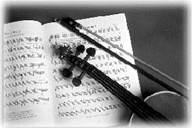
From the day I signed up for the Naumburg Competition, everything changed. I had made a decision to start again, to save my life, and that meant a 360-degree turnaround.
I kept on practicing. An enormous amount of work had to be done in two months. I went from not practicing at all to thirteen hours a day.
I spent two weeks just playing scales. If I thought I sounded bad before, now I sounded worse than awful.
At the time I lived on 72nd Street, close to West End Avenue. I had an apartment with a window the size of a shoebox. I didn't do mylaundry. I left my apartment only to walk to Juilliard─and not onBroadway like everyone else. I walked up Amsterdam Avenue because I didn't want to see anybody, didn't want to run into anybody, didn't want anyone to ask what I was doing.
I stopped going to classes and became a hermit. I even talked Miss DeLay into giving my lesson at night.
My eating habits were awful. I lived on fried sausages, a pint of peanut butter/chocolate ice cream, and a gallon of Coca-Cola every day. That's all I ate for eight weeks.
I was nuts. I was completely obsessed with getting back into shape, with doing well in this competition. If I could, people would know I was still on earth. Not to count me out; to stop asking, “Whatever happened to Nadja?”
The last week before the Naumburg auditions, I couldn't touch the violin. I had worked and worked and worked and worked and then I just couldn't work anymore.
I certainly could have used it. I wasn't as prepared as I should have been. But I simply had to say, “Nadja, you've dedicated yourself to this thing. Ready or not, do your best.”
Fifty violinists from around the world auditioned for the competition on May 25, 26, and 27, 1981. Those that made it past thepreliminaries would go on to the semifinals. Those that passed that stage would go to the finals. In years past, one violinist was chosen as winner and two received second and third place.
On May 26, the day of my audition, I went to the Merkin Concert Hall at 67th Street and Broadway. I waited, played for twenty minutes, and went home. I couldn't tell whether the preliminary judges were impressed or not. I'd find out the next evening.
Maybe subconsciously I was trying to keep busy; that night, when I fried the sausages, I accidentally set my apartment on fire. I grabbed my cat and my violin, and ran out the door. The fire was put out, but everything in my place was wrecked.
Fortunately, the phone was okay and on the evening of May 27, I had the news from Lucy Rowan Mann of Naumburg. Thirteen of us had made it.
Talk about mixed emotions. I was thrilled to be among the thirteen; a group that included established violinists, some of whom had already made records. But it also meant I had to play the next day in the semifinals of the competition.
Everyone entering the competition had been given two lists of concertos. One was a list of standard repertory pieces. The other list was twentieth-century repertory. For our big competition piece, we were to choose from each list and play a movement from one in the semifinals, and a movement from the other in the finals─if we made it that far.
From the standard repertory list, I chose the Tchaikovsky Concerto. I had been playing the Tchaik for three years, so it was a good piece for me.
From the twentieth-century list, I chose the Prokofiev G minor Concerto. I had never played it onstage before.
My goal had been just passing the auditions, but now my thought pattern began to change. If I wanted a sliver of a chance of advancing again, my brain said, “Play your strong piece first.”
Logically, I should play the Tchaikovsky in the semifinals just to make it to the next stage. Who cared if that left me with a piece I probably wouldn't play as well in the finals of the competition? It'd be a miracle to get that far.
There wouldn't be more than seven violinists chosen for the final round, and if I were in the top seven of an international group, that was plenty good enough.
The semifinals were held on May 28 in Merkin Concert Hall. You were to play for thirty minutes: your big piece first, then the judges would ask to hear another.
There was a panel of eight judges. They had a piece of paper with my choices of the Tchaikovsky and the Prokofiev in front of them. “Which would you like to play?” they asked.
I said meekly, “Prokofiev.”
My brain and all the logic in the world had said, “Play your strong piece.” My heart said, “Go for it all. Play your weak piece now, save Tchaikovsky for the finals.”
Maybe I don't listen to logic so easily after all.
My good friend, the pianist Sandra Rivers, had been chosen as accompanist for the competition. She knew I was nervous. There had been a very short time to prepare; I was sure there'd be memory slips, that I'd blank out in the middle and the judges would throw me out. My hands were like ice.
The first eight measures of the Prokofiev don't have accompaniment. The violin starts the piece alone. So I started playing.
I got through the first movement and Sandra said later my face was as white as snow. She said I was so tense, I was beyond shaking. Just a solid brick.
It was the best I'd ever played it. No memory slips at all. Technically, musically, it was there.
I finished it thinking, “Have I sold my soul for this? Is the devil going to visit me at midnight? How come it went so well?”
I didn't know why, but often I do my best under the worst of circumstances. I don't know if it's guts or a determination not to disappoint people. Who knows what it is, but it came through for me, and I thank God for that.
As the first movement ended, the judges said, “Thank you.” Then they asked for the Carmen Fantasy.
I turned and asked Sandy for an A, to retune, and later she said the blood was just rushing back into my face.
I whispered, “Sandy, I made it. I did it.”
“Yeah,” she whispered back, kiddingly, “too bad you didn't screw up. Maybe next time.”
At that point I didn't care if I did make the finals because I had played the Prokofiev so well. I was so proud of myself for coming through.
I needed a shot in the arm; that afternoon I got evicted. While I was at Merkin, my moped had blown up. For my landlord, that was the last straw.
What good news. I was completely broke and didn't have the next month's rent anyway. The landlord wanted me out that day. I said, “Please, can I have two days. I might get into the finals, can I please go through this first?”
I talked him into it, and got back to my place in time for the phone call. “Congratulations, Nadja,”“they said. “You have made the finals.”
I had achieved the ridiculously unlikely, and I had saved my best piece. Yet part of me was sorry. I wanted it to be over already. In the three days from the preliminaries to the semifinals, I lost eight pounds. I was so tired of the pressure.
There was a fellow who advanced to the finals with me, an old, good friend since Pre-College. Competition against friends is inevitable in music, but I never saw competition push a friendship out the window so quickly. By the day of the finals, I hated him and he hated me. Pressure was that intense.
The finals were held on May 29 at Carnegie Hall and open to the public. I was the fourth violinist of the morning, then there was a lunch break, and three more violinists in the afternoon.
I played my Tchaikovsky, Saint-Sa‘ns’s Havanaise, and Ravel's Tzigane for the judges: managers, famous violinists, teachers, and critics. I went on stage at five past eleven and finished at noon. Those fifty-five minutes seemed like three days.
I was so relieved when I finished playing; I was finished! It's impossible to say how happy I was to see the dressing room. I went out for lunch with my friends. It was like coming back from the grave. We laughed and joked and watched TV.
As I returned to Carnegie Hall to hear the other violinists, I realized I'd made a big mistake: they might ask for recalls. A recall is when they can't decide between two people and they want you to play again. It's been done; it's done all the time in competitions. No way was I in shape to go onstage and play again.
In the late afternoon, the competition was over. Everybody had finished playing. Quite luckily─no recalls.
The judges deliberated for an hour. The tension in the air was unbelievable. All the violinists were sitting with their little circle of friends. I had my few friends around me, but no one was saying much now.
Finally, the Naumburg Foundation president Robert Mann came on stage.
“It's always so difficult to choose ...” he began.
“Every year we hold this competition,” Robert Mann said. “And in the past, we've awarded three prizes. This year we've elected to only have one prize, the first prize.”
My heart sank. Nothing for me. Not even Miss Congeniality.
“We have found,” Mann went on, “that second place usually brings great dismay to the artist because they feel like a loser. We don't want anyone here to feel like a loser. Every finalist will receive five hundred dollars except the winner, who will receive three thousand dollars.”
And then he repeated how difficult it was to choose, how well everyone had played ...dah, dah, dah.
I was looking down at the floor.
“The winner is ...”
And he said my name.
A friend next to me said, “Nadja, I think you won!”
I went numb. My friends pulled me up and pointed me toward the stage. It was a long walk because I had slipped into a seat in the back. Sitting up in front was my old friend. I would have to walk right past him and I was dreading it, but before I could, he got up and stopped me.
He threw his arms around me and I threw my arms around him. I kept telling him how sorry I was. I was holding him and started to cry, saying, “I'm sorry, I'm sorry, I'm sorry.” I didn't want to lose, but I really didn't want him to lose either. And he was holding me and saying, “Don't be sorry. I'm so proud of you.” It was over, and we would be friends again.
I took my bow, then ran to Juilliard. Ten blocks uptown, one block west, to give Miss DeLay the news. She could be proud of me now, too.
Suddenly, everything was clear. Playing the violin is what I'd do with my life. Heaven handed me a prize: “You've been through a lot, kid. Here's an international competition.”
Everything had changed when I prepared for the Naumburg, and now everything changed again. I made my first recording. Between September 1981 and May 1982, I played a hundred concerts in America, made one trip to Europe, then two months of summer festivals. And people asked me back.
There was a great deal of anxiety playing in Europe for the first time. But I was able to rely on my self-confidence to pull me through.
Self-confidence onstage doesn't mean a lack of nerves backstage. The stakes had increased. This wasn't practice anymore, this was my life. I'd stare into a dressing-room mirror and say, “Nadja, people have bought tickets, hired baby-sitters, you've got to calm down; go out there and prove yourself.”
Every night I'd prove myself again. My life work had truly begun
- 1.
In a gesture to prepare for the competition, Nadja did all the following except _________
- A.preoccupying herself in practice
- B.trying to carry out her deeds secretly
- C.abandoning going to school for classes
- D.consuming the best food to get enough energy
- A.
- 2.
How many violinists does the passage mention advanced to the finals?
- A.Four
- B.Five
- C.Six
- D.Seven
- A.
- 3.
After Nadja finished playing at the finals, she went out for a while and when she came back to hear the other violinists she realized she had made a mistake because _________
- A.she forgot that there was going to be a recall
- B.she didn’t get hold of the permission to leave
- C.chances were that she had to replay and she was off guard
- D.there was another play she had to take part in in the afternoon
- A.
Buddy seldom saw either of his parents. But he was happy where he was and he had many kindly
relatives, among whom Miss Sook was by far his best friend. Before Christmas, Buddy's father had
managed to get legal custody(法定监护) of him for this Christmas. So, he had a new suit, with a card
pinned with his name and address and made the trip alone, by bus, to New Orleans.
Several things occurred that kept me awake the whole night. First, the footfalls, the noise of my father
running up and down the stairs, breathing heavily, I had to see what he was up to. So I hid and watched.
There was a Christmas tree and the fireplace downstairs. Moreover, I could see my father. He was
crawling around under the tree arranging a pyramid of packages. I felt dizzy, for what I saw forced me to
reconsider everything. If these were presents intended for me, then obviously they had not been ordered
by the Lord and delivered by Santa Claus; no, they were gifts bought and wrapped by my father,which
meant that my rotten little cousin Billy Bob and other rotten kids like him weren't lying when they laughed
at me and told me there was no Santa Claus. The worst thought was: Had Sook known the truth, and lied
to me? No, Sook would never lie to me. She believed. It was just that-well, though she was
sixty-something, in some ways she was at least as much of a child as I was.
I waited until I was sure he was in bed and sound asleep. Then I crept downstairs and examined the
tags attached to each of the packages. They all said: "For Buddy." I decided to open the packages: It
was Christmas morning. I was awake, so why not? I won't bother to describe what was inside them: just
shirts and sweaters and dull stuff like that. The only thing I appreciated was a toy gun. Somehow I got the
idea it would be fun to waken my father by firing it. So I did. Bang. Bang. Bang. He raced out of his room, wild-eyed, Bang. Bang. Bang. "Buddy-what the hell do you think you're doing?" Bang. Bang. Bang. "Stop that!" I laughed. "Look, Daddy. Look at all wonderful things Santa Claus brought me."
Calm now, he walked into the room and hugged me. "You like what Santa Claus brought you?"
I smiled at him. He smiled at me. There was a tender lingering (逗留不去的) moment, damaged when I said: "Yes. But what are you going to give me, Daddy?" His smile evaporated. His eyes narrowed
suspiciously-you could see that he thought I was pulling some kind of trick. But then he blushed, as though he was ashamed to be thinking what he was thinking. He patted my head, and coughed and said: "Well, I
thought I'd wait and let you pick out something you wanted. Is there anything particular you want?"
I reminded him of the airplane we had seen in the toy store on Canal Street. His face sagged. Oh, yes, he
remembered the airplane and how expensive it was. Nevertheless, the next day I was sitting in that
airplane dreaming I was zooming toward heaven while my father wrote out a check for a happy salesman, who promised to help ship the plane on the bus.
But I wasn't free of New Orleans yet. The problem was a large bottle of wine; maybe it was because of
my departure, but anyway my father had been drinking it all day, and on the way to the bus station, he
scared me by grabbing my wrist and harshly whispering: "I'm not going to let you go. I can't let you go back to that crazy family in that crazy old house. Just look at what they've done to you. A boy six, almost
seven, talking about Santa Claus! It's all their fault, all those sour old spinsters with their Bibles and their
knitting needles, those drunken uncles. Listen to me, Buddy. There is no God! There is no Santa Claus.
" He was squeezing my wrist so hard that it ached. "Kiss me. Please. Please. Kiss me. Tell your daddy
that you love him." But I couldn't speak. I was terrified I was going to miss my bus. And I was worried
about my plane, which was strapped to the top of the taxi. "Say it: 'I love you.' Say it. Please. Buddy. Say
it."
It was lucky for me that our taxi-driver was a good-hearted man. Because if it hadn't been for his help, and the help of some efficient porters and a friendly policeman, I don't know what would have happened
when we reached the station. My father was so drunk he could hardly walk, but the policeman talked to
him, quieted him down, helped him to stand straight, and the taxi-man promised to take him safely home.
But my father would not leave until he had seen the porters put me on the bus.
Once I was on the bus, I crouched in a seat and shut my eyes. I felt the strangest pain. A crushing pain
that hurt everywhere. I thought if I took off my heavy city shoes, those crucifying monsters, the agony
would ease. I took them off, but the mysterious pain did not leave me. In a way it never has; never will.
Twelve hours later I was home in bed. The room was dark. Sook was sitting beside me, rocking in a
rocking chair, a sound as soothing (令人舒畅的) as ocean waves. I had tried to tell her everything that
had happened, and only stopped when I was hoarse (嘶哑的) as a howling dog. She stroked her fingers
through my hair, and said: "Of course there is a Santa Clause. It's just that no single somebody could do
all he has to do. So the Lord has spread the task among us all. That's why everybody is Santa Claus. I am. You are. Even you cousin Billy Bob. Now go to sleep. Count stars. Think of the quietest thing. Like snow. I'm sorry you didn't get to see any. But now snow is falling through the stars-" Stars sparkled, snow whirled inside my head; the last thing I remembered was the peaceful voice of the Lord telling me something I
must do. And the next day I did it. I went with Sook to the post office and bought a penny postcard. That same postcard exists today. It was found in my father's safety deposit box when he died last year. Here is what I had written him: Hello pop hope you are well I am and I am turning to pedal my plane so fast I will
soon be in the sky so keep your eyes open and yes I love you Buddy.
B. He thought his son should have known all the presents were sent by him, not Santa Claus.
C. It was difficult for him to accept that his son is so greedy.
D. He was ashamed of not knowing what his son liked.
B Buddy's father and Miss Sook were people of different personalities.
C. Buddy still held the belief that there was Santa Claus.
D. Buddy finally mailed a postcard to his father.
B. Miss Sook had no idea of Santa Clause, and lied to Buddy.
C. Father loved Buddy very much and prepared a lot of gifts for him.
D. Buddy was afraid of his father for they had been separated long time.
B. clever
C. naughty
D. trusted
B. A Christmas Memory
C. How to Celebrate Christmas in a Meaningful Way?
D. A Christmas of a Divorced Family
years, Buddy seldom saw either of his parents. But he was happy where he was and he had many
kindly relatives, among whom Miss Sook was by far his best friend. Before Christmas, Buddy's
father had managed to get legal custody(法定监护) of him for this Christmas. So, he had a new
suit, with a card pinned with his name and address and made the trip alone, by bus, to New
Orleans.
Several things occurred that kept me awake the whole night. First, the footfalls, the noise of my father
running up and down the stairs, breathing heavily, I had to see what he was up to. So I hid and watched.
There was a Christmas tree and the fireplace downstairs. Moreover, I could see my father. He was
crawling around under the tree arranging a pyramid of packages. I felt dizzy, for what I saw forced me to
reconsider everything. If these were presents intended for me, then obviously they had not been ordered
by the Lord and delivered by Santa Claus; no, they were gifts bought and wrapped by my father. Which
meant that my rotten little cousin Billy Bob and other rotten kids like him weren't lying when they laughed
at me and told me there was no Santa Claus. The worst thought was: Had Sook known the truth, and lied
to me? No, Sook would never lie to me. She believed. It was just that-well, though she was
sixty-something, in some ways she was at least as much of a child as I was.
I waited until I was sure he was in bed and sound asleep. Then I crept downstairs and examined the
tags attached to each of the packages. They all said: "For Buddy." I decided to open the packages: It
was Christmas morning. I was awake, so why not? I won't bother to describe what was inside them: just
shirts and sweaters and dull stuff like that. The only thing I appreciated was a toy gun. Somehow I got the
idea it would be fun to waken my father by firing it. So I did. Bang. Bang. Bang. He raced out of his room, wild-eyed, Bang. Bang. Bang. "Buddy-what the hell do you think you're doing? Bang. Bang. Bang. "Stop
that!" I laughed. " Look, Daddy. Look at all wonderful things Santa Claus brought me."
Calm now, he walked into the room and hugged me. "You like what Santa Claus brought you?"
I smiled at him. He smiled at me. There was a tender lingering (逗留不去的) moment, damaged
when I said: "Yes. But what are you going to give me, Daddy?" His smile evaporated. His eyes narrowed
suspiciously-you could see that he thought I was pulling some kind of trick. But then he blushed, as
though he was ashamed to be thinking what he was thinking. He patted my head, and coughed and said: "Well, I thought I'd wait and let you pick out something you wanted. Is there anything particular you
want?"
I reminded him of the airplane we had seen in the toy store on Canal Street. His face sagged. Oh,
yes, he remembered the airplane and how expensive it was. Nevertheless, the next day I was sitting in
that airplane dreaming I was zooming toward heaven while my father wrote out a check for a happy
salesman, who promised to help ship the plane on the bus.
But I wasn't free of New Orleans yet. The problem was a large bottle of wine; maybe it was because
of my departure, but anyway my father had been drinking it all day, and on the way to the bus station, he
scared me by grabbing my wrist and harshly whispering: "I'm not going to let you go. I can't let you go
back to that crazy family in that crazy old house. Just look at what they've done to you. A boy six, almost
seven, talking about Santa Claus! It's all their fault, all those sour old spinsters with their Bibles and their
knitting needles, those drunken uncles. Listen to me, Buddy. There is no God! There is no Santa Claus."
He was squeezing my wrist so hard that it ached. "Kiss me. Please. Please. Kiss me. Tell your daddy
that you love him." But I couldn't speak. I was terrified I was going to miss my bus. And I was worried
about my plane, which was strapped to the top of the taxi. "Say it: 'I love you.' Say it. Please. Buddy. Say
it."
It was lucky for me that our taxi-driver was a good-hearted man. Because if it hadn't been for his help, and the help of some efficient porters and a friendly policeman, I don't know what would have happened
when we reached the station. My father was so drunk he could hardly walk, but the policeman talked to
him, quieted him down, helped him to stand straight, and the taxi-man promised to take him safely home.
But my father would not leave until he had seen the porters put me on the bus.
Once I was on the bus, I crouched in a seat and shut my eyes. I felt the strangest pain. A crushing pain
that hurt everywhere. I thought if I took off my heavy city shoes, those crucifying monsters, the agony
would ease. I took them off, but the mysterious pain did not leave me. In a way it never has; never will.
Twelve hours later I was home in bed. The room was dark. Sook was sitting beside me, rocking in a
rocking chair, a sound as soothing (令人舒畅的) as ocean waves. I had tried to tell her everything that
had happened, and only stopped when I was hoarse (嘶哑的) as a howling dog. She stroked her fingers
through my hair, and said: "Of course there is a Santa Clause. It's just that no single somebody could do
all he has to do. So the Lord has spread the task among us all. That's why everybody is Santa Claus. I
am. You are. Even you cousin Billy Bob. Now go to sleep. Count stars. Think of the quietest thing. Like
snow. I'm sorry you didn't get to see any. But now snow is falling through the stars-" Stars sparkled,
snow whirled inside my head; the last thing I remembered was the peaceful voice of the Lord telling me
something I must do. And the next day I did it. I went with Sook to the post office and bought a penny
postcard. That same postcard exists today. It was found in my father's safety deposit box when he died
last year. Here is what I had written him: Hello pop hope you are well I am and I am turning to
pedal my plane so fast I will soon be in the sky so keep your eyes open and yes I love you Buddy.
B. He thought his son should have known all the presents were sent by him, not Santa Claus.
C. It was difficult for him to accept that his son is so greedy.
D. He was ashamed of not knowing what his son liked.
B. His father was very drunk and had difficulty returning home.
C. He didn't say "I love you" to his father.
D. He had an argument with his father at home.
B. Buddy's father and Miss Sook were people of different personalities.
C. Buddy still held the belief that there was Santa Claus.
D. Buddy finally mailed a postcard to his father.
B. Miss had no idea of Santa Clause, and lied to Buddy.
C. Father loved Buddy very much and prepared a lot of gifts for him.
D. Buddy was afraid of his father for they had been separated long time.
B. clever
C. naughty
D. trusted
B. A Christmas Memory
C. How to Celebrate Christmas in a Meaningful Way?
D. A Christmas of a Divorced Family