网址:http://m.1010jiajiao.com/timu3_id_2975814[举报]
Can you remember a morning when you’ve woken up to the ring of your alarm clock and wished you could stay in bed? You haven’t slept well, your hair is a mess. Worse, you can’t stop yawning. Yawning is universal to humans and many animals. Cats, dogs and fish yawn just like humans do! Yawning is an involuntary(无意识的,不自觉的) action during which you open your mouth and breathe deeply. The average duration of a yawn is about 6 seconds.
The purpose and cause of yawning are still a mystery. Scientists are not sure what causes a yawn. People yawn when they are tired or bored, but they also yawn when they aren’t. There are many ideas explaining why we yawn.
One idea is that yawning is a way for the body to become more alert by taking in more oxygen. A yawn increases the heart rate, forces carbon dioxide out of the lungs and blood stream, and brings oxygen to the brain. But one study showed that volunteers given a lot of oxygen did not yawn any less than before, while those given a lot of carbon dioxide did not yawn more.
Another idea is that early humans used yawning as a form of communication. If one decided it was time to sleep, they would tell the others by yawning and they would do it in return to show they agreed.
A third explanation comes from psychology professor Gordon Gallup of University at Albany in New York. He said that as people yawn, they cool off their brains. “Brains are like computers.” he said. “They only operate efficiently and effectively when they’re cool. Many things connected to yawning, like being tired, make the brain hot, and yawning can reduce the heat.”
Scientists have sent people into space, and created terrible nuclear weapons, but there are lots of seemingly simple things, such as why we yawn, or hiccup(打嗝), that they can’t figure out. Next time you are in class in the morning, let out a big yawn and watch to see how many of your classmates yawn in response!
【小题1】What’s the purpose of the description of how bad you may feel when you’re woken up in the morning?
| A.To explain why humans yawn. |
| B.To explain how humans start yawning. |
| C.To lead into the topic of yawning. |
| D.To complain about being woken up by the clock. |
| A.A way to show that you feel hot. |
| B.A way to get rid of carbon dioxide. |
| C.A way to cool off your brain. |
| D.A way to communicate. |
| A.When you feel frustrated. |
| B.The weather is hot. |
| C.Someone else yawns near you. |
| D.When you breathe in a lot of carbon dioxide. |
| A.The real reason why humans and most animals yawn. |
| B.Hiccups are an involuntary human action similar to yawns. |
| C.The more an action can be studied, the easier it is to research. |
| D.Finding out why humans yawn should be easier than sending people into space. |
Can you remember a morning when you’ve woken up to the ring of your alarm clock and wished you could stay in bed? You haven’t slept well, your hair is a mess. Worse, you can’t stop yawning. Yawning is universal to humans and many animals. Cats, dogs and fish yawn just like humans do! Yawning is an involuntary(无意识的,不自觉的) action during which you open your mouth and breathe deeply. The average duration of a yawn is about 6 seconds.
The purpose and cause of yawning are still a mystery. Scientists are not sure what causes a yawn. People yawn when they are tired or bored, but they also yawn when they aren’t. There are many ideas explaining why we yawn.
One idea is that yawning is a way for the body to become more alert by taking in more oxygen. A yawn increases the heart rate, forces carbon dioxide out of the lungs and blood stream, and brings oxygen to the brain. But one study showed that volunteers given a lot of oxygen did not yawn any less than before, while those given a lot of carbon dioxide did not yawn more.
Another idea is that early humans used yawning as a form of communication. If one decided it was time to sleep, they would tell the others by yawning and they would do it in return to show they agreed.
A third explanation comes from psychology professor Gordon Gallup of University at Albany in New York. He said that as people yawn, they cool off their brains. “Brains are like computers.” he said. “They only operate efficiently and effectively when they’re cool. Many things connected to yawning, like being tired, make the brain hot, and yawning can reduce the heat.”
Scientists have sent people into space, and created terrible nuclear weapons, but there are lots of seemingly simple things, such as why we yawn, or hiccup(打嗝), that they can’t figure out. Next time you are in class in the morning, let out a big yawn and watch to see how many of your classmates yawn in response!
1.What’s the purpose of the description of how bad you may feel when you’re woken up in the morning?
|
A.To explain why humans yawn. |
|
B.To explain how humans start yawning. |
|
C.To lead into the topic of yawning. |
|
D.To complain about being woken up by the clock. |
2.Which is not among the possible reasons for yawning mentioned in the passage?
|
A.A way to show that you feel hot. |
|
B.A way to get rid of carbon dioxide. |
|
C.A way to cool off your brain. |
|
D.A way to communicate. |
3.In which situation are you likely to yawn?
|
A.When you feel frustrated. |
|
B.The weather is hot. |
|
C.Someone else yawns near you. |
|
D.When you breathe in a lot of carbon dioxide. |
4.What can we learn from the passage?
|
A.The real reason why humans and most animals yawn. |
|
B.Hiccups are an involuntary human action similar to yawns. |
|
C.The more an action can be studied, the easier it is to research. |
|
D.Finding out why humans yawn should be easier than sending people into space. |
查看习题详情和答案>>
Can you remember a morning when you’ve woken up to the ring of your alarm clock and wished you could stay in bed? You haven’t slept well, your hair is a mess. Worse, you can’t stop yawning. Yawning is universal to humans and many animals. Cats, dogs and fish yawn just like humans do! Yawning is an involuntary(无意识的,不自觉的) action during which you open your mouth and breathe deeply. The average duration of a yawn is about 6 seconds.
The purpose and cause of yawning are still a mystery. Scientists are not sure what causes a yawn. People yawn when they are tired or bored, but they also yawn when they aren’t. There are many ideas explaining why we yawn.
One idea is that yawning is a way for the body to become more alert by taking in more oxygen. A yawn increases the heart rate, forces carbon dioxide out of the lungs and blood stream, and brings oxygen to the brain. But one study showed that volunteers given a lot of oxygen did not yawn any less than before, while those given a lot of carbon dioxide did not yawn more.
Another idea is that early humans used yawning as a form of communication. If one decided it was time to sleep, they would tell the others by yawning and they would do it in return to show they agreed.
A third explanation comes from psychology professor Gordon Gallup of University at Albany in New York. He said that as people yawn, they cool off their brains. “Brains are like computers.” he said. “They only operate efficiently and effectively when they’re cool. Many things connected to yawning, like being tired, make the brain hot, and yawning can reduce the heat.”
Scientists have sent people into space, and created terrible nuclear weapons, but there are lots of seemingly simple things, such as why we yawn, or hiccup(打嗝), that they can’t figure out. Next time you are in class in the morning, let out a big yawn and watch to see how many of your classmates yawn in response!
- 1.
What’s the purpose of the description of how bad you may feel when you’re woken up in the morning?
- A.To explain why humans yawn
- B.To explain how humans start yawning
- C.To lead into the topic of yawning
- D.To complain about being woken up by the clock
- A.
- 2.
Which is not among the possible reasons for yawning mentioned in the passage?
- A.A way to show that you feel hot
- B.A way to get rid of carbon dioxide
- C.A way to cool off your brain
- D.A way to communicate
- A.
- 3.
In which situation are you likely to yawn?
- A.When you feel frustrated
- B.The weather is hot
- C.Someone else yawns near you
- D.When you breathe in a lot of carbon dioxide
- A.
- 4.
What can we learn from the passage?
- A.The real reason why humans and most animals yawn
- B.Hiccups are an involuntary human action similar to yawns
- C.The more an action can be studied, the easier it is to research
- D.Finding out why humans yawn should be easier than sending people into space
- A.
My Way to Success
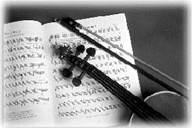
From the day I signed up for the Naumburg Competition, everything changed. I had made a decision to start again, to save my life, and that meant a 360-degree turnaround.
I kept on practicing. An enormous amount of work had to be done in two months. I went from not practicing at all to thirteen hours a day.
I spent two weeks just playing scales. If I thought I sounded bad before, now I sounded worse than awful.
At the time I lived on 72nd Street, close to West End Avenue. I had an apartment with a window the size of a shoebox. I didn't do mylaundry. I left my apartment only to walk to Juilliard─and not onBroadway like everyone else. I walked up Amsterdam Avenue because I didn't want to see anybody, didn't want to run into anybody, didn't want anyone to ask what I was doing.
I stopped going to classes and became a hermit. I even talked Miss DeLay into giving my lesson at night.
My eating habits were awful. I lived on fried sausages, a pint of peanut butter/chocolate ice cream, and a gallon of Coca-Cola every day. That's all I ate for eight weeks.
I was nuts. I was completely obsessed with getting back into shape, with doing well in this competition. If I could, people would know I was still on earth. Not to count me out; to stop asking, “Whatever happened to Nadja?”
The last week before the Naumburg auditions, I couldn't touch the violin. I had worked and worked and worked and worked and then I just couldn't work anymore.
I certainly could have used it. I wasn't as prepared as I should have been. But I simply had to say, “Nadja, you've dedicated yourself to this thing. Ready or not, do your best.”
Fifty violinists from around the world auditioned for the competition on May 25, 26, and 27, 1981. Those that made it past thepreliminaries would go on to the semifinals. Those that passed that stage would go to the finals. In years past, one violinist was chosen as winner and two received second and third place.
On May 26, the day of my audition, I went to the Merkin Concert Hall at 67th Street and Broadway. I waited, played for twenty minutes, and went home. I couldn't tell whether the preliminary judges were impressed or not. I'd find out the next evening.
Maybe subconsciously I was trying to keep busy; that night, when I fried the sausages, I accidentally set my apartment on fire. I grabbed my cat and my violin, and ran out the door. The fire was put out, but everything in my place was wrecked.
Fortunately, the phone was okay and on the evening of May 27, I had the news from Lucy Rowan Mann of Naumburg. Thirteen of us had made it.
Talk about mixed emotions. I was thrilled to be among the thirteen; a group that included established violinists, some of whom had already made records. But it also meant I had to play the next day in the semifinals of the competition.
Everyone entering the competition had been given two lists of concertos. One was a list of standard repertory pieces. The other list was twentieth-century repertory. For our big competition piece, we were to choose from each list and play a movement from one in the semifinals, and a movement from the other in the finals─if we made it that far.
From the standard repertory list, I chose the Tchaikovsky Concerto. I had been playing the Tchaik for three years, so it was a good piece for me.
From the twentieth-century list, I chose the Prokofiev G minor Concerto. I had never played it onstage before.
My goal had been just passing the auditions, but now my thought pattern began to change. If I wanted a sliver of a chance of advancing again, my brain said, “Play your strong piece first.”
Logically, I should play the Tchaikovsky in the semifinals just to make it to the next stage. Who cared if that left me with a piece I probably wouldn't play as well in the finals of the competition? It'd be a miracle to get that far.
There wouldn't be more than seven violinists chosen for the final round, and if I were in the top seven of an international group, that was plenty good enough.
The semifinals were held on May 28 in Merkin Concert Hall. You were to play for thirty minutes: your big piece first, then the judges would ask to hear another.
There was a panel of eight judges. They had a piece of paper with my choices of the Tchaikovsky and the Prokofiev in front of them. “Which would you like to play?” they asked.
I said meekly, “Prokofiev.”
My brain and all the logic in the world had said, “Play your strong piece.” My heart said, “Go for it all. Play your weak piece now, save Tchaikovsky for the finals.”
Maybe I don't listen to logic so easily after all.
My good friend, the pianist Sandra Rivers, had been chosen as accompanist for the competition. She knew I was nervous. There had been a very short time to prepare; I was sure there'd be memory slips, that I'd blank out in the middle and the judges would throw me out. My hands were like ice.
The first eight measures of the Prokofiev don't have accompaniment. The violin starts the piece alone. So I started playing.
I got through the first movement and Sandra said later my face was as white as snow. She said I was so tense, I was beyond shaking. Just a solid brick.
It was the best I'd ever played it. No memory slips at all. Technically, musically, it was there.
I finished it thinking, “Have I sold my soul for this? Is the devil going to visit me at midnight? How come it went so well?”
I didn't know why, but often I do my best under the worst of circumstances. I don't know if it's guts or a determination not to disappoint people. Who knows what it is, but it came through for me, and I thank God for that.
As the first movement ended, the judges said, “Thank you.” Then they asked for the Carmen Fantasy.
I turned and asked Sandy for an A, to retune, and later she said the blood was just rushing back into my face.
I whispered, “Sandy, I made it. I did it.”
“Yeah,” she whispered back, kiddingly, “too bad you didn't screw up. Maybe next time.”
At that point I didn't care if I did make the finals because I had played the Prokofiev so well. I was so proud of myself for coming through.
I needed a shot in the arm; that afternoon I got evicted. While I was at Merkin, my moped had blown up. For my landlord, that was the last straw.
What good news. I was completely broke and didn't have the next month's rent anyway. The landlord wanted me out that day. I said, “Please, can I have two days. I might get into the finals, can I please go through this first?”
I talked him into it, and got back to my place in time for the phone call. “Congratulations, Nadja,”“they said. “You have made the finals.”
I had achieved the ridiculously unlikely, and I had saved my best piece. Yet part of me was sorry. I wanted it to be over already. In the three days from the preliminaries to the semifinals, I lost eight pounds. I was so tired of the pressure.
There was a fellow who advanced to the finals with me, an old, good friend since Pre-College. Competition against friends is inevitable in music, but I never saw competition push a friendship out the window so quickly. By the day of the finals, I hated him and he hated me. Pressure was that intense.
The finals were held on May 29 at Carnegie Hall and open to the public. I was the fourth violinist of the morning, then there was a lunch break, and three more violinists in the afternoon.
I played my Tchaikovsky, Saint-Sa‘ns’s Havanaise, and Ravel's Tzigane for the judges: managers, famous violinists, teachers, and critics. I went on stage at five past eleven and finished at noon. Those fifty-five minutes seemed like three days.
I was so relieved when I finished playing; I was finished! It's impossible to say how happy I was to see the dressing room. I went out for lunch with my friends. It was like coming back from the grave. We laughed and joked and watched TV.
As I returned to Carnegie Hall to hear the other violinists, I realized I'd made a big mistake: they might ask for recalls. A recall is when they can't decide between two people and they want you to play again. It's been done; it's done all the time in competitions. No way was I in shape to go onstage and play again.
In the late afternoon, the competition was over. Everybody had finished playing. Quite luckily─no recalls.
The judges deliberated for an hour. The tension in the air was unbelievable. All the violinists were sitting with their little circle of friends. I had my few friends around me, but no one was saying much now.
Finally, the Naumburg Foundation president Robert Mann came on stage.
“It's always so difficult to choose ...” he began.
“Every year we hold this competition,” Robert Mann said. “And in the past, we've awarded three prizes. This year we've elected to only have one prize, the first prize.”
My heart sank. Nothing for me. Not even Miss Congeniality.
“We have found,” Mann went on, “that second place usually brings great dismay to the artist because they feel like a loser. We don't want anyone here to feel like a loser. Every finalist will receive five hundred dollars except the winner, who will receive three thousand dollars.”
And then he repeated how difficult it was to choose, how well everyone had played ...dah, dah, dah.
I was looking down at the floor.
“The winner is ...”
And he said my name.
A friend next to me said, “Nadja, I think you won!”
I went numb. My friends pulled me up and pointed me toward the stage. It was a long walk because I had slipped into a seat in the back. Sitting up in front was my old friend. I would have to walk right past him and I was dreading it, but before I could, he got up and stopped me.
He threw his arms around me and I threw my arms around him. I kept telling him how sorry I was. I was holding him and started to cry, saying, “I'm sorry, I'm sorry, I'm sorry.” I didn't want to lose, but I really didn't want him to lose either. And he was holding me and saying, “Don't be sorry. I'm so proud of you.” It was over, and we would be friends again.
I took my bow, then ran to Juilliard. Ten blocks uptown, one block west, to give Miss DeLay the news. She could be proud of me now, too.
Suddenly, everything was clear. Playing the violin is what I'd do with my life. Heaven handed me a prize: “You've been through a lot, kid. Here's an international competition.”
Everything had changed when I prepared for the Naumburg, and now everything changed again. I made my first recording. Between September 1981 and May 1982, I played a hundred concerts in America, made one trip to Europe, then two months of summer festivals. And people asked me back.
There was a great deal of anxiety playing in Europe for the first time. But I was able to rely on my self-confidence to pull me through.
Self-confidence onstage doesn't mean a lack of nerves backstage. The stakes had increased. This wasn't practice anymore, this was my life. I'd stare into a dressing-room mirror and say, “Nadja, people have bought tickets, hired baby-sitters, you've got to calm down; go out there and prove yourself.”
Every night I'd prove myself again. My life work had truly begun
- 1.
In a gesture to prepare for the competition, Nadja did all the following except _________
- A.preoccupying herself in practice
- B.trying to carry out her deeds secretly
- C.abandoning going to school for classes
- D.consuming the best food to get enough energy
- A.
- 2.
How many violinists does the passage mention advanced to the finals?
- A.Four
- B.Five
- C.Six
- D.Seven
- A.
- 3.
After Nadja finished playing at the finals, she went out for a while and when she came back to hear the other violinists she realized she had made a mistake because _________
- A.she forgot that there was going to be a recall
- B.she didn’t get hold of the permission to leave
- C.chances were that she had to replay and she was off guard
- D.there was another play she had to take part in in the afternoon
- A.
 [A] This 1000-wat electric kettle rapidly boils up to 1 quart of water for coffee, tea and more. It provides a rapid and quiet heating process, making it ideal for the office, home or students’ bedroom, and unit’s easy-open lid is designed with a security lock to prevent spilling. The kettle automatically shuts off when the water boils. |
 [B] This 12-inch everyday pan is made of aluminum, allowing for quick heat giving. The stainless-steel handles are comfortable to grasp, plus they decrease heat moving so handles stay cool on the stovetop. The included lid is ideal for moist-heat cooking. It cooks fast and is easy to clean and can cook everything with little oil or no oil. |
 [C] This lightweight carpet cleaner comes with a display of convenient features. It gets under furniture and in hard-to-reach areas, and it is removable for easy clean-up. It provides heavy-duty cleaning for the worst type dirt, like high-traffic areas and pet stains, and dirty water and clean water always remain separate. It is ideal for carpeted stairs. |
 [D] This electric pressure washer is an ideal choice for home and auto cleaning projects. It features and an instant stop or start function. It also includes an adjustable pressure nozzle(喷嘴), so you can adjust pressure from 100 PSI to 1300 PSI, and owns effective cleaning power. |
 [E] This solar spotlight turns on automatically at dark and off at dawn. Show off garden accessories like fountains or light a path through your yard with a solar light that needs neither electricity nor maintenance. Solar lighting saves money and energy by gathering power from the sun. |
 [F] Keep the air in the home, office, or workplace circulating with this high-performance fan. It features a design for fast, focused cooling and effective air circulation. It also comes equipped with a three-speed motor and a specially-designed blade, which provides different power. Thoughtfully designed, the fan can also be wall mounted to help save floor space. |
【小题1】Terminal examination is coming near and it is getting hotter and hotter. Michael studies hard at his desk, often wet through with sweat. Now what he is most longing for is some kind of instrument that can cool himself while he is doing his lessons at the desk so he can have a better learning result.
【小题2】It is only a few days before Christmas Day. Jacky and his family are to give their house a thorough cleaning. As his father has some trouble with his health, Jacky volunteers to undertake the task of cleaning the ceiling and walls. In order to do a better job, he is eager to find an ideal instrument to match his aim.
【小题3】For the purpose of being admitted by a key university, Harry has been burying himself in lessons and often studies until late into the night so that he often feels tired out and sleepy. “Why not refresh myself with a cup of coffee now and then?” He thinks and then he comes up with an idea….
【小题4】Simon has decided to go hiking with his classmates for a holiday and hopes to have a picnic by cooking in the open air to add pleasure and fun to their trip. Now he is given the task that he should get an instrument with which they can cook delicious dishes.
【小题5】Peter’s mother is a cleaner whose job is to get clean kinds of floors, including carpets of many buildings. The boring work—especially the stair carpet cleaning—often makes her mother worn out. So Rachel is anxious to buy her an easy-to-use machine to take the place of her mother’s heavy work. 查看习题详情和答案>>