网址:http://m.1010jiajiao.com/timu3_id_2965279[举报]
第一部分:听力(共两节,每小题1.5分,满分30分)
第一节:请听下面5段对话,选出最佳选项。每段对话仅读一遍。
1.What are the speakers talking about?
A.Their children.
B.Foreign countries.
C.Traveling.
2.What will the woman do?
A.Attend the wedding.
B.Go over the lessons.
C.Travel with the man.
3.Where are the speakers probably?
A.At a theatre.
B.At a restaurant.
C.At a gas station.
4.How will the woman go to New York?
A.By car.
B.By air.
C.By train.
5.When will the speakers most probably leave?
A.At 5∶30.
B.At 6∶00.
C.At 7∶10.
第二节:请听下面5段对话或独白,选出最佳选项。每段对话或独白读两遍。
请听第6段材料,回答第6至8题。
6.How does the man feel?
A.Excited.
B.Tired.
C.Surprised.
7.What does the man suggest doing?
A.Resting at home.
B.Dancing with some friends.
C.Listening to some music.
8.Where will the speakers probably eat?
A.At the club.
B.At home.
C.At a restaurant.
请听第7段材料,回答第9至11题。
9.Why hasn't Mr.Smith's package arrived according to the delivery man?
A.He didn't write the address on it.
B.He didn't write the right address on it.
C.He didn't pay enough money for it.
10.How much did Mr.Smith pay for the express?
A.$48.
B.$64.
C.$84.
11.How will the woman solve the problem?
A.By calling directly to the Dallas office.
B.By making up the money Mr.Smith have lost.
C.By sending Mr.Smith to clear up the problem.
请听第8段材料,回答第12至14题。
12.Who is Ken?
A.Beth's boss.
B.Beth's boyfriend.
C.Beth's father.
13.What did Beth do last night?
A.She went to a bar with her brother.
B.She watched TV with her parents.
C.She went to the cinema with Ken.
14.What does Beth's brother think she should do?
A.Start looking for a new boyfriend.
B.Treat Ken in the same way as he treated her.
C.Buy something to eat.
请听第9段材料,回答第15至17题。
15.What does the man want the woman to do this weekend?
A.Write the report.
B.Take a holiday.
C.Help him with his report.
16.When should the speakers hand in their reports?
A.On March 13TH.
B.On March 3TH.
C.On March 30TH.
17.What can we learn from the conversation?
A.The man has worked hard these days.
B.The woman will attend a meeting on Saturday.
C.The man hopes that the woman is free on the 14th.
请听第10段材料,回答第18至20题。
18.How long has the speaker known Susan?
A.About six weeks.
B.About six months.
C.About six years.
19.When does Susan get angry?
A.When the speaker asks her the questions about their relationship.
B.When she meets the speaker's parents.
C.When the speaker invites her to play.
20.What can we know about the speaker?
A.He is 24.
B.He is a manager.
C.He is ready to settle down and get married.
听力
第一节
听下面5段对话。每段对话后有一个小题,从题中所给的A、B、C三个选项中选出最佳选项。听完每段对话后,你都有10秒钟的时间来回答有关小题和阅读下一小题。每段对话仅读一遍。
W:Oh, Michael…I didn’t tell you.My sister phoned yesterday.She wants to get married.
M:Married! She’s only seventeen.
1.What does Michael think of the woman’s sister?
A.She is not old enough to get married.
B.She is too old to get married.
C.She is married.
M:Waitress! I’d like the menu, please.
W:Here you are, sir.
2.Where is the man?
A.In a bookstore.
B.In a train station.
C.In a restaurant.
M:Has the TV been repaired?
W:Yes.We’d expected the repairs to cost us about dollars, but they charged us twice as much.
3.How much did the lady pay?
A.$15.
B.$20.
C.$30.
M:Hello, Jane.How lucky to run into you.Can you and Tom come to dinner tomorrow evening?
W:I think so.I don’t think we’re going out.
4.How does the woman respond?
A.She refuses to go to dinner.
B.She agrees to go to dinner.
C.She is angry.
M:I have to go to class because I have a test, but if I could, I’d go with you to the cinema.
W:That’s too bad.I wish that you could come along.
5.Where is the man going?
A.To class.
B.To the cinema.
C.To the doctor’s office.
第二节
听下面5段对话或独白。每段对话或独白后有几个小题,从题中所给的A、B、C三个选项中选出最佳选项。听每段对话或独白前,你将有时间阅读各个小题,每小题5秒钟;听完后,各小题将给出5秒钟的作答时间。每段对话或独白读两遍。
听第6段材料,回答第6~8题。
M:Hello, Mrs Smith.How are you?
W:Fine, thanks, Mr Downs.How’s your boy, Jack?
M:He is a bit tired.You know, he goes to school at eight o’clock every morning.He doesn’t get home till after four.Then he does his homework after ten.It often takes him a couple of hours to finish it.
W:Poor boy.Children work hard at school nowadays, don’t they? Does he like it?
M:School, you mean? Yes, he does.He likes his teachers, and that always makes a difference.
W:Yes, it does.Does he go to school by bus?
M:No, he walks.He likes walking.He meets some of his friends at the corner and they go together.
W:What does he do when it rains?
M:His uncle takes him in the car.He passes the school on the way to the office.
6.What are the two talking about?
A.Mrs Smith.
B.Mr Downs.
C.Mr Downs’ son.
7.How long does a school day last?
A.At least 8 hours.
B.About 6 hours.
C.Nearly 7 hours.
8.How does Jack usually go to school?
A.By bus.
B.On foot.
C.By car.
听第7段材料,回答第9~11题。
M:Hello! Can I speak to Susan, please?
W:Speaking.Is that you, Tom?
M:Yes, it is.I am going to New Zealand in two weeks’ time, and my wife is going with me.
W:Oh, how lucky you are! How long are you going for?
M:For a couple of months, maybe half a year.My boss wants me to help set up a branch company there.Well, Susan, you have been to New Zealand several times.Can you give us some suggestions, or just tell us about that country?
W:I’d love to.We can have a talk sometime.
M:Why not come over to dinner in my house this weekend.My wife wants to meet you as well.
W:All right.What about Saturday?
M:OK.See you at 6∶00 p. m., this coming Saturday.Goodbye!
9.Who answered the phone?
A.Tom.
B.Tom’s wife.
C.Susan.
10.When are they going to New Zealand?
A.In half a year.
B.In a couple of months.
C.In two weeks.
11.Where are they going to meet?
A.At Susan’s.
B.At Tom’s.
C.In New Zealand.
听第8段材料,回答第12~14题。
M:As you can see, Maria, the railway station is very crowded during rush hours.
W:How many people do you suppose ride into New York every day to work?
M:I don’t know.Must be several hundred thousand at least.Maybe a million.
W:I’m glad they’re not all taking this train.
M:Oh, they come from all directions, and by many different means, by railroads, ferries and subways.Then of course, some people drive in.
W:I’m a little afraid I’ll get lost.
M:You’ll soon learn that New York is a very easy city to get around.
W:Let’s see, the “Avenues” run north and south and the “Streets” run east and west, don’t they?
M:That’s right.You won’t get lost when you travel alone.
W:I hope not.
12.What can Maria see?
A.Many trains.
B.Many planes.
C.Many people.
13.What’s the woman afraid of?
A.Driving in.
B.Taking ferries(摆渡).
C.Getting lost.
14.What kind of city is New York, according to the man?
A.An easy city to get around.
B.A city full of subways.
C.A city difficult to get around.
听第9段材料,回答第15~17题。
W:Good afternoon.
M:Good afternoon.My name’s William Turner.I want to make an appointment to see Dr Smith please.
W:Yes, of course, Mr Turner.May I have your address please?
M:108 Park Road, London.
W:Yes, we have you on our records.Can you manage this afternoon at 3:00?
M:Fine.
W:Will 3:00 be all right?
M:Well, yes, but I prefer a later time so I can come along after work.
W:Then what about 5:30?
M:Well, that’s fine.Thank you.Goodbye.
W:Goodbye.
15.Who is William Turner?
A.A close friend of Dr Smith’s.
B.A patient of Dr Smith’s.
C.Both A and B.
16.When will Mr Turner go to see Dr Smith?
A.At 4∶00 p. m.
B.At 5∶00 p. m.
C.At 5∶30 p. m.
17.What’s the main idea of this dialogue?
A.Mr Turner wants to make an appointment with Dr Smith.
B.Mr Turner will go to see Dr Smith at 5∶30 p. m.
C.Mr Turner is a patient of Dr Smith’s.
听第10段材料,回答第18~20题。
If a Chinese comes to England and wants to drive his car there, he must know the English rules of the road and the English traffic signs.One rule is that he must always drive on the left.Another rule is that he mustn’t drive faster than thirty mph through town and villages.If he does not pay attention to this speed limit, the police will soon be after him.The third rule is that cars on the main road have right of way.It is not easy to drive in London, because the traffic is so busy and buses and trucks sometimes block the roads.It is much less difficult to find your way if you go by one of the red buses or the underground.There are bus stops at every street corner.And if you cannot find one, ask a policeman.He will help you at once.
18.On which side of the road are cars driven in England?
A.On the left.
B.On the right.
C.The passage doesn’t tell about that.
19.What can we know from the passage?
A.We know police in England are often after you.
B.We know police in England are often helpful.
C.We know police in England are often impolite.
20.What’s the best title for this passage?
A.English Traffic
B.Come to England
C.Traffic Rules
听力(共两节,满分30分)
第一节(共5小题;每小题1.5分,满分7.5分)
听下面5段对话。每段对话后有一个小题,从题中所给的A、B、C三个选项中选出最佳选项。听完每段对话后,你都有l0秒钟的时间来回答有关小题和阅读下一小题。每段对话仅读一遍。
1.What’s the probable relationship between the two speakers?
A.Father and daughter.
B.Mother and son.
C.Husband and wife.
2.How was the journey?
A.Satisfying.
B.Exciting.
C.Disappointing.
3.Where does the conversation most probably take place?
A.At home.
B.In a shop.
C.At school.
4.What does the woman think about the man’s plan?
A.She thinks he is foolish.
B.She thinks he works very hard.
C.She thinks he is very clever.
5.What is happening outside?
A.It is raining slightly.
B.It is raining heavily.
C.It is shining.
第二节(共15小题;每小题1.5分,满分22.5分)
听下面5段对话或独白。每段对话或独白后有几个小题,从题中所给的A、B、C三个选项中选出最佳选项。听每段对话或独白前,你将有时间阅读各个小题,每小题5秒钟;听完后,各小题将给出5秒钟的作答时间。每段对话或独白读两遍。
听第6段材料,回答第6至8题。
6.Why did the man talk to the woman?
A.He wanted to buy a house.
B.He wanted to get a job.
C.He wanted to rent a flat.
7.What is the flat the man is interested in?
A.It has a bathroom and one bedroom.
B.It has two bedrooms and a sitting room.
C.It has a kitchen but it hasn’t a bathroom.
8.How much will the man pay for the biggest one each year?
A.3600 dollars.
B.2400 dollars.
C.3000 dollars.
听第7段材料, 回答第9至11题。
9.Where does the conversation most likely take place?
A.In the street.
B.At the woman’s home.
C.Over the phone.
10.What is the woman going to do tonight?
A.To help her sister with English.
B.To meet her friend at the station.
C.To go to an exhibition with her parents.
11.When can the woman most probably go to see a film with the man?
A.Tonight.
B.This weekend.
C.Some time next week.
听第8段材料,回答第12至14题。
12.What’s wrong with the man?
A.He was caught in a rain.
B.He caught a bad cold.
C.He had a pain in the nose.
13.What does the man plan to do?
A.To go on with his work.
B.To ask others for some medicine.
C.To ask for a sick leave.
14.What’s the probable relationship between the two speakers?
A.Doctor and patient.
B.Classmates.
C.Workmates.
听第9段材料,回答第15至17题。
15.What does the woman intend to do?
A.To introduce the Workers Club.
B.To invite the man to see a film.
C.To invite the man to do sports.
16.What can we learn about the club?
A.It’s open until l2∶00 at night.
B.People can skate there.
C.Three buses pass the club.
17.What will the woman do at the club tomorrow night?
A.Skate.
B.Play volleyball.
C.Play table tennis.
第三节(共3小题;每小题1.5分,满分4.5分)
听第10段材料,回答第18至20题。
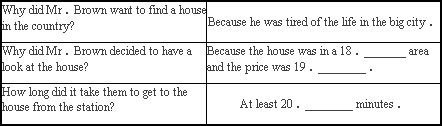
听力(共两节:满分30分)
第一节:(共5小题:第小题1.5分,满分7.5分)
听下面5段对话。每段对话后有一个小题,从题中所给的A、B、C三个选项中选出最佳选项。听完每段对话后,你都有10秒钟时间来回答有关小题和阅读下一小题。每段对话仅读一遍。
1.Who is answering the telephone call?
A.Bill.
B.Mike.
C.Kate.
2.What does the man mean?
A.He is practising English.
B.He didn’t understand the woman.
C.He doesn’t want to help the woman.
3.When will the film probably start?
A.At 7∶30
B.At 7∶00
C.At 6∶30
4.What do the two speakers think of the exam?
A.It is difficult.
B.It is moderate
C.It is easy.
5.What are the speakers talking about?
A.The man’s friend-Henry.
B.An excellent camping tent.
C.The weather.
第二节:听下面5段对话或独白。每段对话或独白后有几个小题,从题中所给的A、B、C三个选项中选择出最佳选项。听每段对话或独白前,你将有时间阅读各个小题,每小题5秒钟;听完后,各个小题将给出5秒钟的作答时间。每段对话或独白读两遍。
听第6段材料,回答至6至8题
6.What is the relationship between the two speakers?
A.Boss and secretary.
B.Workmates.
C.Fellow travelers.
7.How long was the man absent?
A.Five days.
B.Ten days.
C.Seven days.
8.What does the man have to do now?
A.Help the woman do her work.
B.Deal with piling e-mails.
C.Work overtime without pay.
听第7段材料,回答第9至11题。
9、Where is Miss Smith?
A.At home
B.In the office.
C.In the conference room.
10.When should Miss Smith call the man?
A.This weekend.
B.Today
C.On Thursday 12th.
11.What number should Miss Smith call the man?
A.8028714
B.8029714
C.9028741
听第8段材料,回答第12至14题。
12.What will Bob major in?
A.Law.
B.Computer.
C.Not decided yet
13.What is the application deadline for Bob according to the conversation?
A.March 13th
B.March 30th
C.A few weeks later.
14.How many universities are mentioned in the conversation?
A.Four.
B.Three.
C.Two.
听第9段材料,回答第15至17题。
15.Why didn’t the woman have her car fixed yesterday?
A.Because the repair cost is too high.
B.Because it was difficult to get the car fixed.
C.Because she couldn’t get back without the car.
16.What did the woman do two days ago?
A.Pull off the expressway.
B.Leave her car in the repair shop.
C.Ask the man to do her homework.
17.What’s the probable relationship between the two speakers?
A.Father and daughter.
B.Classmates.
C.Teacher and student.
听第10段材料,回答第18至20题。
18.What won’t the students do tomorrow?
A.Take a picture.
B.Have an English exan.
C.Have lunch at school.
19,When will the students get to the playground?
A.At 10∶00
B.At 10∶30
C.At 11∶00
20.What can we learn from the talk?
A.The students will go to the foot of the Red Hill by bus.
B.The students will go down the hill at 4∶00 p. m.
C.The whole climbing activity will last abort 6 hours.
听力(共二节,满分30分)
第一节 听下面5段对话,每段对话后有一个小题,从题中所给的A、B、C三个选项中选出最佳选项。听完每段对话后,你都有10秒钟的时间来回答有关小题和阅读下一小题。每段对话仅读一遍。
1.How often does the man play golf?
A.Once a week.
B.Once a month.
C.Every day.
2.What did the woman win in the contest?
A.A free trip.
B.A good camera.
C.A medal.
3.What is the boy going to do next?
A.Have dinner.
B.Do his reading.
C.Watch TV.
4.When does the man leave home?
A.At 6∶00
B.At 7∶00
C.At about 6∶40
5.How is the girl going to spend the weekend?
A.Staying with her parents.
B.Boating in the Water Park.
C.Preparing for the competition.
第二节(共15小题;每小题1.5分,满分22.5分)
听下面5段对话或独白。每段对话或独白后有几个小题,从每题所给的A、B、C三个选项中选出最佳选项。听每段对话或独白前,你将有时间阅读各个小题,每小题5秒钟;听完后,各小题将给出5秒钟的作答时间。每段对话或独白读两遍。
听第6段材料,回答第6至8题
6.Why does the girl want to change her coat?
A.Because the coat doesn’t fit her.
B.Because the coat is too expensive.
C.Because she doesn’t like the colour.
7.Who bought the coat for the girl?
A.Her brother.
B.Her sister.
C.Her mother.
8.Which coat will the girl probably take?
A.A red one, Size 11.
B.A yellow one, Size 9.
C.A blue one, Size 11.
听第7段材料,回答第9至11题
9.What’s the relationship between the two speakers?
A.Teacher and student.
B.Driver and passenger.
C.Policeman and witness.
10.What caused the accident to happen?
A.A dog.
B.A child.
C.An old man.
11.When did the ambulance(救护车)come?
A.At 8∶40
B.At 8∶30
C.At 8∶45
听第8段材料,回答第12至14题
12.Where does the conversation probably take place?
A.In the woman’s house.
B.In a restaurant.
C.In the man’s office.
13.What does the woman advice the man to do to improve his cooking?
A.Take a course.
B.Teach himself.
C.Learn from her.
14.Why does the man want to make a phone call?
A.He wants to call his wife.
B.He’d like to learn how to cook.
C.He want to talk to his secretary.
听第9段材料,回答第15至17题
15.Why does the man ask the woman for help?
A.He has to go to the café.
B.He has to write a report.
C.He has to wait for a call.
16.What does the woman suggest the man for dessert?
A.Pies.
B.Cookies.
C.Cakes.
17.Where does this conversation most likely take place?
A.At school.
B.At a restaurant.
C.At a grocery store(杂货店).
听第10段材料,回答第18至20题
18.Why did the Harrises think they would have to go to bed hungry?
A.Because it’s a 5-star hotel.
B.Because they thought no meals would be served late in the evening.
C.Because they were very tired after the trip.
19.How long did the service time for lunch last in the 5star hotel?
A.2 hours.
B.4 hours.
C.3 hours.
20.What did Mrs.Harris think of the times of the meals in he hotel?
A.She thought they would have enough time to see they city.
B.She thought they would have to spend too much time on meals instead of traveling.
C.She thought the times were suitable and felt very satisfied.