网址:http://m.1010jiajiao.com/timu3_id_2901140[举报]
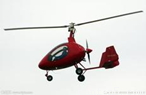
My name is Jim White. I live in America. I had a very u __1.__ experience on Sunday. I s___2.___a UFO in the daytime. Early this spring, I went outside w___3.___ my friend Bill who lived close to me. We were walking to a hill when I saw a l___4.___ bright light dancing in the sky. I called Jim and asked him to look up. He kept a___5.___, “What is that?” “A UFO!” I shouted excitedly. I n__6.__ it was round and red in the center.
After we looked at it for a m__7.__, we found it
seemed that it had wings, but it was still round. Bill would not b__8.___ me
when I told him it must be a UFO. We shouted t__9.__ it and we wished that it would land. We wanted to
know i__10._ there was an alien in it. But soon it disappeared. I guessed we
scared it off.
a UFO. We shouted t__9.__ it and we wished that it would land. We wanted to
know i__10._ there was an alien in it. But soon it disappeared. I guessed we
scared it off.
Do you believe me? It’s a true story.
查看习题详情和答案>>
A man went to a farm.While he was there,he saw a pig with a wooden leg.This surprised him so much.He decided to ask the farmer about it.
“This isn't a common pig and l am very lucky to have him.”said the farmer.“Only two days ago there was a fire in chicken shed(鸡舍)when 1 was away from the farm.The pig noticed this and immediately let all the chickens out into the yard.He then phoned the firemen(消防员)and asked them for help.”
“AIso.a few weeks ago,when I was driving my truck down a steep hill,the truck hit a tree and 1 was badly hurt.The pig rushed to the truck and pulled me out of just before the truck caught fire.”
When the farmer was just about to tell another story,the man said,“Yes, yes,but what about the wooden leg?”
“Well.”said the farmer,“when you’ve got a pig as good as that,you don’t eat it all at once”
( ) 1.The man was surprised because he saw a farmer with a wooden leg.
( ) 2.The pig was very unusual and the farmer was proud of it.
( ) 3.The farmer was once saved by the pig.
( ) 4.The pig lost a leg while he was trying to save the farmer's chickens.
查看习题详情和答案>>
|
broadcast1/'brɔ:dkɑ:st||ˈbrɔdˌkæst/n[C] a programme on the radio or on television: a radio news broadcast | live broadcast ( = a programme that you see or hear at the same time as the events are happening) broadcast2 v past tense and past participle, broadcast 1 [ I,T] to send out radio or television programmes: The interview was broadcast live across Europe. 2 [T] to tell something to a lot of people: There was no need to broadcast the fact that he lost his job. broadcaster /ˈbrɔːdkɑːstə || ˈbrɔːdkæstər/ n [C] |
curious/ ˈkjʊəriəs || 'kjur-/ adj 1 wanting to know about something: When I mentioned her name everyone was curious. | [ +about] I’m incurious about this book she's supposed to be writing. |curious to see/hear/know etc: Mandy was curious to hear what Peter had to say himself.—opposite INCURIOUS 2 strange or unusual: a curious noise coming from the cellar | curious that It's very curious that she left without saying goodbye. curl1 /kɜ:l|| kɚrl/ n 1[C] a small mass of hair |
|
flask / flɑ:sk || flæsk/n [C] I BrE a special type of bottle that you use to keep liquids either hot or cold, for example when travelling 2 a flat bottle usually used to carry alcohol 3 a glass bottle with a narrow top, used in a LABORATORY flat1/ flæt / adj flatter, flattest 1▶ SURFACE◀ smooth and level, without raised or hollow areas, and not sloping or curving: a flat-bottomed boat |a perfectly flat sandy beach | flat as a |
pollute / pə'lu:t/ v [T] 1 to make air, water, soil etc dangerously dirty and not suitable for people to use: beaches polluted by raw sewage | industrial emissions that pollute the air 2 pollute sb’s mind to give someone immoral thoughts and spoil their character: fears that Lawrence's novels would pollute young minds--polluted adj: polluted rivers--polluter n [C] pollution / pəˈlu:ʃn /n [U] 1 the process of making |
1.The pronunciation of the word "broadcast" is ____ or/ˈbrɔdˌkæst /.
A. /'brɔ:dkɑ:st/ B. /'brəud'sɑ:st/ C. /bræd'kɔst/ D. /'bru:dkɑ:st/
2.The word"____ "can be used as an adjective (形容词).
A. pollute B. pollution C. curious D. curiously
3.Which of the following is a flask?


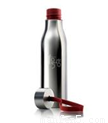
A. B. C. D.
4. The word "pollute" means "______".
A. to tell something to a lot of people B. wanting to know about something
C. a programme on the radio or on TV D. to make air. water, soil, etc dirty
5.These texts are probably from ______.
A. a magazine B. a dictionary
C. a newspaper D. an advertisement
查看习题详情和答案>>
综合填空
根据短文和所给首字母写出所缺单词,使短文完整,意思通顺、连贯
Do you know something about tree rings (年轮)? Do you know they can tell us what the weather was l__1___, sometimes even hundreds of years ago?
A tree will grow well in a climate with lots of sunshine and rainfall. And l__2__ sunshine or rainfall will limit (限制) the growth of a tree. We can see the change of climate by studying the tree rings. For e___3___, to find out the weather of ten years ago, count the rings of a tree from o___4___ to the inside. If the t___5___ ring is far from the eleventh ring, then we are sure that it was sunny and rainy most of that year. If it is near to the eleventh ring, then the climate that year was bad.
Tree rings are i___6___ not only for studying the history of weather but also for studying the history of man. Long long ago there lived a lot of people at a place in New Mexico. But now you can find only s___7___ there—no trees and no people. What h____8___?
A scientist studied the rings of d___9__ trees there. He found that the people had to leave b__10___ they had cut down all trees to make fires and buildings. As all trees had gone, the people there had to move.
查看习题详情和答案>>
How do you remember the way to your house? Where do dreams come from? It is your brain(大脑) that does these things. A British scientist showed that “sleep can improve one’s memory.” It’s not a dream for students to study when they sleep. In fact, your brains is working day and night. If you learn words before bed, a certain part of the brain may help you to remember the words while you sleep. What’s more, another scientist in the USA found that there was a “talent button(天才按钮)” in the human brain. It might make a person more talented.
There are more interesting things about the brain. Your brain uses less energy than a fridge light. Just two bananas can give the brain enough energy to work for a whole day. According to some scientists, yawning(打哈欠) keeps our brains “cool”, which makes us think quicker.
Here are some pieces of advice to keep a good brain:
l Eat healthy food.
l Get a lot of playtime or exercise.
l Don’t drink or smoke.
l Use your brain a lot.
1. A British scientist found out that ________ could improve our memories.
A. drink B. dreams C. sleep D. bananas
2. According to the passage, if we want to have a good brain, we should ________.
A. use our brains more B. sleep fewer hours
C. work longer hours D. remember fewer things
3.Which of the following is TRUE according to the passage?
A. Our brains only work in the daytime.
B. Our brains need much energy every day.
C. Smoking can keep our brains healthy.
D. Getting exercise is good for our brains.
查看习题详情和答案>>