网址:http://m.1010jiajiao.com/timu3_id_2862653[举报]
me angry," said Zhang Hua, a middle sc
 hool student in Guangzhou. Do you have the same problem?
 Perhaps your parents had the same problem when they were your age long ago. Why does it seem that
some parents are not so friendly in their children's eyes?
One of the biggest things is when someone becomes a parent, he/she likes worrying thing. They worry
about every
 thing about you, from the time you were born. They do a lot for you though something would
make you angry, because they care about you and worry about you. They worry about your choice of
friends, the food you eat, your work at school, how much sleep you get, etc. All these things are part of
your life. They want you to grow up h
 ealthily and happily.
 So how can you make things easier on yourself? It's easier than you think. Just make sure your parents
know that you're doing, Get them to know your friends. Phone if you stay somewhere else so that your
parents don't call every hospital in the phone book looking for your body. Say sorry to them when you
make mistakes. Take responsibility (责任) for what you have done. Talk about your ideas with them.
They may talk about theirs with you.
Most of all, try to think about why your parents do this or do that. They are still practising being parents
and need help you can give them. Some day, when you become a parent, they may be able to help you
how to get on with your children.
B. tell the teacher
C. say sorry to our parents
D. make a telephone call to our parents
B. some parents are unfriendly, which makes their children angry
C. children should do everything as their parents say
D. parents love their children very much and the children should understand them
B. How do Get on with Parents?
C. Zhang Hua's Problem.
D. What are Parents Worrying about?
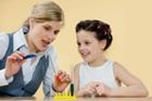 Children are natural scientists, very interested in the world around them. Helping them enjoy science can be easy; there’s no need for a lot of scientific terms(科学术语)or modern labs. You only have to share your children’s interests.
Firstly, listen to their questions. I once visited a classroom of seven-year-old children to talk about science as a job. The children asked me “textbook questions” about schooling, the money I got and whether I liked my job. When I finished answering, we sat facing each other silently. Finally I said, “Now that we’ve finished with your lists, do you have questions of your own about science?”
After a long wait, a boy put up his hand, “Have you ever seen a grasshopper(蚱蜢) eat? When I try eating leaves like that, I get a stomachache. Why?” This began a lot of questions that lasted nearly two hours.
Secondly, give them time to think. Studies over the past 30 years have shown that, after asking a question, many teachers usually wait only one second or less for an answer, no time for a child to think. When teachers increase their “wait time” to three seconds or more, children give better answers.
Thirdly, watch your language. When the child is having a science discussion, don’t jump in with “That’s right” or “Very g ood”. These words work well when i
 t comes to encouraging a child to help others. But in talking about science, these words make a child think that the discussion is over. Instead, keep things going by saying, “That’s interesting” or “I’ve never thought of it that way before”, or coming up with more questions or ideas.
Lastly, show; don’t tell. Let children look at their hands through a microscope(显微镜), and they’ll understand why you want them to wash before dinner….
81. To help children enjoy science, the most important thing for teachers to do is ___________.
A. let them see the world around B. let them study in modern labs
C. tell them the difficult terms on science D. share the children’s interests
82. In the last sentence of the second paragraph, the words “your lists” mean ____________.
A. your answers to the questions B. your own questions about science
C. your questions from textbooks D. all the questions of your own
83. According to the passage, children can give better answers to the questions if teachers ____.
A. ask them to answer quickly B. wait for one or two seconds after a question
C. tell them to watch their language D. wait at least three seconds after a question
84. The writer talks about all of the following ways except that teachers should ____________.
A. tell their children stories instead of telling them to remember facts
B. offer their children chances to see things for themselves
C. allow enough time for their children to find answers to the questions
D. encourage their children to ask questions of their own
85. The writer of the passage is probably ____________.
A. a teacher B. a scientist
C. a seven-year-old boy’s father D. a reporter
查看习题详情和答案>>
Children are natural scientists, very interested in the world around them. Helping them enjoy science can be easy; there’s no need for a lot of scientific terms(科学术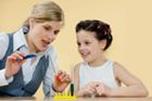 语)or modern labs. You only have to share your children’s interests.
Firstly, listen to their questions. I once visited a classroom of seven-year-old children to talk about science as a job. The children asked me “textbook questions” about schooling, the money I got and whether I liked my job. When I finished answering, we sat facing each other silently. Finally I said, “Now that we’ve finished with your lists, do you have questions of your own about science?”
After a long wait, a boy put up his hand, “Have you ever seen a grasshopper(蚱蜢) eat? When I try eating leaves like that, I get a stomachache. Why?” This began a lot of questions that lasted nearly two hours.
Secondly, give them time to think. Studies over the past 30 years have shown that, after asking a question, many teachers usually wait only one second or less for an answer, no time for a child to think. When teachers increase their “wait time” to three seconds or more, children give better answers.
But in talking about science, these words make a child think that the discussion is over. Instead, keep things going by saying, “That’s interesting” or “I’ve never thought of it that way before”, or coming up with more questions or ideas.
Lastly, show; don’t tell. Let children look at their hands through a microscope(显微镜), and they’ll understand why you want them to wash before dinner….
36. To help children enjoy science, the most important thing for teachers to do is ___________.
A. let them see the world around B. let them study in modern labs
C. tell them the difficult terms on science D. share the children’s interests
37. In the last sentence of the second paragraph, the words “your lists” mean ____________.
A. your answers to the questions B. your own questions about science
C. your questions from textbooks D. all the questions of your own
38. According to the passage, children can give better answers to the questions if teachers ____.
A. ask them to answer quickly B. wait for one or two seconds after a question
C. tell them to watch their language D. wait at least three seconds after a question
39. The writer talks about all of the following ways except that teachers should ____________.
A. tell their children stories instead of telling them to remember facts
B. offer their children chances to see things for themselves
C. allow enough time for their children to find answers to the questions
D. encourage their children to ask questions of their own
40. The writer of the passage is probably ____________.
A. a teacher B. a scientist
C. a seven-year-old boy’s father D. a reporter
查看习题详情和答案>>
| |||||||||||||||||||||||||||
2. Most children can't c on one thing for a long time.
3. You should exercise more so as to keep e .
4. There's a s smell in the room. Do you know what it is?
5. The girl ate too many c_________. So her teeth are bad .